
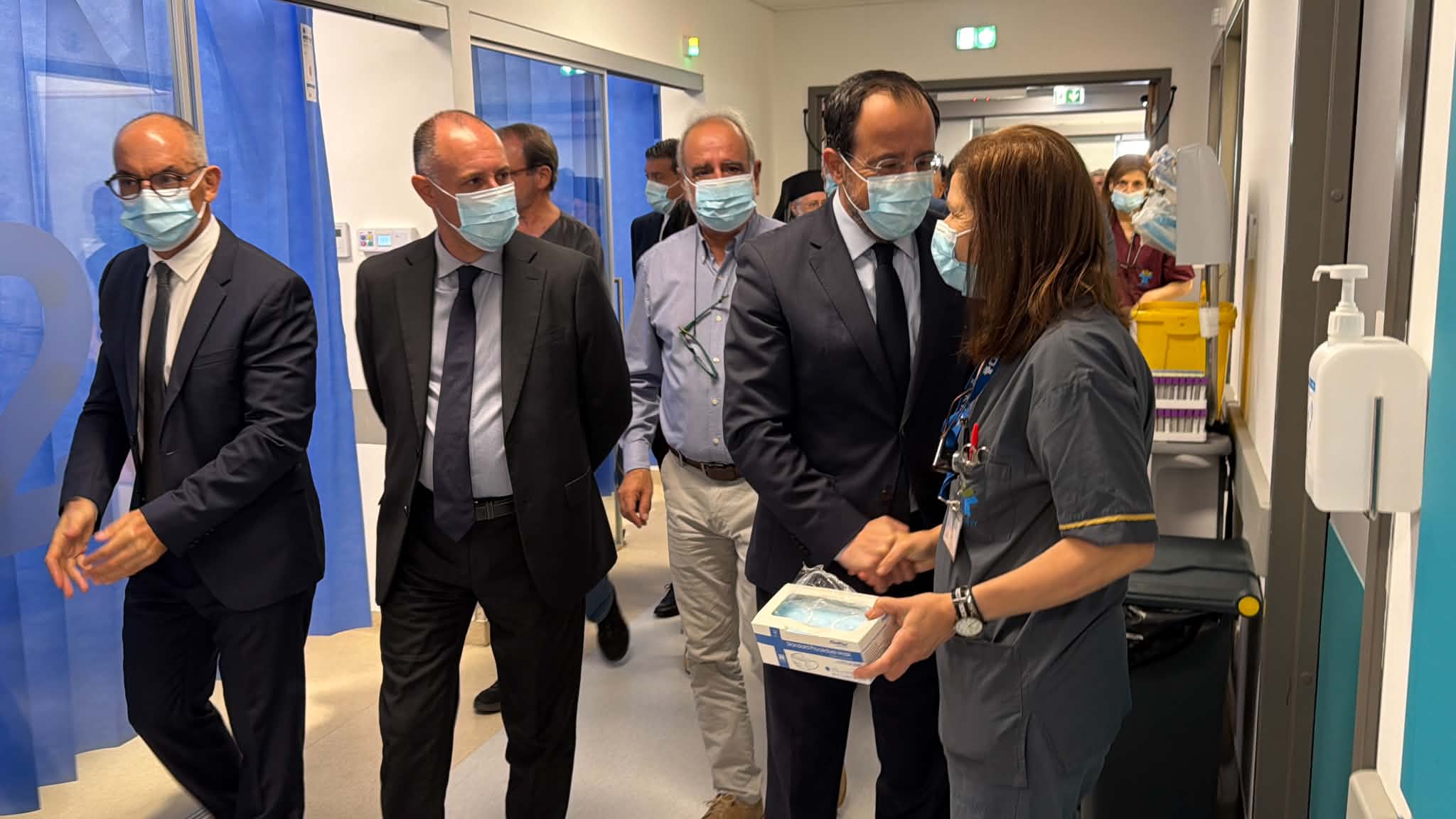
The upgraded accident and emergency department at Nicosia general hospital, completed at a cost of €4.1 million, was inaugurated on Monday, with the government aiming to improve patient care and working conditions for medical staff.
Speaking at the inauguration, President Nikos Christodoulides said his government was investing in healthcare facilities across Cyprus to better meet patients’ needs, particularly when they required urgent treatment.
He added that government projects co-funded by the EU and due to be approved by the cabinet in September 2027 would exceed €3.5 billion, with healthcare among the priorities.
Christodoulides recalled visiting Nicosia general hospital twice with his daughters since taking office, saying that on both occasions “the response was exemplary”.
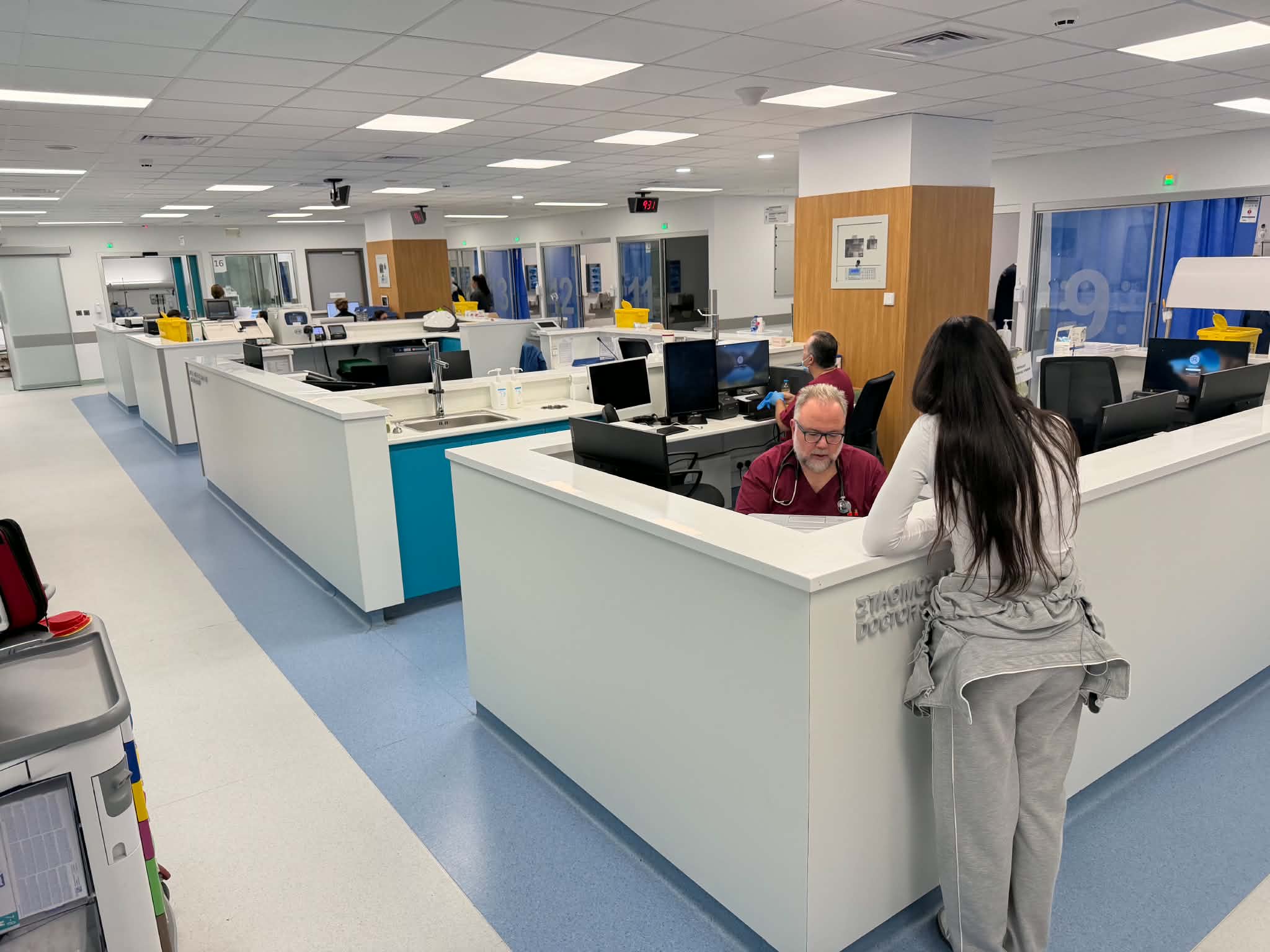
Referring to the upgraded department, he highlighted two improvements in particular: a dedicated area where relatives could receive updates on patients, and a rest area for medical staff working under constant pressure.
He said providing suitable working conditions was essential for healthcare professionals who regularly faced difficult decisions under sustained pressure.
“So, we have an obligation to care for their working conditions too and create the appropriate environment, which, at the end of the day, will contribute to further enhancing their performance,” he said.
“Above all, it is important to prove in practice that health and education are our top priorities, sectors we approach as an investment,” he added.
State health services Okypy chairman Marinos Kallis said the upgraded casualty department was an important step forward for the hospital.
Human lives behind A&E visits
He said casualty was a “mirror” for hospital services, where time was of the essence and immediate treatment was “directly linked to life”.
“Behind every incident there is a human being, a family, a whole life that can change in a matter of minutes […] Immediate assessment, proper prioritisation of incidents and fast decisions are not just procedures, but essential preconditions for the protection of human life,” he explained.
He said the department could not operate in isolation but was the “dynamic core of a network of services that cooperate, communicate and respond in a coordinated manner”.
The aim, Kallis said, was for “every person that visits the hospital in a time of need to feel safe and cared for”.
A&E director Savvas Savva said the department was now state-of-the art, and will help medical professionals provide the best possible treatment to those who need it.
He said many obstacles had been overcome before the upgraded department was delivered, with the staff working in difficult conditions to care for patients.
He said the department offered a more comfortable waiting room, upgraded registration procedures, private examination booths and separate rooms, which facilitated protecting personal data and offered a better environment for both staff and patients.
A negative pressure chamber has been created for patients with highly contagious diseases, as well as an area for agitated or aggressive patients.
Other departments have also been improved.
The president listed the expansion of the Nicosia general hospital’s fourth floor with the neurological clinic and the stroke unit. The next step, he said, was an infectious disease unit.
At Makarios hospital, an extensive upgrade programme is under way, including a new paediatric emergency department and renovations to the gynaecology and paediatric surgery clinics, as well as the children’s wards.
An additional floor is being built to house the thalassaemia centre and a new neonatal intensive care unit, while plans are also being developed for a new paediatric oncology clinic, with what Christodoulides described as “a significant contribution from the private sector.”
At Limassol general hospital, the haemodialysis centre has been expanded and a new intensive care unit is being developed. Plans also include an infectious diseases and day care unit, as well as upgrades to the accident and emergency department.
The president said work on the radiology department at Larnaca general hospital was underway, while improvement works at Paphos general hospital were nearing completion.
At the Paphos hospital, a floor is also being prepared to accommodate oncology services and treatment for thalassaemia patients.
Other planned projects include a new €17 million hospital in Polis Chrysochous, the second phase of mental health facility upgrades, the renovation of Troodos hospital and energy efficiency and building improvements at Famagusta general hospital.

Click here to change your cookie preferences