
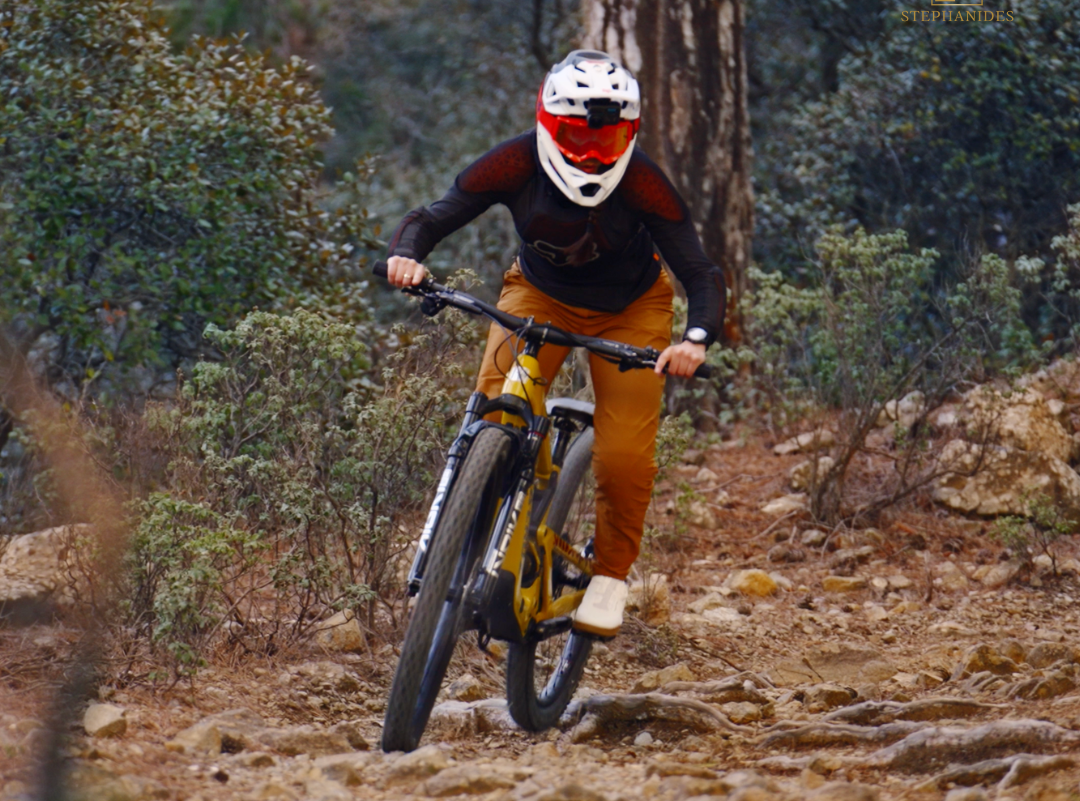
New documentary follows Cypriot downhill champion from training at home to an icy French race, while promoting resilience, women’s participation in sport and bone marrow donor registration
For Savvina Koulle, downhill mountain biking is not just about going fast. It is a way to face fear, push boundaries and discover how to react when situations do not go as planned.
Her experience is the focus of Everybody Falls: The Road to the Summit, a documentary that tracks the Cypriot champion from her training sessions at home to the rough trails in the Dolomites and the cold descent of the gruelling Mountain of Hell in France.
A race against the elements
The Mountain of Hell in Les Deux Alpes, France, is a completely different beast compared to riding in the mountains of Cyprus. The legendary race is famous for its frantic, high-speed descent down a massive glacier, where navigating ice, blinding speed and crowded packs of riders requires absolute focus.
Koulle took on this massive challenge in the women’s e-bike category, winning the race in 2025 and incredibly repeating the performance this year, the first woman from Cyprus or Greece to have made this achievement.
While having a motor might make people think an electric mountain bike is the easy way out, it doesn’t take away from the immense skill and control needed to survive the course.
“People often hear ‘e-bike’ and assume the race is a breeze,” Koulle says. “But you still have to wrestle the bike, nail your lines, and react in a split second.”
In fact, the heavy frame of an electric bike demands physical strength just to keep it steady.
Toss in an icy, slick surface, and the difficulty spikes.
Riders have to constantly read the changing terrain, anticipate what the competitors around them are doing, and adapt on the fly.
“You have to stay completely locked in because things can go sideways super fast,” Koulle adds.
Coming from Cyprus meant adjusting to a frozen environment that felt worlds away from her usual training grounds.
While solid preparation was key, no amount of training can eliminate the risks or guarantee a perfect run.
To anyone watching the race on a screen, the descent looks like a thrilling, chaotic display of pure speed and adrenaline.
But for the rider in the middle of it, every single second is a high-stakes decision.
The documentary, directed by Andreas Kolokotronis, aims to capture exactly that the massive gap between the wild spectacle the crowd sees and the intense mental focus required just to cross the finish line.
The film shows the physical and emotional challenges that come with the sport’s striking visuals. It also conveys a message that resonates beyond just the competition; everyone encounters difficulties, but the important thing is how to deal with them.
The film was developed as a social awareness campaign in collaboration with the Karaiskakio Foundation, aiming to promote resilience while encouraging people to register as bone marrow donors. All net proceeds from ticket sales will be donated to the foundation.
Beyond the speed
One of the main difficulties in creating the documentary was to depict what downhill mountain biking actually feels like, instead of just filming the speed and the trails.
A camera can record a rider going down a mountain, but it cannot easily express the pressure of selecting a line, the fatigue from a tough ride or the need to make decisions in a matter of seconds.
“You can see the speed and the steep trails on camera, but it is more challenging to show the pressure, the fear and how exhausted you feel while still needing to make quick decisions,” Koulle says.
The film documents her preparation in Cyprus, her journey to Europe by ferry with her bike and equipment in a van, and her training in the Dolomites prior to the race.
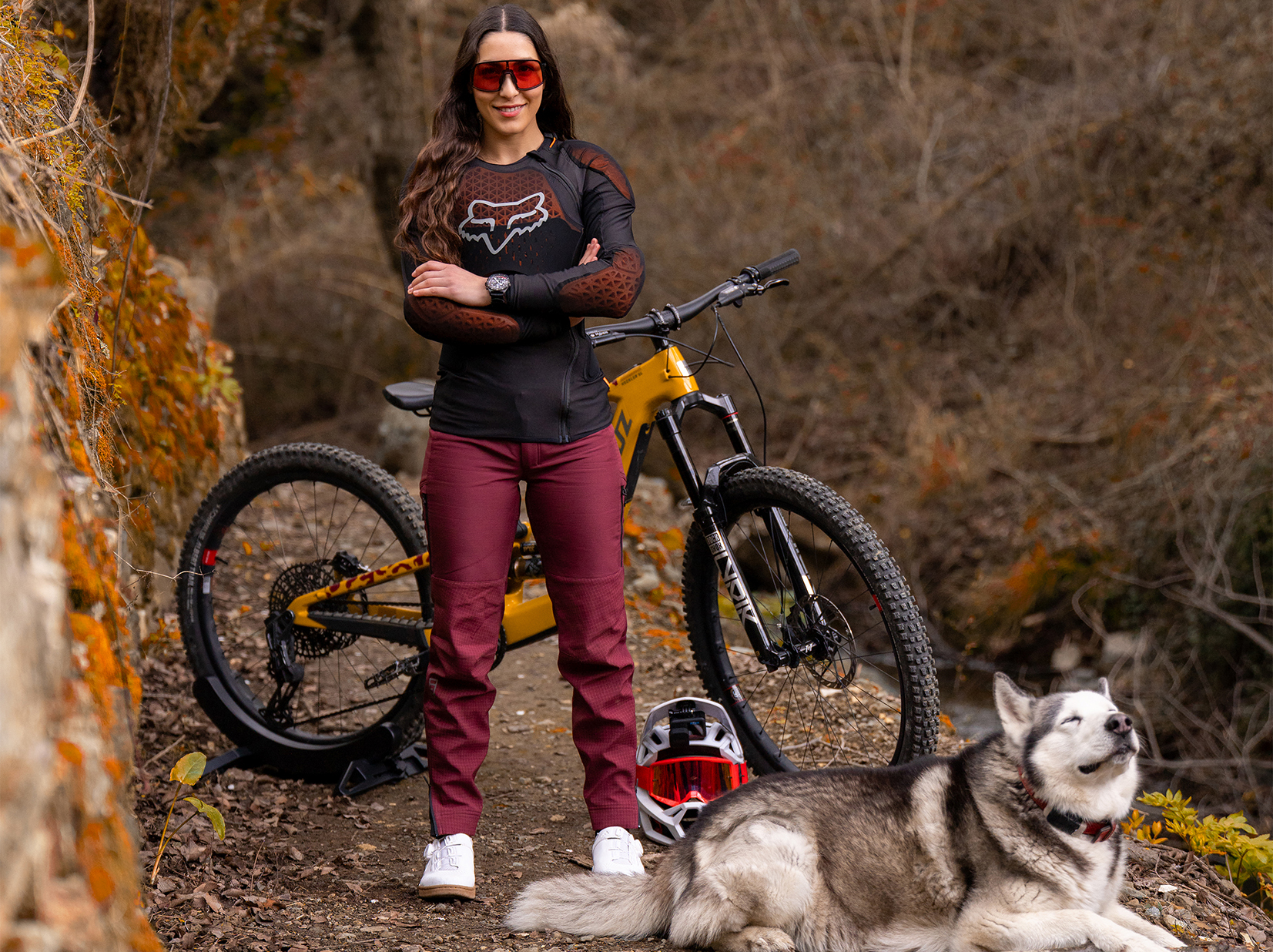
The journey needed careful planning and exposed her to terrain and conditions that were very different from what she was used to at home, but proved ideal as a training ground for the race.
Family, friends and fellow riders also contribute their experiences.
Their stories reveal the support systems and sacrifices that are part of a race, providing viewers with a more personal understanding of what it takes to engage in the sport.
Koulle aimed for the film to reach individuals who may never have ridden a mountain bike. The technical aspects of downhill racing might be unknown to them, but the emotions tied to her journey are relatable.
“I wanted someone who has never ridden a mountain bike to find something they could connect with,” she explains.
The fear, uncertainty and determination of mountain bike racing are feelings that many feel in perhaps less exhilarating situations.
By looking beyond the race itself, the documentary seeks to illustrate how the challenges encountered on a mountain can resonate with the difficulties people face in their daily lives.
Racing on ice
Koulle has carved out a unique space for herself in a sport where women are still few and far between in Cyprus. Downhill mountain biking isn’t just about adrenaline; it takes serious physical strength, technical skill, sharp focus and the resilience to handle punishing terrain.
Chasing this passion has meant packing her bags and heading abroad to train and compete.
Every trip requires adapting to totally unfamiliar conditions and committing to a discipline that demands constant prep work.
But her impact goes far beyond the racetrack. As a content creator, Koulle shares her mountain biking and outdoor adventures to inspire others to get outside, stay active, and tackle things that might feel intimidating at first.
Moving to Platres was a turning point, allowing her to build her daily life right around these goals.
By working independently, she gets the flexibility she needs to balance intense training sessions, professional projects, content creation and essential recovery time.
Juggling all these moving parts isn’t always easy, but her different passions naturally fuel one another.
“Through mountain biking, I have experiences to share. Through my content, I can reach people and bring attention to a cause that matters,” she explains.
That link between sport and the community is what sparked the Eat Her Dust initiative that organises mountain biking days and events, with a special focus on women.
Her goal is to give women a welcoming space to try the sport, build up their skills, and grow their confidence at their own speed.
Koulle wants newcomers to know they don’t need to be totally fearless or highly experienced to get started. Learning is just part of the ride. Sometimes, it’s just about trying something new, enjoying nature, and figuring out exactly what you’re capable of.
Making space for women
Koulle hopes her journey will inspire more young women across Cyprus to give downhill mountain biking a shot, especially since female riders are still such a rare sight on local trails.
“I hope a young woman watches this and feels the spark to try something she’s been terrified to even start,” she shares.
That’s exactly why she runs Eat Her Dust, organising dedicated mountain biking days and community events built by women, for women.
“I just want them to experience the sport, enjoy being out in nature, and build up their confidence entirely at their own speed,” she adds.
For her, real success isn’t about podiums or race times. True impact lies in helping other people believe in what they can do.
“When someone tells me that my story gave them the push to start riding, or helped them find the self-belief to try something new, it truly means the world to me,” Savvina says.
Everybody Falls: The Road to the Summit will be shown at Premier Cinemas at Nicosia Mall on November 17, with two public screenings scheduled for that day

Click here to change your cookie preferences