
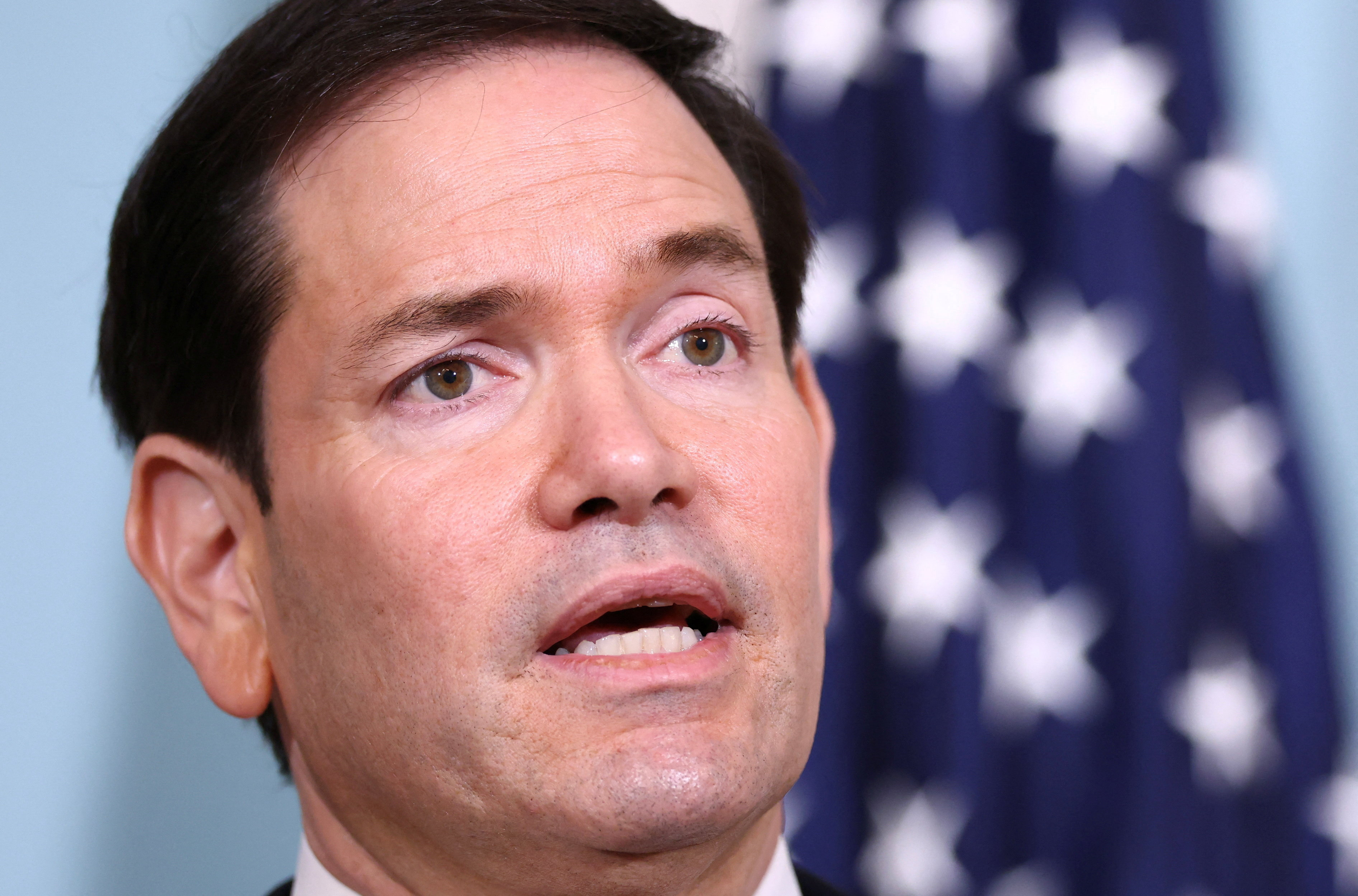
The Hellenic American Leadership Council (HALC) has called on US Secretary of State Marco Rubio to publicly reject the Turkey-Libya maritime memorandum and clarify that it has no legal effect on third countries, including Greece, warning that the disputed agreement also threatens American energy investments and strategic interests in the eastern Mediterranean.
In a letter to Rubio, HALC, whose executive director is Endy Zemenides, criticised the US State Department’s recent response to the issue, arguing that Washington had adopted a weaker position than it did when the memorandum was first signed in 2019.
The intervention follows the ratification of the memorandum by Libya’s House of Representatives on October 20, a development that prompted a response from the European Union and renewed concerns over competing maritime claims and offshore energy exploration in the region.
HALC pointed to the EU’s position on October 21, supported by all 27 member states, which reiterated that the memorandum infringes on the sovereign rights of third countries, is incompatible with the law of the sea and cannot produce legal consequences for other states. Egypt and Israel have also raised objections to the agreement.
By contrast, the US State Department said on October 22 that maritime disputes should be resolved through good-faith negotiations and encouraged bilateral dialogue between Greece and Turkey, both Nato allies.
HALC noted that in 2019, Washington had described the agreement as “counterproductive and provocative”.
The organisation warned that Washington’s reluctance to address the memorandum’s legal implications directly could be interpreted by Ankara and Tripoli as tacit acceptance of their maritime claims.
A central concern raised in the letter is the growing involvement of American energy companies in offshore exploration around Crete.
HALC referred to agreements signed by Chevron in February for hydrocarbon exploration and exploitation in four offshore areas in Greece, with a 70 per cent participating interest, including the South Crete 1 and South Crete 2 blocks.
Libya has formally protested against Greek exploration activities in these areas, while Turkey’s defence ministry has claimed that Chevron’s exploration blocks overlap with maritime areas assigned to Libya under the Turkey-Libya memorandum.
The letter also highlighted ExxonMobil’s role as operator of two offshore blocks west and southwest of Crete, where seismic surveys have been conducted since 2022.
According to HALC, these investments are closely linked to Europe’s efforts to reduce its dependence on Russian natural gas and to broader US energy interests in the region.
The organisation argued that unresolved maritime disputes create uncertainty for American companies considering substantial investments in deepwater exploration.
It also pointed to the State Department’s own acknowledgement that resolving maritime disputes would facilitate commercial investment and exploration, arguing that Washington’s current position fails to provide the legal clarity needed by investors.
Beyond energy, HALC raised concerns about the potential security implications of the disputed maritime claims, particularly around Crete, which hosts the US naval facility at Souda Bay.
The installation is among the most strategically important American and Nato military facilities in the eastern Mediterranean.
HALC argued that attempts to challenge maritime jurisdiction around Crete could contribute to instability in the security environment surrounding the base and potentially affect US defence interests.




Click here to change your cookie preferences