
By Dina-Perla Portnaar
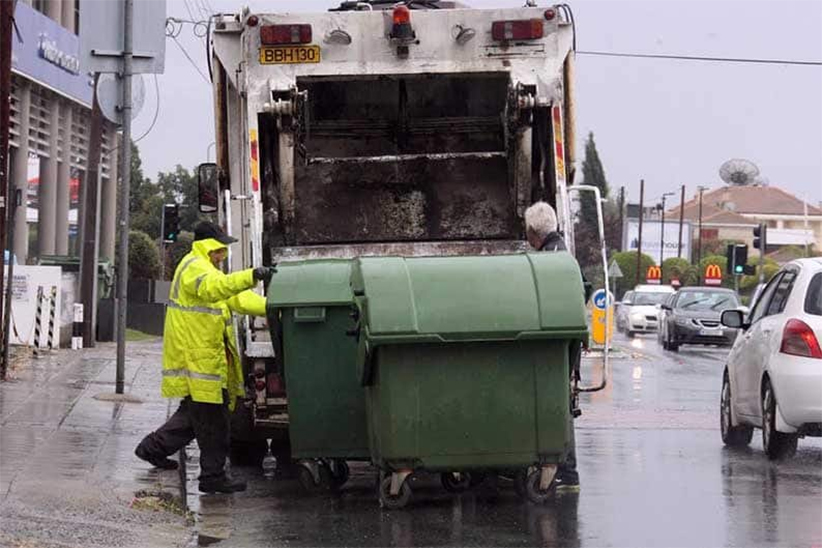
Late in the evening, even past midnight, Paphos picks up the rubbish and for a few enchanted hours, civilisation smells like it has its act together again. Rubbish collection in Cyprus is a fascinating thought through, not merely because the cooler air is kinder to workers and machines, but because night-time collection is a small rebellion against the tyranny of the visible. The city removes the evidence of its appetites while the city rests. In the morning, the inhabitants may mistake cleanliness for virtue.
There’s also a more practical intelligence to how Cyprus handles the trash. A rubbish truck is an enormous moving punctuation mark. It stops, groans, reverses and asks an entire street to wait. In daylight, it could interrupt the working city. At night, it negotiates with the city after everyone has largely clocked off.
The collection still makes noise. The evening or night isn’t a magical soundproofing system. But the labour is moved out of the hours when people are rushing, or pretending not to notice. The truck becomes less of an obstacle.
Green bins and neighbourhood politics
My contribution to this civic metabolism is modest. I produce roughly one small shopping bag of rubbish every two weeks. But the municipal taxes in Paphos aren’t aligned with my minimalistic lifestyle.
Only when my possessions arrived from the Netherlands did I have three moving boxes. My neighbour across the street began a speech. I understood none of it. But instincts told me that he wanted to point out that that green bin was his territory. There are green containers on both sides of the street. The other one was full.
I obeyed, with the agreeable smile of someone who has understood the imperative but not the explanation. Only later did I learn that the green bins are institutions, local controversies, and a form of political philosophy with lids. I had wanted to reassure my neighbour that I hardly make any rubbish and he shouldn’t worry. But I had no phone with me and my Greek wasn’t yet up to the task. I planned to explain later, but later never came. He also reached his own conclusions of me being very tidy, seeing me sweep regularly. Or that I run an extremely small cardboard empire (pun intended).
There’s much more dust here than in the Netherlands, where rain rinses the streets. Some of the sources of that dust simply don’t exist in Amsterdam. My neighbours see me removing dust from the pavement, which is less a chore than an ongoing negotiation with geology. A character-building exercise and a great workout.
Beyond the bins
Paphos is trying as hard as I am. It has added rubbish trucks, containers, and equipment. Fourteen cleaning carts, donated by a Cypriot of Chinese background, reportedly cost about €1,800 each. Yeroskipou has seen a new modern truck for separated collection. On one beach-cleaning outing, volunteers collected around 18kg of rubbish in 20 minutes, including more than 2,000 cigarette butts.
There are stranger footnotes to the rubbish saga. A trash truck left the road near Achelia after its brakes failed, lightly injuring three people. A giant squid washed ashore by the Paphos lighthouse, while a seal later turned up near Kato Paphos harbour. Meanwhile, residents near Kissonerga have complained about dumping at a Green Point, with rubbish attracting pests and creating fire concerns. The same goes for other places. Volunteers, including many foreigners, help clean up. The waste processing challenge has been described in parliament as a “ticking time bomb”.
So, the green bin is both a symbol and a confession. Cyprus wants to improve. It wants the comforting belief that when rubbish leaves our sight, it has entered someone else’s philosophy. But the late evening/midnight truck teaches a better lesson! A city isn’t clean because it hides its waste, but because enough people care where it goes. In Cyprus, even the rubbish has a nightlife, and we are all, one way or another, responsible for the morning after.





Click here to change your cookie preferences