
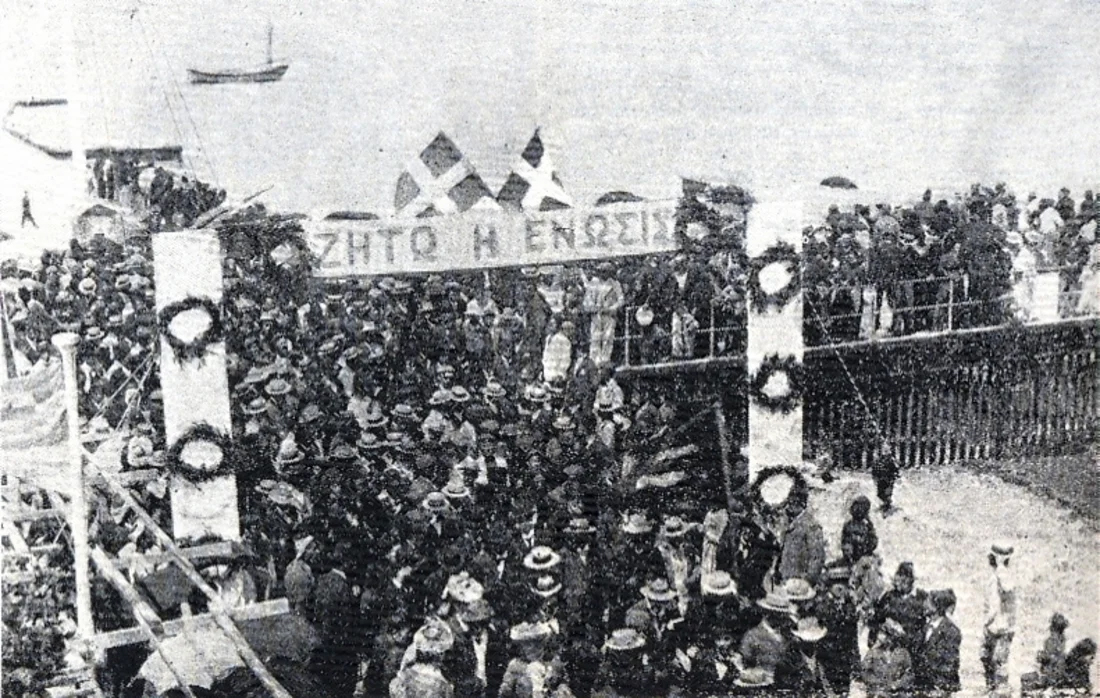
The October 1931 uprising was driven by economic hardship and political frustration as well as the campaign for union with Greece
Ninety-five years ago in October 1931, Britain deployed some 150 troops to Cyprus from Cairo and sent warships to Limassol and Paphos after a crowd burned down government house in Nicosia.
The colonial authorities subsequently dismantled the island’s elected bodies and ruled by authoritarian decree until the Second World War.
The uprising, known in Greek as ‘Oktovriana’, began on October 21 and was over by early November, leaving ten exiled for life and 2,606 convicted for sedition.
Although sometimes presented as a mostly church-led, political uprising, historian Ersi Demetriadou told the Cyprus Mail that “it is a fallacy to suggest the uprising was simply a consequence of the church and the elites,” arguing that 1931 “should be seen as an expression of those frustrations” the island faced at the time.
Demetriadou stressed the economic pressure behind that dissatisfaction: the Wall Street Crash in 1928 raised taxes on a population that mostly lived at subsistence level, and Cyprus was also still paying London an annual tribute of about £92,800, a legacy of the Ottoman era.
A mass exodus of Cypriots abroad as unemployment rose, together with the colonial tax burden, “weighed heavily on the lower agrarian classes”, she said.
Petros Papapolyviou, associate professor of contemporary Cypriot history at the University of Cyprus, said the uprising had both economic and political roots, driven by “the broader global economic crisis” and by fiscal policies that placed “an increasingly unbearable burden on the local population”.
A protest turns into a revolt
Some 5,000 people, mostly students and city notables, gathered outside Phaneromeni church on the first day chanting for enosis, after the remaining Greek Cypriot members of the legislative council resigned at the Nicosia commercial club.
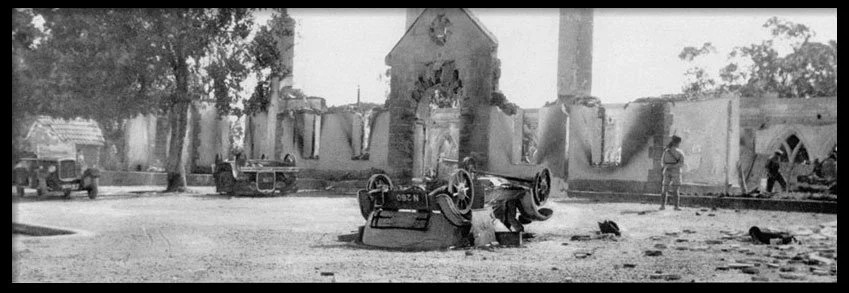
Marchers picked up sticks from a government timber yard on the way to government house, and a force of mounted and baton police failed to hold them at the gates.
Police commissioner colonel Gallagher read the Riot Act in translation, but the crowd held its ground, burning planks were thrown through the broken windows and police cars were set ablaze.
At 10.35pm Gallagher ordered 12 officers to fire a single round each, with instructions to aim at legs, and Onoufrios Clerides, aged 15, was killed.
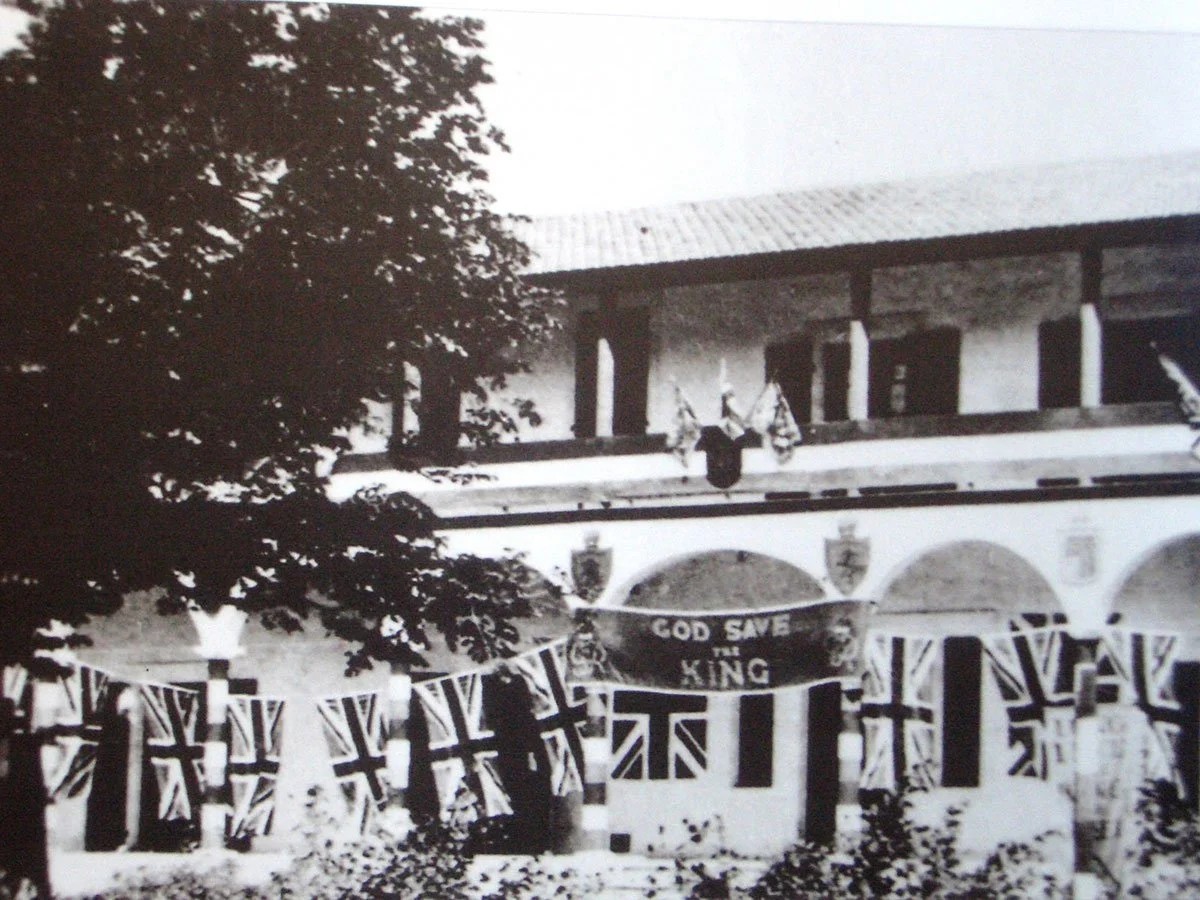
Within minutes of the grounds being cleared flames took the whole building, and protests spread to Famagusta, Kyrenia and Pissouri, where Union Jacks were pulled down and often replaced with Greek flags.
Most accounts record 17 protesters killed, among them Maria Zodiati, 19 and pregnant, who died at Kato Zodia on October 26, and Ioannis Salloumis, 71, who died at Mandria after being attacked by a British soldier; Loizos Loizides, 24, died under torture in Kyrenia.
Troops, arrests and collective punishment
Reinforcements arrived within days, as the Royal Navy cruisers, the Shropshire and London, anchored at Limassol, a destroyer docked in Paphos, and by October 23 four warships carrying soldiers had reached the island, with the first troops requested from Egypt, then nominally independent but under British military occupation.
British authorities arrested more than 400 people, tried 3,359 and convicted 2,606, and a special law fined residents to pay for the damage, a measure widely considered as collective punishment.
The Shropshire carried Bishop Nikodimos of Kition into exile, and the Bishop of Kyrenia, Makarios Myrianthous, was arrested on October 26 and spent years in Athens.
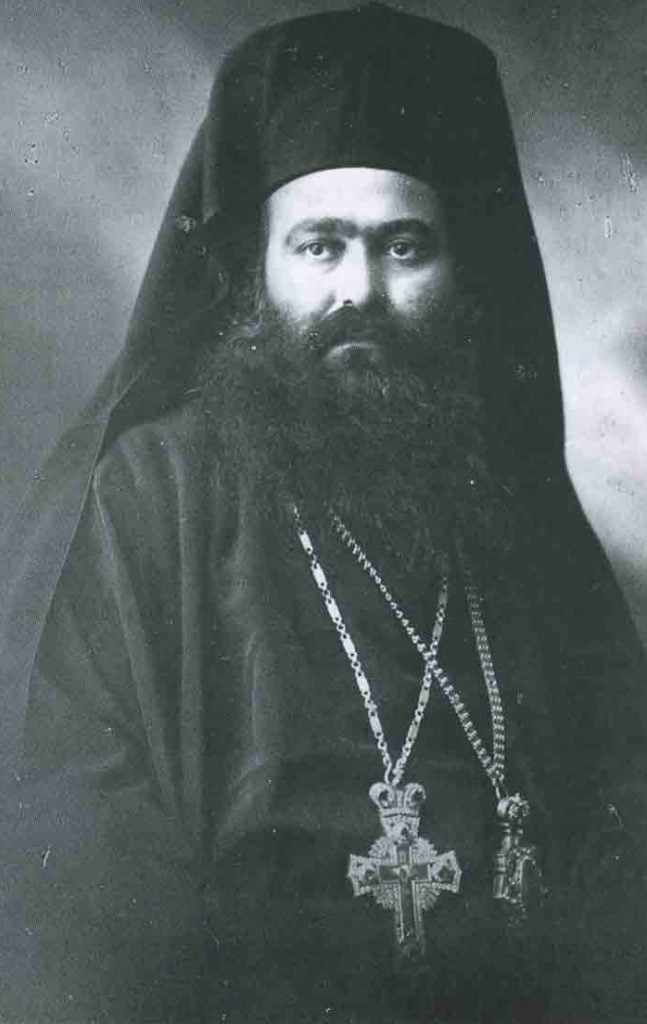
Demetriadou said the harsh treatment of church figures “played poorly” with the public and “further emboldened” Cypriots in the view that British rule “would not prove as liberating as previously foreseen”.
The Greek consul general in Nicosia, Alexis Kyrou, was accused of instigating the revolt after working behind the scenes to build a united opposition front against instructions from Athens, and he was dismissed, while Governor Ronald Storrs was repositioned to Northern Rhodesia.
Papapolyviou said Kyrou was not directly involved in the events themselves, but that his activities were “one of the principal factors” intensifying the political struggle between 1930 and 1931.
The autocratic system that followed became known as Palmerocracy, named after Storrs’ replacement Governor Richmond Palmer.
In the wake of the troubles, the legislative council and municipal elections were abolished, the governor took over the appointment of mukhtars and district judges, and promoting enosis, flying the Greek flag and gathering in groups of more than five were banned, while censorship fell hardest on left-wing newspapers.
The measures were aimed at the church and fledgling communist organisations, but with parties and elected office removed it was the church that remained the one institution able to speak publicly for enosis.
Papapolyviou said the policy “ultimately proved misguided” and that Palmerocracy “rendered British rule deeply unpopular among a substantial section of the population”.
After its demise, he said, the forces that had resisted most strongly, “the Ethnarch and the Left”, came to dominate the domestic political scene.
Storrs and the failure of British goodwill
Storrs was an unlikely figure to preside over the collapse of British goodwill, a classically trained satrap who had served in Egypt under Kitchener and alongside TE Lawrence in Arabia before arriving from the governorship of Jerusalem.
He began as an avid philhellene and wrote in his memoirs that “The Greekness of the Cypriots is in my opinion indisputable”.
Historian David Carter described him as an autocrat who ran the island as a personal fiefdom, whose library and art collection burned with old government house, but who counted as a greater loss his “shattered belief” in Greek Cypriot goodwill.
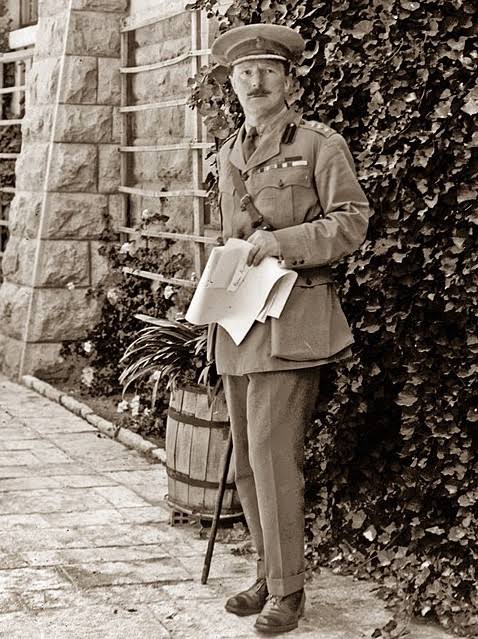
Biographer Nancy Crawshaw said the British had “failed to notice the ground swell of dissatisfaction” stirred by the church, and administrators who spent the summer in the lofty heights of the Troodos mountains had discovered only in mid-September 1931 how much ground the church had gained in their absence.
In September Storrs blocked a legislative council decision to halt tax rises meant to cover a budget deficit, and the Greek Cypriot members resigned and formed the National Radical Union.
On October 17, Bishop Nikodimos resigned his seat, and the next day in Larnaca he told the crowd, “Do not be afraid because England has a fleet”, and that “if necessary, let our blood flow”.
Papapolyviou said the bishop’s resignation and speeches in Larnaca and Limassol “contributed to the escalation of tensions”, while the Bishop of Kyrenia was involved in establishing the National Radical Union of Cyprus.
Division under colonial rule
Storrs also sought to use the island’s Turkish Cypriots, then roughly a fifth of the population, as a counterweight to the Greek Cypriot majority, since the community did not join the enosis campaign.
Under the constitution of 1925 Greek Cypriots held only nine of the council’s 21 seats, and Demetriadou said the council’s “disproportionate favouring” of Turkish Cypriots caused “great frustration” among them.
Turkish Cypriot member Neyati Bey voted against the tax measure, which meant it failed in the council, and Storrs overrode the result by decree.
On the night of October 21, police inspector Faiz, a Turkish Cypriot, held government house with some 40 policemen, and when the building caught fire, he led Storrs and a senior official through a tunnel to a dry riverbed, where they found a car. Faiz was awarded the King’s Police Medal.
Britain’s reliance on Turkish Cypriots in the police grew in the years that followed, and when Eoka launched its armed campaign on April 1, 1955, the government expanded the force with auxiliary police drawn largely from that community which gave rise to the “divide and rule” critique.
Enosis and the limits of British promises
Athens offered no assistance at the time of the riots, with Prime Minister Eleftherios Venizelos insisting that there was “no Cyprus issue between Greece and England” and banning Cypriots living in Greece from travelling to the island.
The question of enosis had hung over British rule from its first day, for when Sir Garnet Wolseley landed in 1878, a deputation told him it trusted Britain would help Cyprus “as it did the Ionian Islands, to be united with Mother Greece”, a reference to the cession of those islands in 1864.
Winston Churchill, then colonial under-secretary, said during a visit in 1907 that it was natural for Greek Cypriots to regard union as “an ideal ardently to be desired”.
Britain then treated the island as a bargaining chip, offering it to Greece in 1912 in exchange for the port of Argostoli and again in 1915 in return for entry into the First World War, which Athens declined.
It annexed Cyprus in 1914, won recognition of its claim at Lausanne in 1923, where Greek envoys did not raise the matter, and made it a crown colony in 1925.
When the colonial under-secretary Sir Drummond Stills visited Famagusta in 1930 and the mayor asked for the island’s return to Greece, Stills replied that Greek Cypriots could keep their culture and traditions as “a constituent part of the British Empire”.
After the Second World War, in which about 30,000 Cypriots served in British forces, Greek Cypriots expected self-determination to be reopened.
Britain offered constitutional reforms that did not include it, and the church rejected them.
In January 1950, under Archbishop Makarios II, the same Kyrenian bishop the British had exiled in 1931, the church held its own plebiscite, in which about 96 per cent of those who took part backed union with Greece. He died in June 1950 and his more famous namesake, Archbishop Makarios III, then took the helm.
Greece took the issue to the United Nations in 1954, but the assembly declined to discuss it, and that July, colonial office minister Henry Hopkinson told the House of Commons that certain territories “can never expect to be fully independent”.
Britain had by then moved its Middle East headquarters to Cyprus from Egypt, which raised the strategic value of the island following the loss of its empire east of Aden.
From 1931 to the struggle of the 1950s
Demetriadou rejects a straight narrative from 1931 to what followed, remarking that “the notion that the armed resistance in the 50s was a direct result of ‘31 does not take into account the full context”.
“Cypriots by then had studied and worked abroad, fought alongside the Allies, exchanged ideals with other colonies under occupation and been trained by a professional army,” she explained, adding that the campaign of armed resistance “occurred under an entirely different context of history”.
Papapolyviou said some leaders of the 1931 uprising, such as Savvas Loizides, who was exiled afterwards, were among the leading figures in establishing Eoka between 1950 and 1955. He said the principal link between 1931 and 1955 “lies at the symbolic level”.
The uprising was a “profound lesson”, he said, that “the next uprising would have to be organised and, this time, armed.”



Click here to change your cookie preferences