
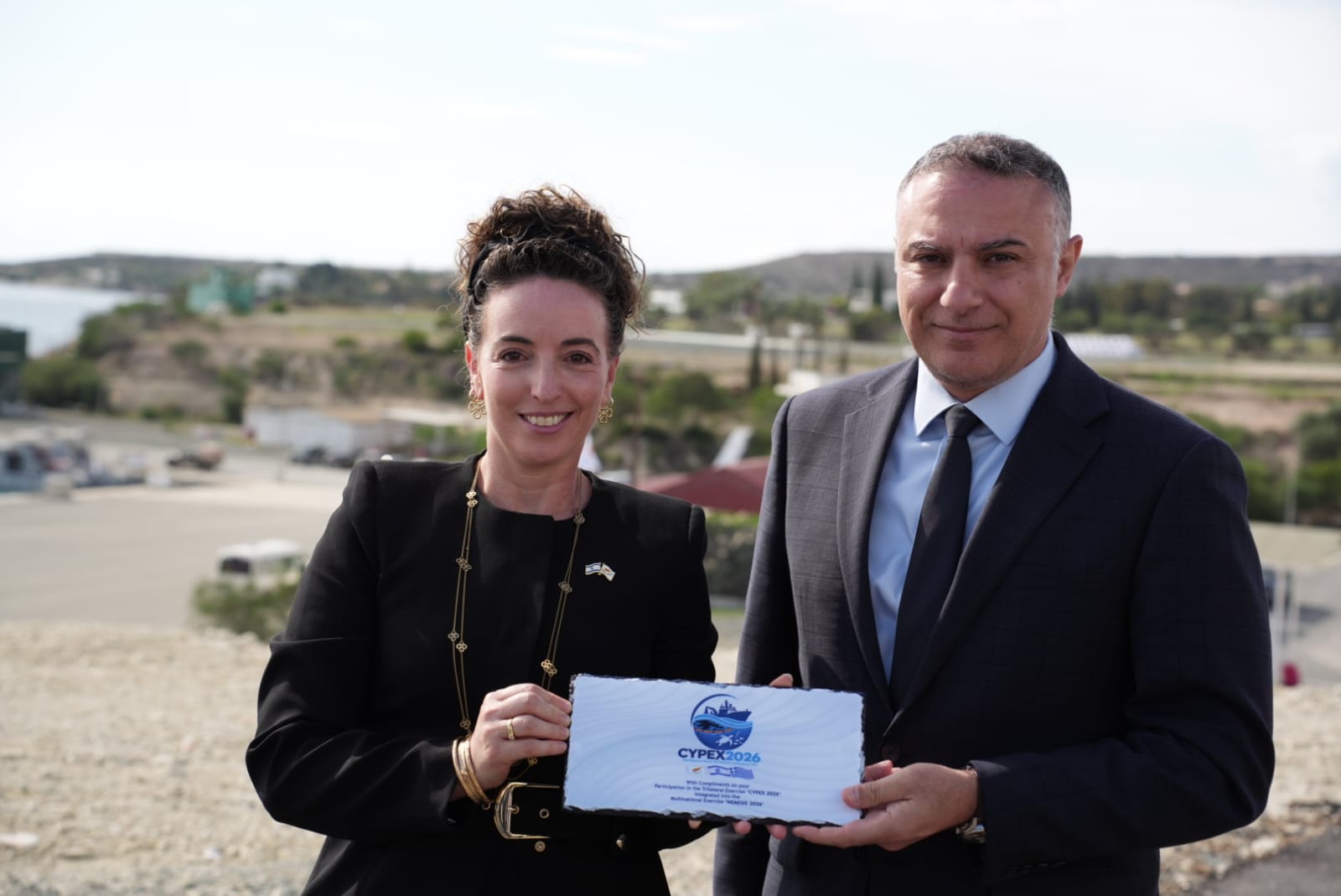
Cyprus and Israel are moving towards a bilateral agreement on environmental cooperation, covering climate change, water management and marine pollution, following talks between their environment ministers on Wednesday.
Agriculture, Rural Development and Environment Minister Christos Senekis met Israeli Environmental Protection Minister Idit Silman on the sidelines of the multinational Nemesis 2026 exercise, in the presence of Israeli Ambassador to Cyprus Shuli Davidovich.
The two sides discussed advancing a bilateral memorandum of understanding on environmental cooperation, with Cyprus undertaking to prepare the initial draft.
The proposed agreement would complement the existing trilateral cooperation framework, providing an additional basis for closer collaboration on shared environmental challenges.
Both ministers expressed satisfaction with existing cooperation and acknowledged the growing pressures facing the eastern Mediterranean as a result of climate change.
Water scarcity, drought, heatwaves, flooding and forest fires featured prominently in their discussions, alongside the need to strengthen the resilience of natural ecosystems and urban areas.
The ministers also explored opportunities for technical cooperation in integrated water resource management, desalination, waste management and energy recovery from waste, biodiversity protection and the management of protected areas.
Particular emphasis was placed on exchanging expertise and best practices to improve adaptation to climate change and develop coordinated responses to common environmental challenges.
Marine environmental protection was another key focus, with both sides stressing the importance of continuing joint exercises and training to prevent and respond to pollution incidents.
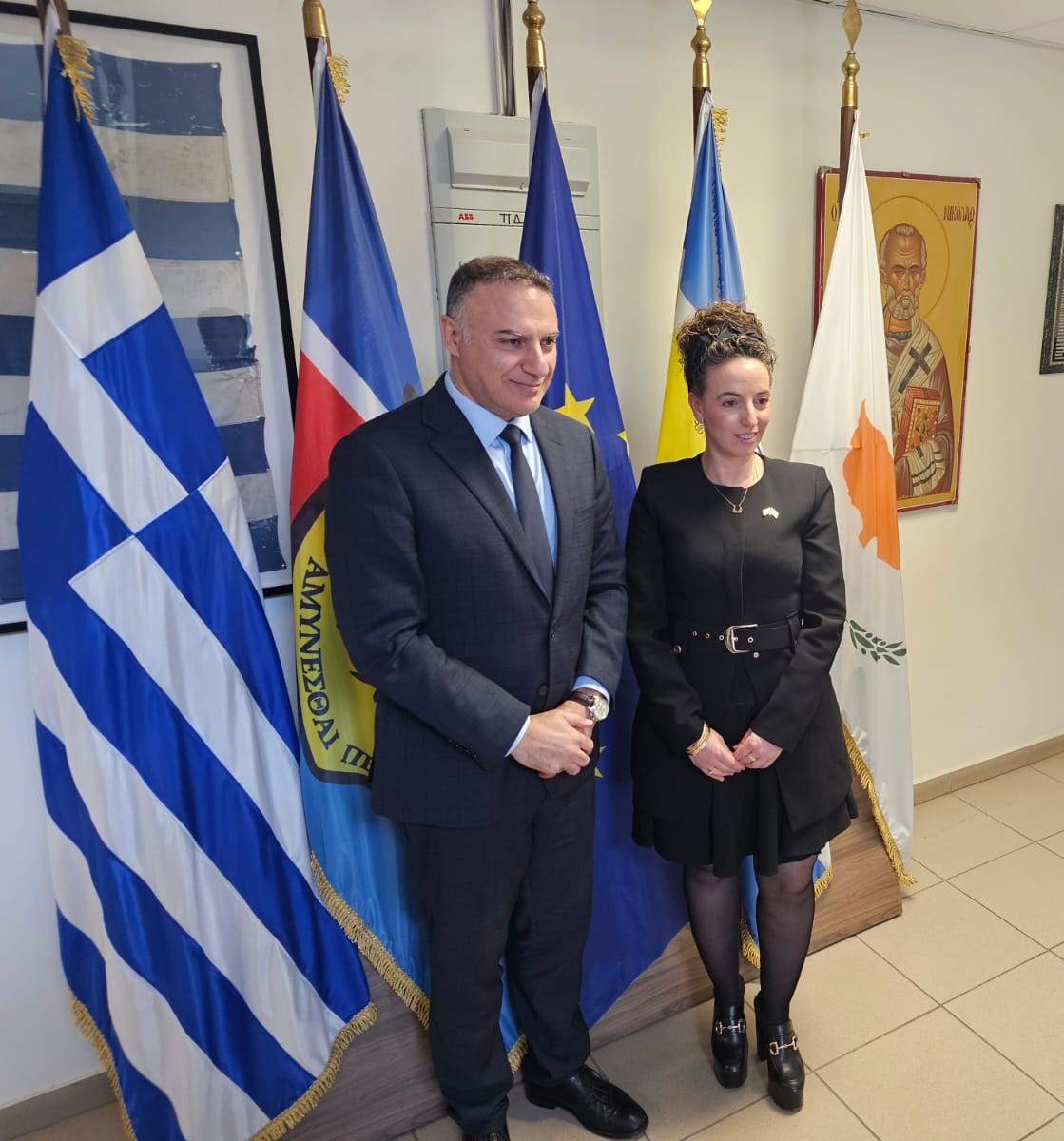
Senekis stressed that environmental threats in the eastern Mediterranean required close international cooperation.
“The risks we face at sea, whether they arise from human activities, malicious acts or natural phenomena, know no borders,” he said.
“Effectively addressing them requires coordination, mutual assistance, operational readiness and, above all, sustained cooperation.”
The minister said Cyprus was systematically investing in strengthening its capacity to respond to marine pollution incidents, including through the acquisition of specialised vessels designed to tackle oil spills.
“We are strengthening our equipment with specialised vessels to respond to marine oil pollution incidents, while continuously upgrading our operational readiness,” he said.
However, he emphasised that Cyprus’ ambitions extended beyond protecting its own waters.
“We want Cyprus to be a reliable partner, ready to assist neighbouring countries whenever and wherever the need arises,” he said.
“For us, good neighbourly relations acquire real value when they are translated into practical solidarity.”
The minister said the exercise demonstrated how regional environmental commitments could be translated into practical cooperation.
“Our shared commitments acquire real value when they are translated into concrete actions, meaningful cooperation and practical solidarity,” he said.
Both Cyprus and Israel reaffirmed their commitment to deepening environmental cooperation through the exchange of expertise and the development of joint initiatives to address challenges facing the region.
“Today’s success does not mark the end of an effort. It represents another meaningful step towards further strengthening our regional cooperation and building a safer and environmentally protected eastern Mediterranean,” Senekis said.


Click here to change your cookie preferences