

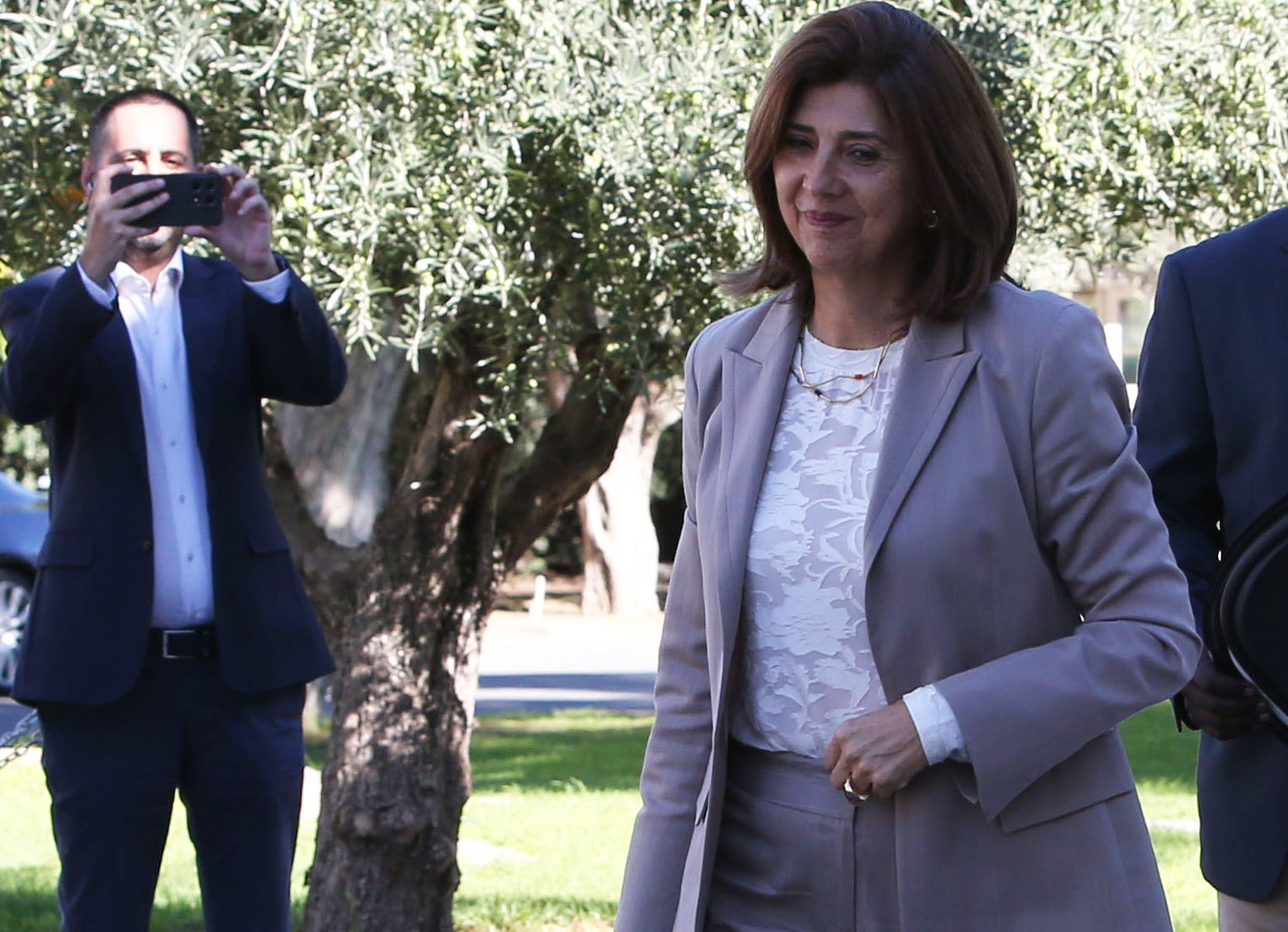
As we have written in the past with regard to the Cyprus problem, the process has become an end in itself. Everyone is happy when there is a so-called peace process in motion that will grind to halt before it reaches anywhere meaningful. This was why everyone was smiling after Monday’s make or break meeting of the two leaders with the UN envoy Maria Angela Holguin.
The process will be kept going for a few more weeks after President Nikos Christodoulides and Tufan Erhuman managed to agree on a confidence-building measure – the opening of two crossing points of very limited usefulness. They needed three-and-a half hours of talks to eventually agree to the bare minimum for keeping the process going. In the end, two instead of the mooted four crossings will be opened and there was no agreement on the second confidence-building measure (CBM) – demining, on which they could not agree on the area that would be demined.
For Christodoulides it was a success that the UN Secretary-General Antonio Guterres will invite the two leaders for meeting now that they have agreed on something. It means the process will be kept alive for at least a few more weeks, but there is no guarantee that Guterres would call the 5+1 meeting when he meets them, given their failure to agree on anything apart from the two crossings and the delegating of some low-importance work on environment and cultural heritage to the technical committees.
There were several meetings of the leaders before Holguin’s arrival, and she met them separately at least twice before Monday’s meeting without being able to report anything resembling real progress. There was Christodoulides, on the one hand, making a big song and dance about his proposals, which he did not bother putting in writing and Erhurman, on the other, demanding Greek Cypriot acceptance of a rotating presidency before anything could be discussed. On Monday, Erhurman submitted a proposal he described as a ‘gamechanger’, which Christodoulides reportedly did not accept. These are the tactical ploys ensuring the process can move at a glacial pace.
So now, the next step will be for the outgoing Secretary-General to find some time in his ultra-busy schedule of his last six weeks in office to meet the two leaders who have both shown very little desire to take the big step that would create the ground for a resumption of talks. Under the circumstances, it is very unlikely he would call the 5+1 meeting that would, supposedly, open the way for a resumption of talks. It seems very likely that the process will end when Guterres meets the leaders in New York because time will have run out. It cannot be kept alive after Guterres is out of the picture at the end of the year.



Click here to change your cookie preferences