
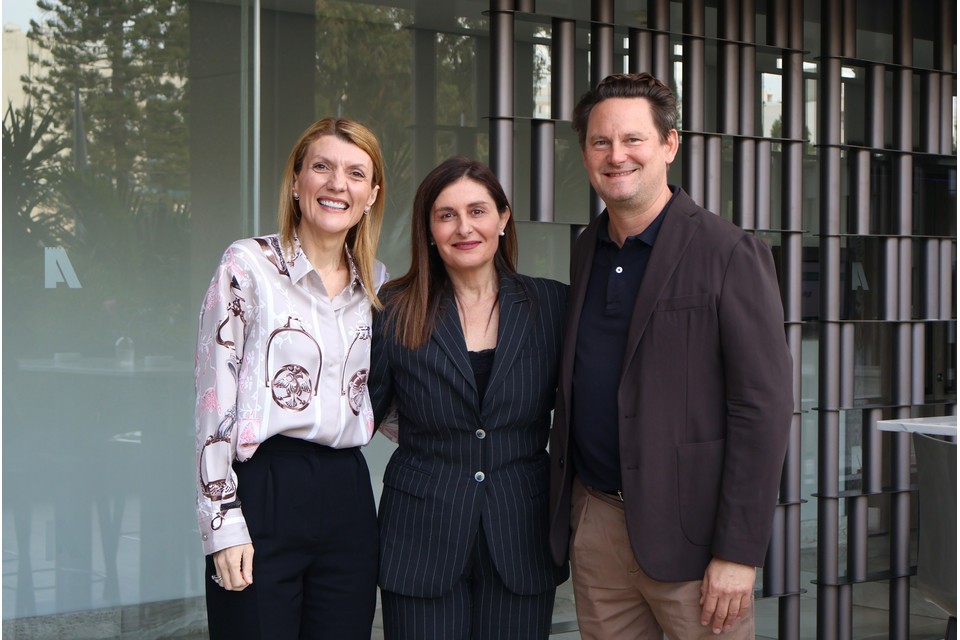
Cyprus wants to become a place where maritime technology is developed, tested and put to work, rather than simply following developments elsewhere, Shipping Deputy Minister Marina Hadjimanolis said this week, as the government moves to attract technology companies, encourage innovation and broaden the island’s shipping industry.
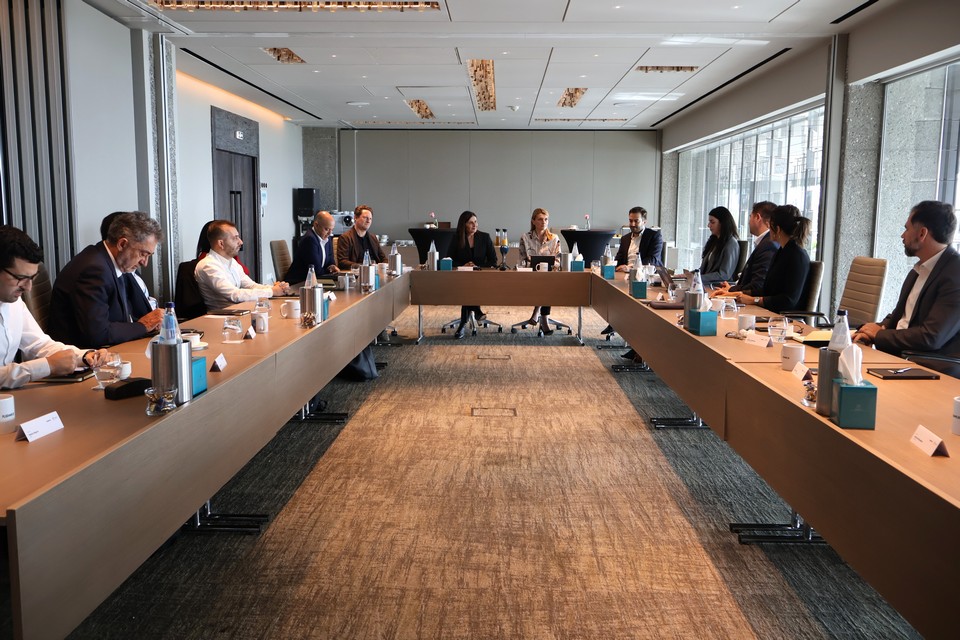
Speaking at the “Is Maritime Technology Delivering? From Business Performance to Life at Sea” event in Limassol, Hadjimanolis outlined plans to strengthen Cyprus’ position as an international maritime centre, with artificial intelligence, digitalisation and innovation playing an increasingly important role.
The event, organised by Tototheo Global and Plug and Play Cyprus, brought together shipowners, operators, technology providers and innovators to examine whether technological advances are delivering tangible benefits to the industry.
For Hadjimanolis, the question is no longer simply what technology can do, but whether it is helping shipping companies operate more efficiently, make better decisions, improve safety and, crucially, make life better for those working at sea.
These considerations, she explained, should guide the next stage of maritime digitalisation, particularly as shipping becomes increasingly dependent on data, automation and artificial intelligence.
“Our ambition is not simply to follow technological developments in shipping. We want Cyprus to provide the right environment for maritime innovation to be developed, tested and applied in response to the real needs of the industry,” she said.
Cyprus, meanwhile, has an advantage in bringing these developments closer to the industry, given its internationally recognised shipping cluster, which brings together shipping companies, ship managers, professional services, technology providers, research institutions and a growing start-up community.
The close relationship between the maritime administration and shipping companies, combined with the island’s academic and research capabilities, offers opportunities for cooperation between policymakers, businesses and technology providers.
Hadjimanolis identified this proximity as one of Cyprus’ greatest advantages, allowing those developing maritime technology to work more closely with the companies that will ultimately use it.
However, she stressed that technological sophistication alone does not necessarily translate into business value.
“Because innovation must ultimately solve a problem,” she explained, adding that a digital platform, AI application or additional stream of data only becomes valuable when it reduces complexity, improves decision-making, strengthens safety, lowers costs or supports more efficient and sustainable operations.

And the government is looking to turn those advantages into new business opportunities.
In particular, the Shipping Deputy Ministry has commissioned a dedicated scientific study to map the full range of maritime-related services currently available in Cyprus, identify gaps and challenges, and recommend measures and incentives to attract new companies and encourage additional business activities.
The study will cover maritime technology, software, digital solutions, research and development, reflecting the government’s intention to expand the shipping cluster beyond its established activities.
The objective is not only to preserve Cyprus’ position as a leading centre for shipping and ship management, but also to attract the specialised expertise, innovation and technological services increasingly required by the international maritime industry.
At the same time, the Deputy Ministry is pressing ahead with the digital transformation of its own services through the Cyprus Shipping 1-stop-shop (CYSh1P) platform.
The initiative is intended to simplify procedures, reduce administrative burdens, improve transparency and provide faster, more efficient services to shipowners, ship managers and the wider maritime community.
Beyond administrative improvements, however, Hadjimanolis stressed that successful innovation must respond to actual business requirements.
Technology companies and start-ups need to understand the operational challenges facing shipping businesses, while shipowners and managers require solutions that are practical, scalable and commercially viable.
Bringing these two sides closer together, she explained, is essential if new technologies are to deliver measurable benefits rather than simply adding another layer of complexity to maritime operations.
The same applies to artificial intelligence, which can support voyage optimisation, predictive maintenance and better operational decisions.
Digital solutions can also reduce administrative workloads and improve communication between ships and shore-based operations, creating opportunities for shipping companies to improve efficiency and make better use of available information.
However, Hadjimanolis warned that greater connectivity also brings new vulnerabilities, particularly as the maritime industry becomes increasingly dependent on interconnected systems.
“Cybersecurity can no longer be treated as an information technology (IT) issue. It is an operational and strategic priority for modern shipping,” she said.
The warning reflects the growing importance of protecting digital infrastructure as maritime operations become more technologically sophisticated and increasingly reliant on data.



Meanwhile, the government’s wider ambitions received another boost on Tuesday, November 10, when the Council of Ministers approved Cyprus’ National Artificial Intelligence Strategy for 2026–2032.
The strategy identifies shipping and maritime transport as one of five strategic sectors of the economy where the application and adoption of artificial intelligence could create significant value for the country.
The emphasis, Hadjimanolis explained, is on applying AI where it can deliver practical benefits, rather than pursuing technology simply because it is available.
For the maritime industry, this means creating conditions in which innovative solutions can be developed, tested and adopted in response to genuine commercial and operational needs.
Nevertheless, the Deputy Minister emphasised that technological progress must not come at the expense of the people working in the industry.
As vessels become more sophisticated and digital systems more complex, seafarers and maritime professionals are expected to develop new skills and adapt to changing working conditions.
This makes investment in education, training and continuous professional development increasingly important, particularly as the sector undergoes both its green and digital transitions.
Human capital, she explained, remains a central priority for the Shipping Deputy Ministry, not least because shipping must continue to appeal to younger generations who have grown up surrounded by digital technology.
Ensuring that seafarers have the skills required to operate advanced vessels and digital systems is therefore just as important as introducing the technology itself.
In this respect, Hadjimanolis also drew attention to the government’s responsibility to create the conditions that allow innovation to develop without prescribing the technological choices of individual businesses.
“We should not prescribe which technologies companies should use,” she said, explaining that the government’s role is to provide a predictable regulatory environment, a modern and responsive maritime administration, investment in skills and opportunities for innovative solutions to be developed and tested.
Industry participation will be equally important, particularly in identifying gaps where technology can make a practical difference.
Cyprus has also continued to support innovation and digitalisation at European level, as part of a wider strategy to strengthen the competitiveness, sustainability and resilience of the EU maritime sector.
Ultimately, Hadjimanolis argued, the success of maritime innovation should be measured by what it delivers to shipping companies, their employees and the industry as a whole.
The real question, she explained, is not simply whether maritime technology is delivering, but what the industry wants it to deliver.
For Cyprus, the answer lies in technology that improves competitiveness, strengthens safety, supports sustainability and makes shipping more resilient.
Above all, Hadjimanolis called for “Technology that reduces complexity rather than adds to it. And technology that supports rather than replaces the human element at the heart of our industry.”
That, she concluded, is the kind of maritime innovation Cyprus wants to support.





Click here to change your cookie preferences