
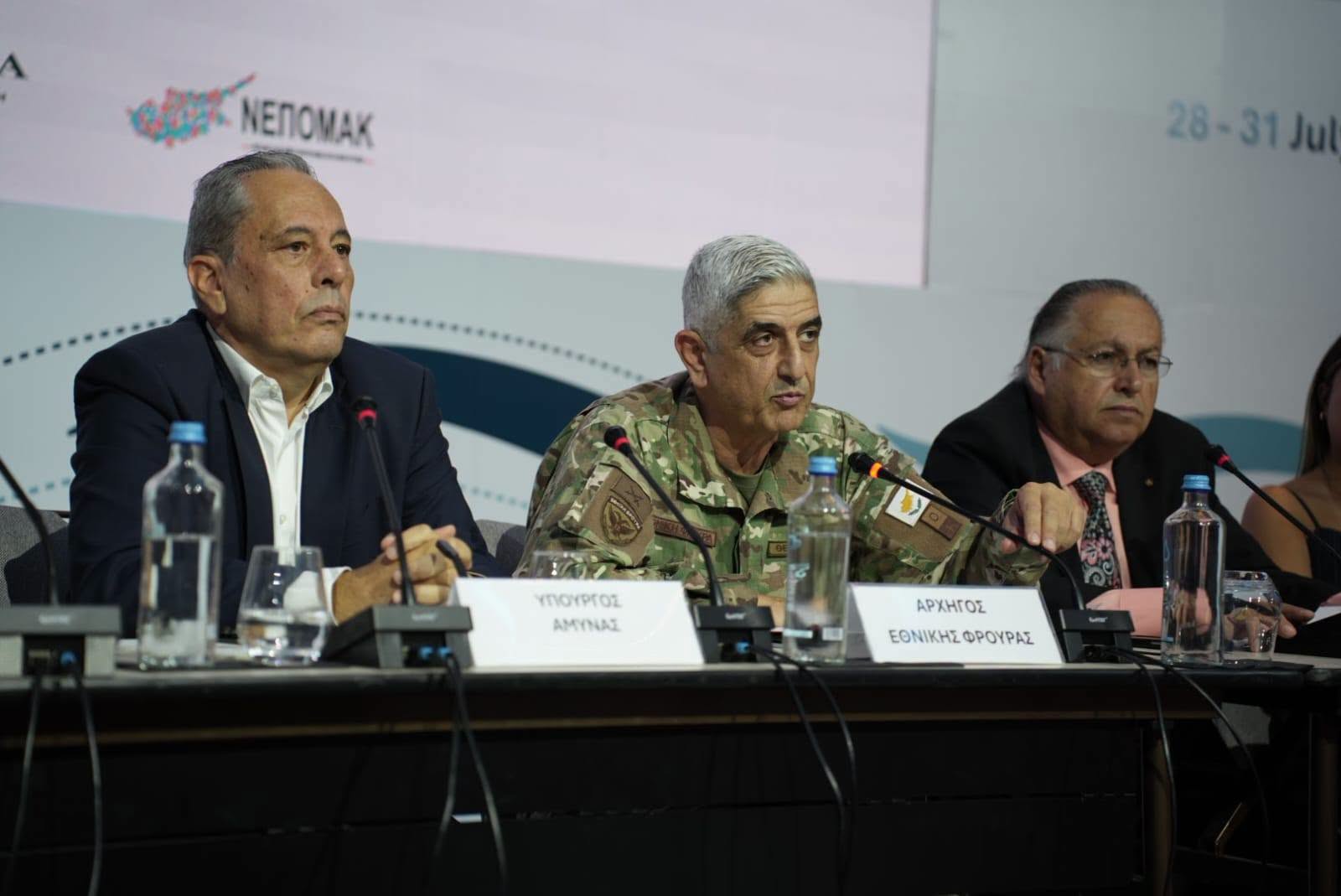
Spending on armaments is set to more than double next year to €430 million, largely through the EU’s Safe defence financing programme.
Defence Minister Vasilis Palmas told the House finance committee on Friday that the ministry’s total budget for 2027 would reach €894.7 million, an increase of €266.6 million compared with this year.
The budget includes contracts financed through Safe, while spending specifically on armaments will rise from €177 million to €430.15 million.
Disy MP Charalambos Petrides said armaments spending had remained at approximately €177 million in each of the previous three budgets.
The ministry’s deputy permanent secretary, Stelios Kountouris, said total defence expenditure, including Safe funding, would account for around 2.2 per cent of GDP in 2027 and 2.11 per cent in 2028.
Armaments spending alone would account for 1.06 per cent of GDP next year, compared with 0.73 per cent in 2026, and approximately 1 per cent in 2028.
Palmas said the government’s commitment was to increase armaments spending to 2 per cent of GDP by 2028.
He noted that Cyprus’ GDP had grown considerably over the years, from around €12 billion to between €34 billion and €38 billion, meaning increases in defence expenditure could appear smaller when expressed as a proportion of GDP.
Asked whether Safe financing should count towards the spending target, Palmas said “it doesn’t matter where the money comes from since it’s ours now”.
He said approximately €250 million to €260 million of the increase could come through Safe, adding that the funds had been approved by the European Commission and must be used by 2030.
Alma leader Odysseas Michaelides criticised the government, saying President Nikos Christodoulides had pledged during his 2023 election campaign to raise armaments spending to at least 2 per cent of GDP.
Michaelides estimated that spending currently stood at around 1.2 per cent of GDP, even with Safe funding.
“This is yet another aspect in which the president falls short,” he said.
Petrides said he and fellow Disy MP Giorgos Karoulas had submitted a bill proposing five-year defence planning and a minimum spending target of 2 per cent of GDP.
Diko MP Chrysis Pantelides, who chaired the committee meeting in place of Christiana Erotokritou, welcomed the increase but said his party wanted further rises to meet the president’s targets.
Direct Democracy MP Yiannis Laouris described the budget as “very low”, citing global conflicts, while Akel MP Valentinos Fakondis called for “specific planning, transparency and strict control” over the additional spending.
Palmas also highlighted the potential benefits of investment in Cyprus’ defence industry.
“The benefit is double,” he said, explaining that such investment would support local companies while providing the ministry with access to technology and equipment.
He said Cypriot firms were already participating in European defence programmes and working directly with the ministry.
The minister set out three priorities, the first being to “bolster the National Guard’s deterrent capacity”, including through the SAFE regulation and bilateral defence cooperation programmes with 20 countries.
The second was improving the armed forces’ resilience to climate change, including a €19 million project funded through EU structural funds to install solar power systems at military camps.
The installations are expected to be completed by the Electricity Authority of Cyprus by the end of 2027.
The third priority was expanding and simplifying the ministry’s online services to make them faster and more accessible to the public.
Turning to personnel, Palmas said additional promotion positions had been created for officers and non-commissioned officers, while 400 contracted personnel had transferred to the professional soldier scheme on November 1.
Allowances for Cypriot students attending military academies in Greece had also been restored to their previous levels, reversing a reduction introduced in 2013.
Body armour for both serving troops and reservists is being bought from Israel under an intergovernmental agreement.
Deputy chief of the National Guard, Lieutenant General Neophytos Pachoulides, said “we are not satisfied” with reservist training, and that two proposals are being prepared for a “tougher core” of reservists, either through volunteering or pay.
Palmas said a programme to improve reservists’ training and conditions would be announced in due course.
Defence committee chairman and Elam MP Evgenios Chamboullas also proposed renaming the ministry the “Ministry of Defence and Liberation”.
A further committee session on armaments is scheduled for November 26.



Click here to change your cookie preferences