
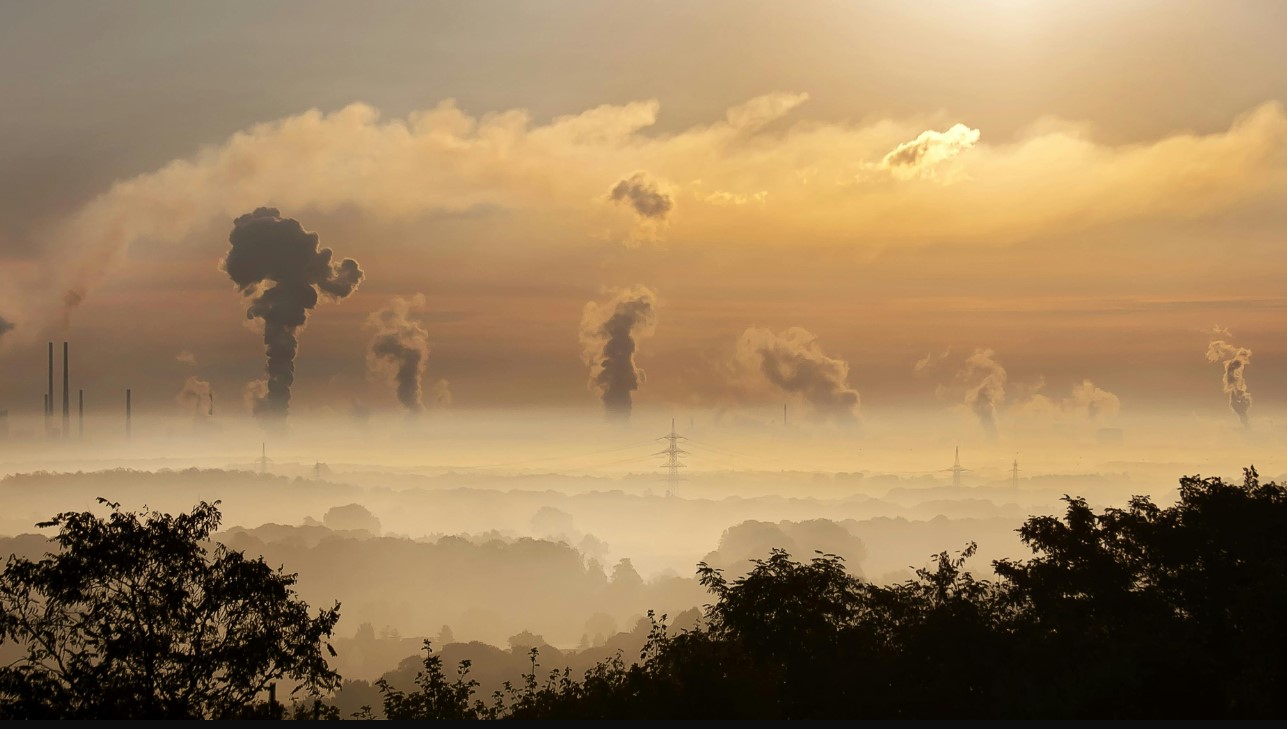
Cyprus faces challenge of decoupling growth from emissions
Cyprus’ greenhouse gas emissions have historically increased alongside economic activity, highlighting the challenge of balancing growth with environmental targets, as new Eurostat figures show EU emissions declining slightly during the second quarter of 2026 despite an expansion in economic output.
Across the European Union, greenhouse gas emissions fell by 0.5 per cent between the first and second quarters of 2026, declining from 837 million tonnes to 833 million tonnes of CO2-equivalent.
The reduction came as the EU economy continued to expand, with GDP increasing by 0.8 per cent over the same period, suggesting that economic growth can be accompanied by lower emissions.
However, the longer-term comparison was less favourable, with emissions increasing by 1.4 per cent year-on-year in the second quarter, while EU GDP grew by 1.5 per cent.
The figures are particularly relevant for Cyprus, where Eurostat’s historical data show that greenhouse gas emissions increased by 2.8 per cent in the second quarter of 2024, before rising by 0.1 per cent in the third quarter and 4.4 per cent in the final quarter of that year.
The upward trend continued into the first quarter of 2025, when emissions increased by 5.3 per cent year-on-year.
For comparison, Greece recorded a 3 per cent annual decline in emissions in the second quarter of 2024, followed by a 4.5 per cent reduction in the third quarter.
However, Greek emissions subsequently increased by 0.5 per cent in the fourth quarter of 2024 and 3.7 per cent in the first quarter of 2025.
The EU-wide reduction in the second quarter of 2026 was driven primarily by lower emissions from electricity, gas, steam and air conditioning supply, which contributed a reduction of 0.44 percentage points.
Households were the second-largest contributor, accounting for a further 0.22 percentage-point reduction, while transportation and storage contributed a smaller decline of 0.01 percentage points.
These improvements were partly offset by higher emissions from other economic activities, mainly services, which added 0.14 percentage points, and manufacturing, which contributed another 0.05 percentage points.
The country breakdown showed that emissions declined in 18 EU member states, increased in eight and remained unchanged in one.
Estonia recorded the largest reduction, at 15.5 per cent, followed by Latvia at 10.6 per cent and Finland at 7.6 per cent.
At the opposite end, Malta recorded the largest increase, at 4.8 per cent, followed by Ireland at 1 per cent and Romania at 0.8 per cent.
Eurostat also found that all eight countries recording higher emissions experienced GDP growth.
Among the 18 countries where emissions declined, 16 nevertheless recorded higher or stable GDP, providing further evidence that economic expansion and emissions reductions can occur simultaneously.
The figures come from Eurostat’s quarterly estimates of greenhouse gas emissions by economic activity, which complement economic indicators such as GDP and employment.




Click here to change your cookie preferences