
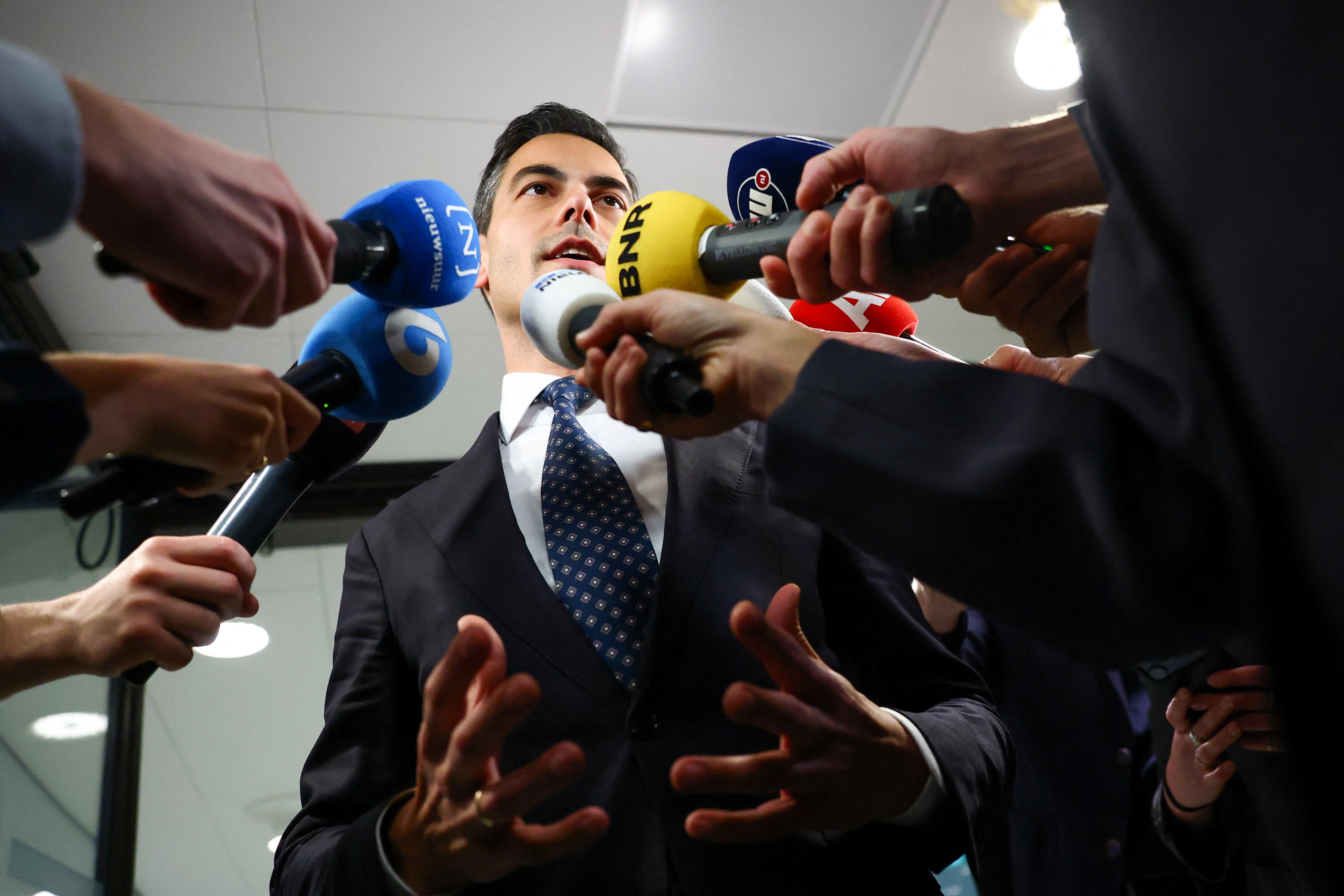
Prime Minister Rob Jetten will meet coalition partners after a bitter dispute over tax increases threatened to bring down his minority government
Dutch Prime Minister Rob Jetten will try to save his minority government from collapse in a meeting with coalition partners on Friday, after a heated debate over wealth taxes exposed deep divisions a day earlier.
Jetten’s three-party coalition threatened to fall apart less than 9 months after its installation, as parties bickered over a deal with the left-wing opposition to support a 2027 tax plan in exchange for a slight increase of wealth taxes.
Coalition divided over wealth tax
The right-wing, pro-business VVD had vehemently opposed this amendment to the original tax plan, while Jetten’s centrist D66 and the Christian Democrats endorsed it.
In its resistance to the proposal, the VVD ultimately voted against its own government’s tax plan, only to see it reach a narrow majority with the support of opposition parties.
VVD leader Ruben Brekelmans said the result of the vote was “disillusioning”, and would force his party to seriously reconsider its position.
A break with the VVD would likely be the end of the minority government led by Jetten, who became in February the youngest prime minister in Dutch history.
After the vote, Jetten said he would do all he could to hold his coalition together and would seek “a new start” in Friday’s meeting with the leaders of the VVD and the Christian Democrats.
Fresh election possible
A government crisis could trigger new elections, which would be the fourth in the Netherlands in the last five years, after two previous governments were also short-lived.
A new vote would not be a given, however, as parties could try to form a new government based on the current seats in the lower house of parliament.
But the options would be limited as that would probably yield another minority government, an option immediately ruled out by the left-wing, opposition leading Pro party on Thursday.
Minority government faces mounting challenges
Jetten’s centrist D66 party was the surprise winner of the last election a year ago on the back of a polished and optimistic campaign, which promised a break from the divisive previous government dominated by nationalist Geert Wilders.
But his optimism was put to the test from the start, as his coalition lacks a majority in both houses of parliament and needs opposition support for all its proposals.
The Netherlands is traditionally led by government coalitions with a majority in parliament.
But securing a majority has become increasingly difficult in a fractured political landscape, as voter preferences change in every cycle and centrist parties have steadily lost support.




Click here to change your cookie preferences