
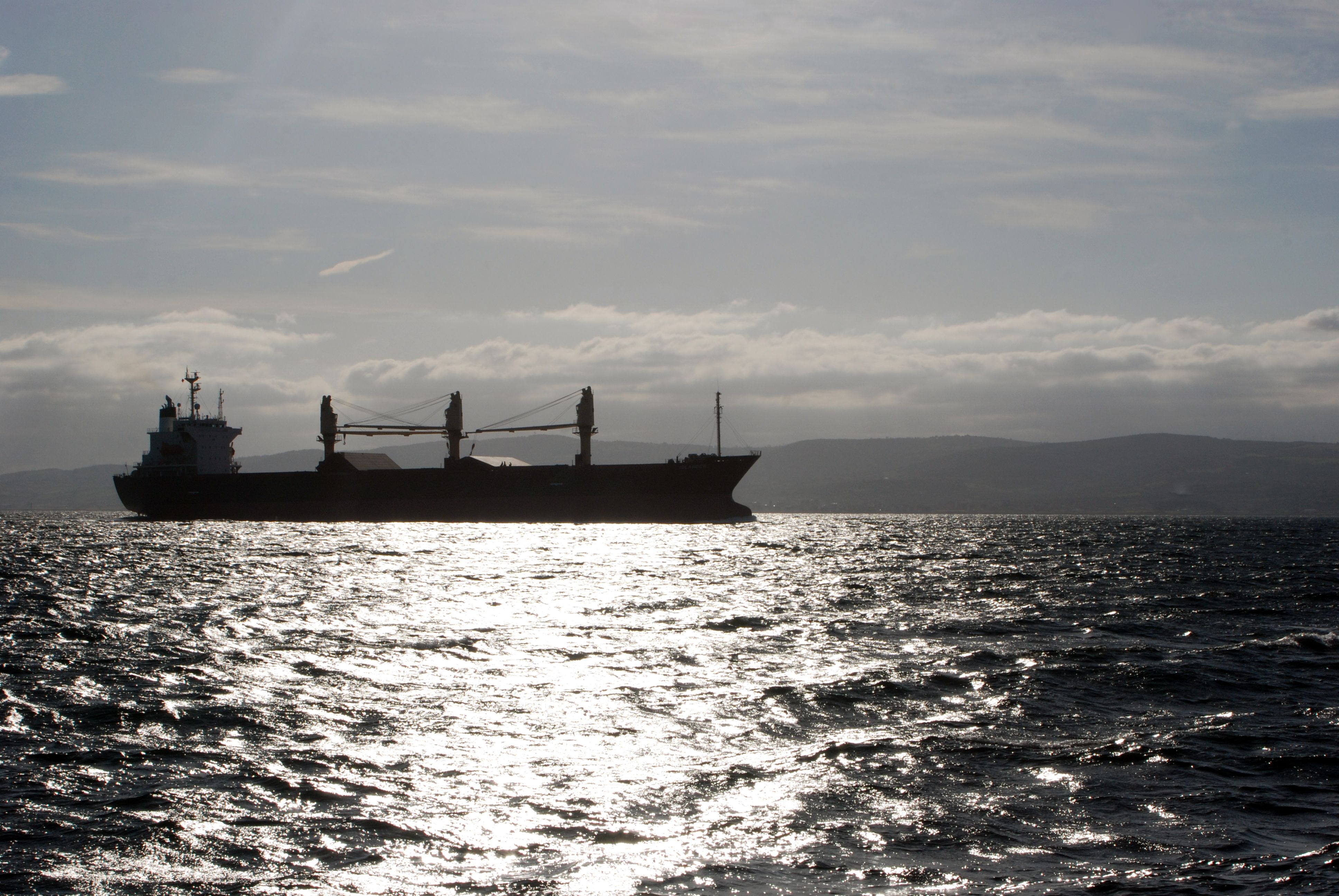
Cypriot shipping executive Thomas Kazakos will take one of the industry’s most pressing questions to Hong Kong next week. How can global shipping operate efficiently when governments are increasingly writing their own rules?
Kazakos, secretary-general of the International Chamber of Shipping (ICS), will join European Shipowners secretary-general Sotiris Raptis and TradeWinds editor-in-chief Julian Bray on Wednesday, November 18, for a discussion on regulatory fragmentation and cybersecurity at the TradeWinds Shipowners Forum.
The discussion, scheduled for 2pm at the Grand Hyatt Hong Kong, forms part of Hong Kong Maritime Week, which runs from November 15 to 21 and brings together shipowners, policymakers, financiers and technology executives.
The timing is particularly significant. Shipping companies are facing growing pressure to reduce emissions, invest in cleaner vessels and protect increasingly connected fleets from cyber threats. But the regulations governing those responsibilities are developing at different speeds across the world’s major trading regions.
For an industry whose ships can cross several jurisdictions on a single voyage, the consequences extend well beyond paperwork.
Different reporting requirements, carbon pricing systems and environmental standards can increase operating costs, complicate investment decisions and leave shipowners uncertain about which technologies and fuels will meet future obligations.
At the centre of the debate is the International Maritime Organisation (IMO), where governments have struggled to agree on a global framework for reducing greenhouse gas emissions from international shipping.
The proposed IMO Net-Zero Framework, intended to establish common fuel standards and a mechanism for pricing emissions, failed to secure final adoption in October 2025, with governments postponing the decision for a year.
Negotiations continued in 2026, although significant differences remain over how the system should operate and who should bear the financial burden.
The next round of technical discussions is scheduled for November 23 to 27, followed by the IMO’s Marine Environment Protection Committee meeting from November 30 to December 3. A further session concerning the proposed framework is provisionally scheduled for December 4.
Kazakos has repeatedly warned that uncertainty over global regulations risks undermining the very investment needed to make shipping cleaner.
Following IMO negotiations in May, he argued that governments needed to reach an agreement capable of securing broad international support.
“It is vital that governments move towards adoption of a comprehensive fit-for-purpose global framework as soon as possible,” he said, stressing the industry’s commitment to moving towards alternative energy sources.
For shipowners, however, the difficulty is that regional measures are already in force.
The European Union’s Emissions Trading System (ETS) has applied to maritime transport since January 2024, requiring companies to account for emissions from ships calling at European ports. The obligations are being phased in, with companies required in 2026 to surrender allowances covering 70 per cent of their eligible emissions from 2025.
Alongside the ETS, the EU’s FuelEU Maritime regulation is pushing operators towards lower-emission energy sources.
European shipowners support the industry’s environmental transition, but they are increasingly questioning whether the revenues collected from shipping are being put to effective use.
In October, European Shipowners reported that the sector accounted for approximately 10 per cent of emissions covered by the EU ETS but contributed almost 20 per cent of its revenues.
The association estimated that shipping generates around €9 billion annually in national and European ETS revenues and called for considerably more funding to support sustainable maritime fuels and technologies.
Its proposal would increase the allowances available through the EU’s Sustainable Maritime Alternative Propulsion mechanism from 110 million to 330 million, representing approximately €30 billion in support.
Raptis, who will appear alongside Kazakos in Hong Kong, argued in October that “the Commission proposal covers only a third of what is needed to help create a market for clean fuels and tech.”
He has also raised concerns about the risk of double regulation if international carbon measures are eventually introduced alongside existing European obligations.
That concern is particularly relevant to Cyprus, whose shipping industry operates far beyond the island’s waters.
According to the Shipping Deputy Ministry, Cyprus hosts one of the world’s leading maritime clusters, with Limassol home to more than 200 shipping and shipping-related companies. Businesses based on the island manage more than 20 per cent of the world’s third-party ship-management fleet.
The sector’s international reach means that decisions taken in Brussels, London and other maritime centres can directly influence the costs and competitiveness of companies operating from Cyprus.
Kazakos, who previously spent three decades leading the Cyprus Shipping Chamber before becoming the first Cypriot to head the ICS in 2025, has made the case for globally consistent regulation a recurring theme of his international appearances.
In an October interview, he warned that fragmented regional measures risked “multiple charges for the same emissions”, potentially diverting investment away from cleaner technologies.
However, the Hong Kong discussion will extend beyond environmental regulation.
Cybersecurity has become another increasingly urgent concern as shipping companies introduce digital navigation systems, satellite communications, remote monitoring and automated vessel-management technologies.
The rapid expansion of connected maritime infrastructure has created new vulnerabilities, with attacks increasingly capable of affecting systems responsible for navigation, propulsion and communications.
A maritime cybersecurity report published earlier this year recorded 828 cyber incidents in 2025, compared with 408 in 2024, reflecting the growing exposure of ships and associated infrastructure.
The IMO has responded by updating its maritime cyber risk management guidelines, while its Facilitation Committee approved a global digitalisation strategy in March, placing greater emphasis on common standards, interoperable systems and secure information exchange.
The challenge for shipowners is to strengthen those protections without creating another patchwork of incompatible national requirements.
Beyond regulation and cybersecurity, the Hong Kong forum will examine geopolitical risks, alternative fuels, shipbuilding, sustainable finance and the growing influence of artificial intelligence on commercial shipping.
The discussions come as geopolitical tensions continue to disrupt established trade routes, forcing shipowners to reconsider vessel deployment, insurance exposure and investment decisions.



Click here to change your cookie preferences