
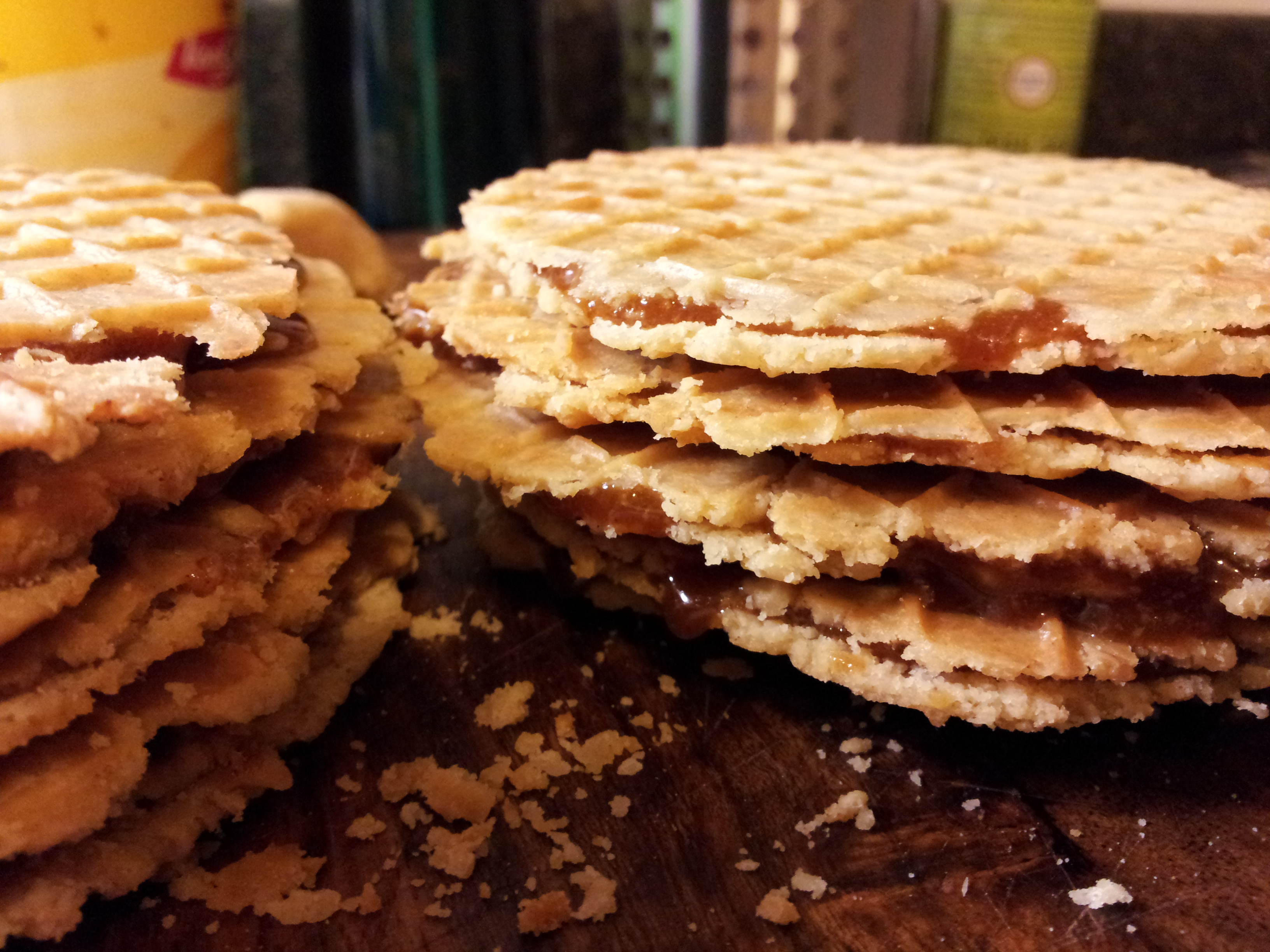
Stroopwafel – the thin, caramel filled waffle of the Netherlands – has its origins in the late eighteenth or early nineteenth century in the southern city of Gouda, where bakers sought inventive ways to make use of leftover crumbs and dough. These early versions were simple, inexpensive biscuits made from a spiced waffle batter, pressed into thin discs and joined together with a sweet syrup filling.
By the nineteenth century, stroopwafels had become firmly established in Dutch food culture. The filling, known as stroop, was traditionally made from a mixture of butter, brown sugar and syrup, sometimes enriched with cinnamon to add warmth and depth. The process of assembling the waffle while still warm allowed the caramel to soften the layers, creating the signature chewy texture that remains central to the experience today.
As industrial baking developed in the early twentieth century, stroopwafels began to be produced on a larger scale, making them widely accessible across the Netherlands. Despite this expansion, many bakeries continued to maintain traditional methods, pressing dough in patterned irons and carefully slicing and filling each waffle by hand.
Regional variations within the Netherlands are relatively subtle, though differences can be found in thickness, spice level and caramel consistency. Over time, modern interpretations have introduced chocolate coatings, flavoured syrups and miniature versions designed for snacking or export markets.
Stroopwafels also hold a distinctive place in Dutch daily life. They are commonly enjoyed with coffee or tea, often placed briefly over a hot cup to soften the caramel filling, a practice that has become part of their cultural ritual.
In Cyprus, stroopwafels are well known through cafés, supermarkets and international food imports, particularly in tourist areas and cosmopolitan bakeries. They are often enjoyed as a sweet accompaniment to coffee, reflecting similar European café traditions. Some local variations incorporate Cypriot honey or nuts, blending Dutch confectionery with Mediterranean flavours and preferences.
Seasonally, stroopwafels are enjoyed throughout the year, though they are especially popular during colder months when their caramel richness pairs well with hot drinks. In summer, they are often eaten as a light snack or dessert, sometimes served with ice cream or fruit in contemporary presentations.





Click here to change your cookie preferences