
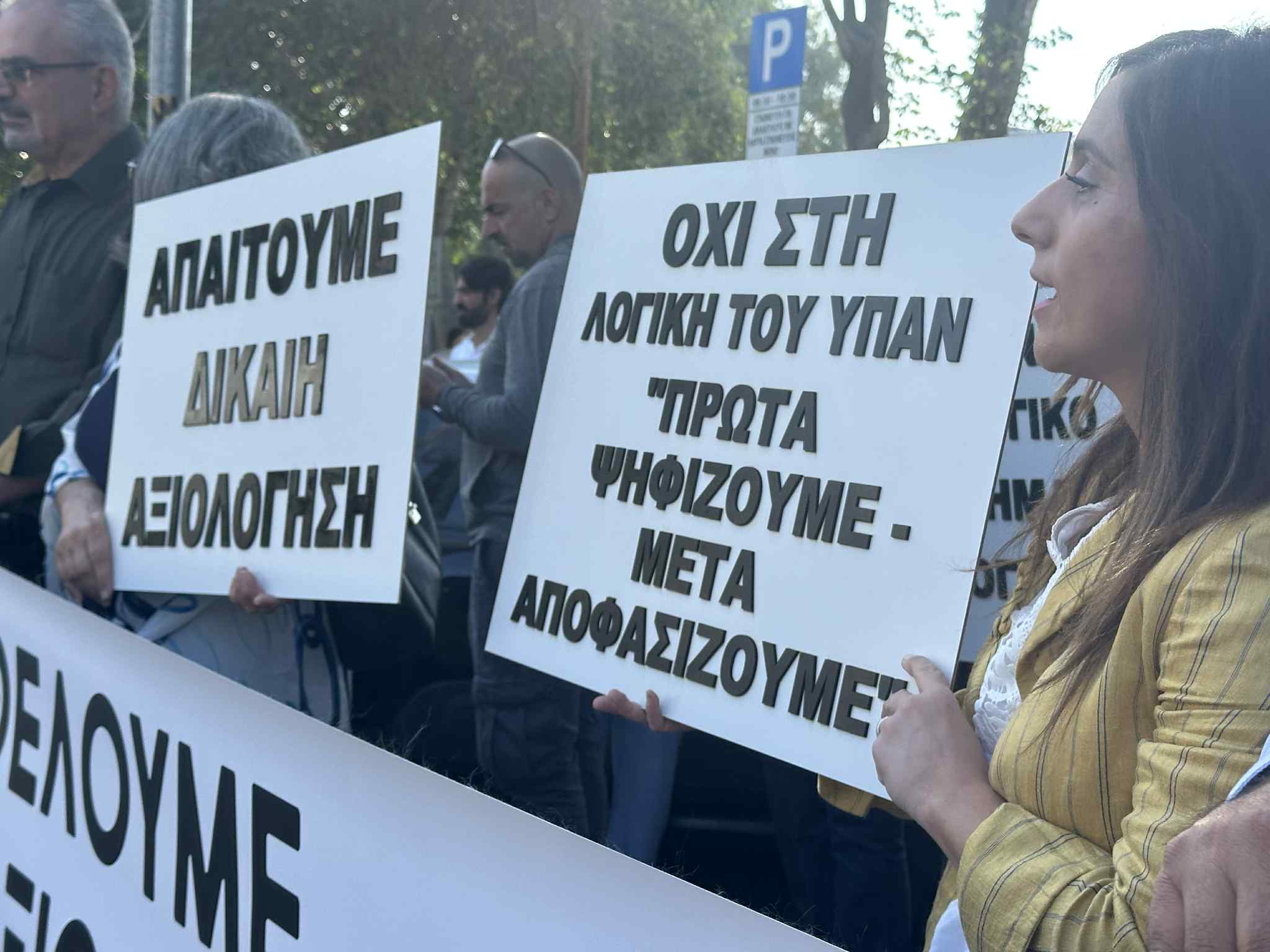
As part of their strike over the government’s plans to introduce a new evaluation system, secondary school teachers on Wednesday emphasised that they agreed that a new system needed to be introduced, but demanded it be ‘meritocratic, fair, and functional’.
“The proposals that we have before us and that are before the House education committee are neither [of these three],” said Oelmek president Dimitris Taliadoros.
He spoke of a lack of structured dialogue for resolving the disagreements on the evaluation scheme, calling on President Nikos Christodoulides to mediate between the parties “as he intervened in other issues and they were resolved”.
Taliadoros said that, while the teachers supported the introduction of a new evaluation system, they did not consider the current proposal to be suitable.
“The existing proposal deregulates the teacher evaluation system. It is ridiculous because it contains provisions that it then disregards,” he added.
He then addressed the MPs participating in the meeting of the House education committee where the proposal was to be discussed, urging them to listen to the voiced concerns over the “incomplete proposal”, accusing the education ministry of failing to take its responsibility on the matter.
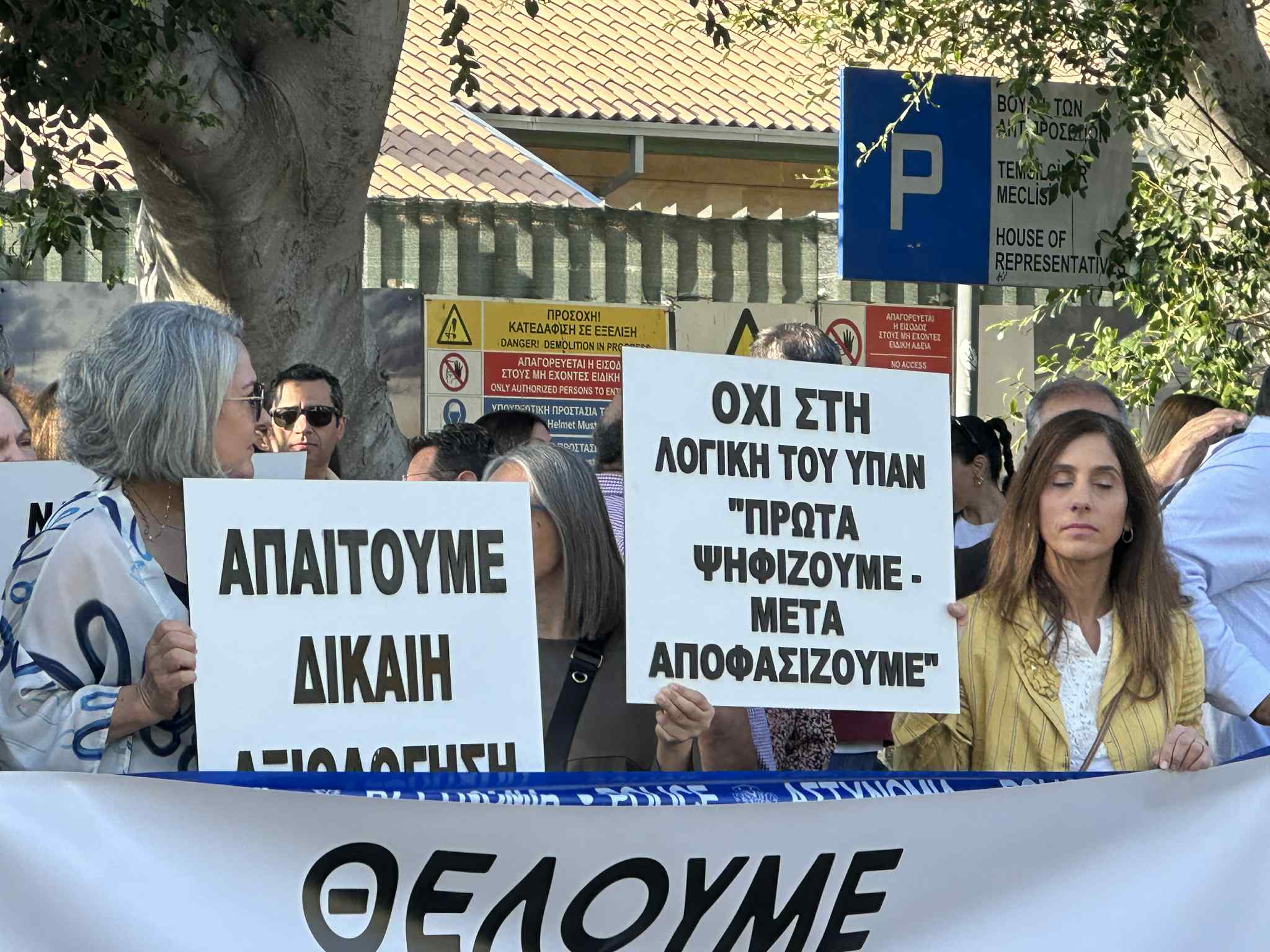
“(…) [The] education ministry, which for 13 months held the dialogue, was unable to present a comprehensive and agreed proposal. So, our fight will continue, it will intensify if necessary for a fair meritocratic and functional evaluation system. No to non-functional plans, no to those that undermine the smooth operation of school units and ultimately deregulate our educational system,” he said.
The teachers had on Wednesday taken to the streets over the new teacher evaluation plans.
According to deputy director of secondary education Giorgos Koutsidis, only five per cent of students showed up at school following the work stoppage which officially ended at 11am.
“Thousands of students, 42,000 in total, as well as their parents, [were affected],” Koutsidis said.
He added that arrangements had been made to ensure that students could resume classes immediately after the strike, noting that absences would not be recorded on Wednesday and assuring that teachers, who returned after the work stoppage, would avoid holding scheduled exams.
High school teachers started their strike on Wednesday morning at 7.30am, leading to classes and public student transportation being temporarily suspended.
With banners that said ‘We demand fair evaluation’ and “We want new evaluation, not deterioration’, the teachers began their protest outside the House of Representatives at 9am.
The demonstration was initially timed for when the education committee would be discussing the ministry’s proposal, however, that was moved until 2pm by the House education committee so as not to disrupt education.
Speaking to CyBC radio, Oelmek vice-president Andreas Mavratsas urged all involved parties involved to tone down their rhetoric, emphasising that this also applied to the education ministry.
While acknowledging weaknesses of the existing evaluation scheme, he said that instead of improving education, the new plan would only burden the state budget by imposing an estimated €6 million in additional payroll costs for the creation of 60 new positions for relevant inspectors.
President Nikos Christodoulides on Monday reiterated that the teacher evaluation reform must be approved, warning that delays would result in the loss of €60 million in funds from the EU Recovery and Resilience Fund.
He insisted that “not a single euro will be allowed to be lost”.
The secondary teachers strike will be followed by their primary school colleagues, who have announced a similar work stoppage for next Wednesday, November 26 at the same time.





Click here to change your cookie preferences