
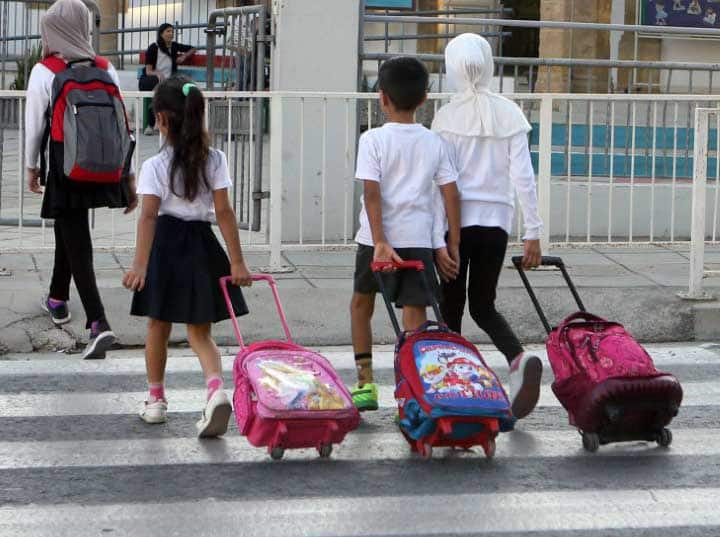
The primary school parents’ association on Friday expressed its “strong satisfaction and indignation” after primary school teachers’ trade union Poed had announced its intention to go on strike next week over the government’s planned reforms to the ways in which teachers are evaluated.
It as such demanded an “immediate” meeting with Education Minister Athena Michaelidou, asking that she “present her decisions and proposals” regarding both the strike itself and, “more generally, regarding the level of learning and education that children receive”.
“We absolutely respect the constitutional right of teachers to strike, which we have supported in the past, but we equally respect the right of our children to an education and parents to a normal everyday life. Any attempt to reverse these rules will be opposed by parents, pupils, and society,” it said.
It added that parents and pupils “do not intend to become pawns in arbitrary and unilateral initiatives”.
“The education of our children is not a negotiable means of pressure, nor can our children be held hostage to union expediencies,” it said, before saying that the strike is taking place “at a time when the public consultation has already been completed” on the teacher evaluation reforms “and the parliamentary process is in its final stage”.
“Despite the amendments and adjustments to the bill, taking into account the positions of all parties involved, Poed is once again choosing the path of conflict, insisting on strike measures and leaving open the possibility of even harsher actions,” it said.
It added that “this stance not only causes reasonable concern among parents but also undermines the stability which the educational process requires”.
As such, it called on Poed to accept the government’s plan, “end the unjustified suffering of children and families”, and “stop using the educational process as a negotiating tool”.
The strike is set to go ahead on the morning of December 18, with Poed on Thursday having lamented that “despite all the efforts” it had made, “it appears that a bill which deviates from [our] positions is being voted on in the plenary session of parliament”.
It had raised concerns that headteachers and their deputies will “participate” in teacher evaluations, saying that this is a plan with which they “disagree strongly” , and lamented that the education ministry “unilaterally submitted a bill … with disagreements, ambiguities, and gaps”.
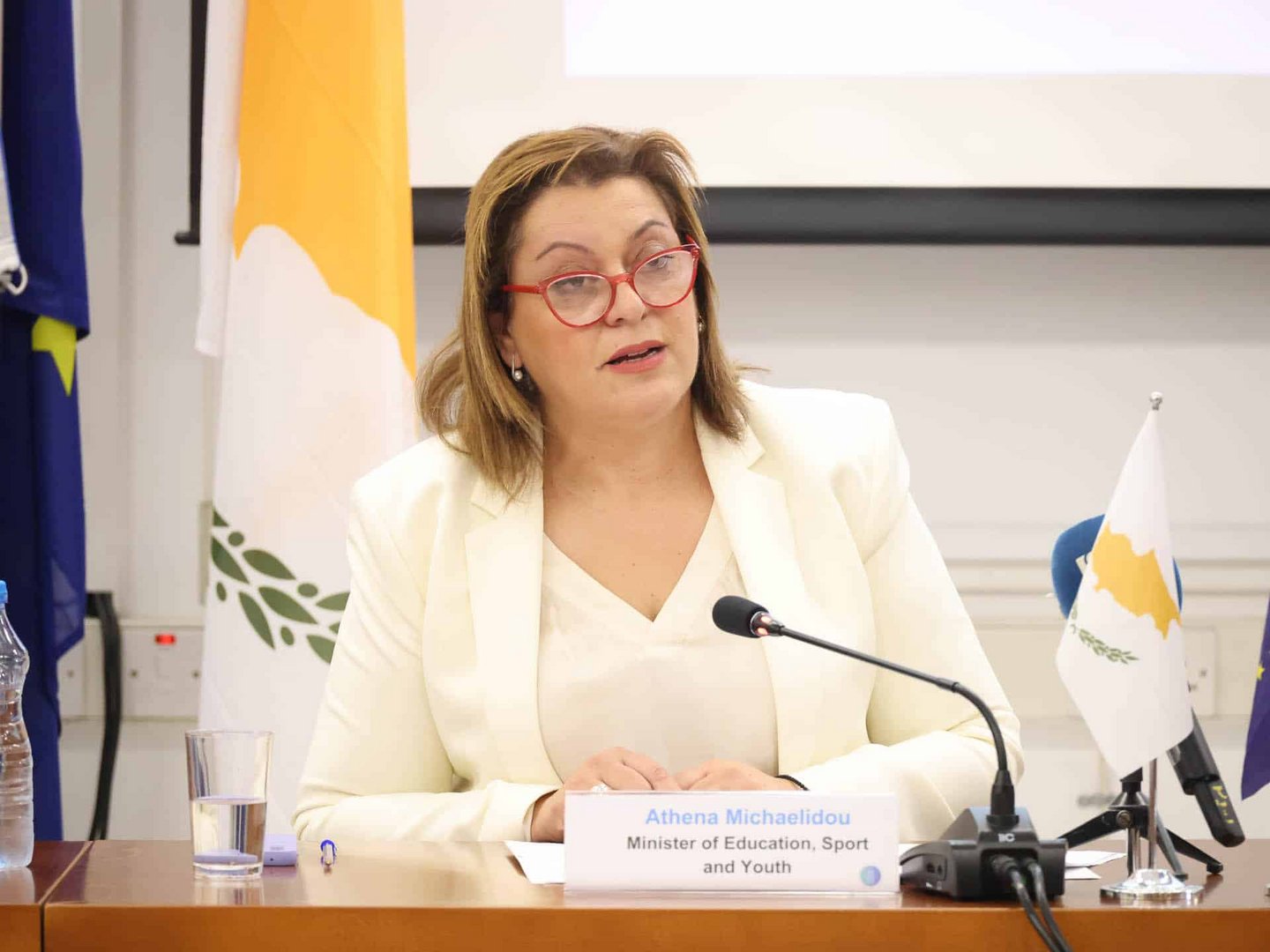
The government’s planned reforms were discussed at the House education committee on Wednesday, with Michaelidou saying after that session that while it is “legitimate” for there to be disagreements, they must be overcome “for the good of our children and our teachers”.
“We cannot work, create in our schools, strive for good results while working with regulations from the 1970s,” she said.
Asked whether she is worried about a potential adverse reaction from teachers in response to her reforms, she said that “the reactions have already been a given from the beginning”.
“What worries me, to tell the truth, is this demand that all demands be satisfied and that the democratic process be obstructed, which I believe our MPs have also understood,” she said.
She added that “disagreements have been limited to a minimum” with the exception of “the issue of headteachers or one or two other issues”, and as such asked, “I wonder where the disagreements and the creation of a climate of tension in education can be based?”.
Earlier in the year, government spokesman Konstantinos Letymbiotis outlined the plan, saying the reform introduces a “multi-layered, scientifically backed evaluation model”, replacing the “decades-old practice of single-person assessments” with collective evaluations involving school heads and inspectors.
The assessments are expected to improve teacher performance and introduce effective mentoring and continuous professional development into the system and are not intended as a punitive measure, Michaelidou had said earlier in the year.
Teachers will now be assessed throughout their careers using clearly defined, measurable criteria and a new rank of “senior teacher” will be created, allowing experienced educators to be promoted without moving into the ranks of the administration, if they are ill-suited for them or do not wish to do so.





Click here to change your cookie preferences