
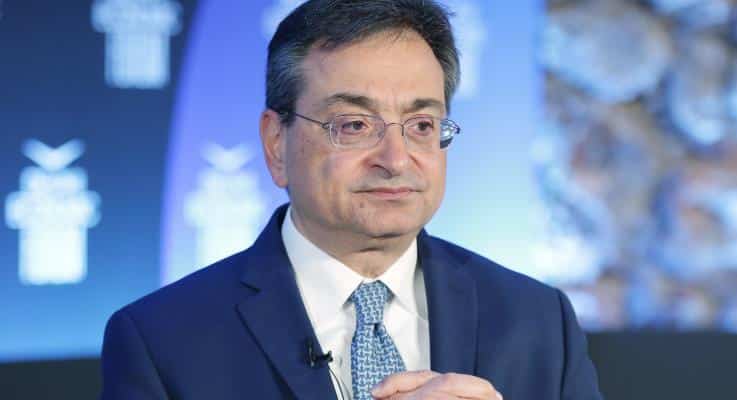
Eurobank CEO calls investments vital for Greece and Cyprus
Eurobank chief executive officer Fokion Karavias said investments are a national necessity and Cyprus plays a pivotal role in the group’s future, in a wide-ranging interview with Greek business outlet Business Daily examining economic growth, banking reform and Eurobank’s eastward expansion.
During the interview, Karavias said that “the banking landscape will change dramatically in the coming years”, while outlining Eurobank’s strategy in Greece, Cyprus and beyond, and warning that Europe risks falling behind unless it accelerates investment and technological adoption.
He said the Greek economy, despite the scars of the crisis, has entered a period of solid growth, with expansion rates exceeding the EU average, even if they remain below the highest levels in the bloc.
Karavias said “growth of 2 to 2.5 per cent in recent years could arguably have been higher”, but added that many EU countries continue to grow at slower rates.
He pointed to falling unemployment, now at single-digit levels, as a structural shift that has created labour shortages for businesses seeking staff and skilled executives.
Tax revenues have also increased, he said, partly due to higher nominal GDP but also as a result of targeted government measures to curb tax evasion, including the spread of electronic transactions.
Karavias said “higher tax revenues have led to primary surpluses”, allowing public debt to fall as a share of GDP, with Greece recording the largest reduction in the EU.
He cautioned, however, that Greece still carries the highest public debt ratio in the union, arguing that debate about excessive surpluses is misleading and risks diverting attention from the need to keep reducing debt.
Turning to the banking sector, he said “we now have a healthy banking system that stands confidently on its feet and finances the economy”, adding that a qualitative shift has also taken place, with a large part of society now accepting private initiative and entrepreneurship as drivers of growth.
Despite the improvement, Karavias warned that challenges remain, noting that the growth model has not fundamentally changed and consumption remains the main driver of GDP.
He said investments have increased, supported by the Recovery and Resilience Fund, but concerns are growing about what happens after the fund expires in August 2026.
Reflecting on Greece’s long-term economic position, Karavias traced a historical arc, noting that Greece joined the then EEC before Portugal and Spain, yet has since been overtaken by both.
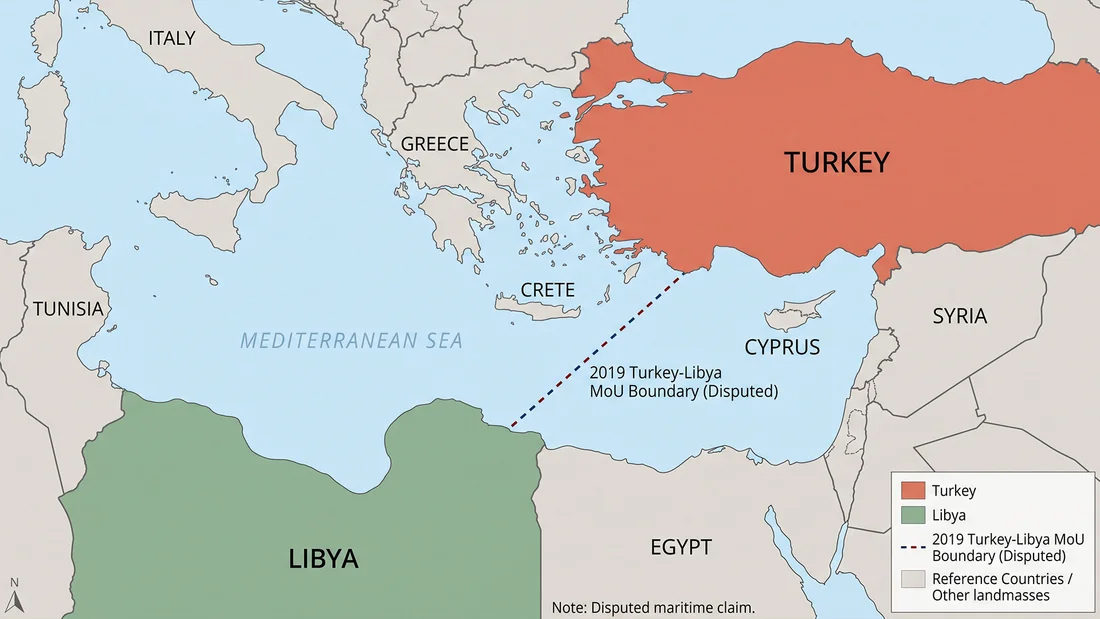
He said “many eastern European countries that once lagged behind us have now surpassed us”, whether measured by GDP or GDP per capita, while Turkey’s economy has grown to roughly four times the size of Greece’s since the 1990s.
Karavias argued that while the post-1974 period has been politically successful, economically Greece has underperformed in relative terms, for reasons that also led to the decade-long crisis.
On investments, he said “I have called them a national goal”, stressing that they are essential to offset demographic decline, sustain the welfare state and underpin national security.
Investment as a share of GDP has risen from 11 per cent in 2019 to about 16 per cent at the end of 2024, with expectations of reaching 18 per cent, but Karavias said this still falls short of the EU average of 21 per cent.
He cited the Draghi report, which considers even the EU level insufficient, and said Europe would need an additional €800bn in annual investment to lift the ratio towards 26 to 27 per cent if it wants to remain competitive with the US and China.
Against this backdrop, Karavias said Greece is competing for capital in an increasingly crowded global market.
Responding to criticism about the quality of investments, he said acquisitions in real estate and tourism are inevitable at this stage, given how low overall investment levels remain.
He argued that reforms in justice, land registry completion and land-use planning are necessary to unlock investment in higher-productivity sectors such as industry, manufacturing and technology.
Productivity, he said, is the key risk that could derail economic progress.
Karavias said “in 2007 labour productivity was close to the European average, while today it stands at around 70 per cent of that level”, attributing this not to workers but to the structure of the economy.
What is more, he said that sectors such as tourism and real estate are inherently lower-productivity, making diversification essential.
The Recovery Fund has helped, he said, noting that around 18 per cent of its loans have gone to industry.
Another drag on productivity is the dominance of small and very small firms, which lack the scale to invest in innovation and technology.
Karavias expressed cautious optimism about venture capital funds that aim to consolidate similar businesses, creating economies of scale that benefit both investors and the wider economy.
He said “entrepreneurial mentality has not yet changed”, despite incentives, but added that specialised funds could play a catalytic role.
On the global environment, Karavias said “we are living through geopolitical shifts that happen once every 100 years”, pointing to wars, tariffs and strained US-Europe relations.
He said markets have remained resilient partly due to massive fiscal expansion during the pandemic and partly due to rapid technological progress, especially in artificial intelligence.
While some warn of a tech bubble, he said US technology firms are clearly driving markets.
Looking ahead to 2026, Karavias described Europe as the weakest link.
He said “Europe’s business model is under question”, citing defence dependence, energy costs, reliance on exports to China and lagging technology adoption.
He criticised excessive regulation, arguing that Europe is present mainly as a regulator in the AI race dominated by the US and China.
On banking criticism, Karavias acknowledged weaknesses in customer service and bureaucracy but said banks have invested tens of millions in digital transformation to put services on customers’ phones.
He explained that Eurobank aims for advisory banking centres, with most appointments available within one to three working days, while walk-in customers are still served.
Addressing financing criticism, he said claims that banks do not lend are unfair, pointing out that Greece recorded one of the highest credit expansion rates in Europe in 2024 and 2025.
He said more than 500 Recovery Fund projects worth about €18bn have been approved, with around 300 involving medium-sized firms.
Karavias said “bring me a viable investment plan and if no bank has financed it, Eurobank will”, stressing that the social role of banks is not to forgive loans but to provide sound financing that supports growth and jobs.
On deposit rates, he said margins are comparable to other southern European countries, including Cyprus, while savings account rates across Europe remain close to zero.
Turning to the legacy of the crisis, Karavias said the greatest loss was the withdrawal of Greek banks from the Balkans and neighbouring regions.
He said Eurobank was an exception, maintaining and expanding its presence in Bulgaria and Cyprus after raising private capital in 2014 and 2015.
He described Cyprus as a strategic pillar of the group, alongside Greece and Bulgaria, with Luxembourg also playing a key role.
Karavias said Eurobank is now the largest Greek bank by assets, exceeding €100bn, following domestic and international acquisitions.
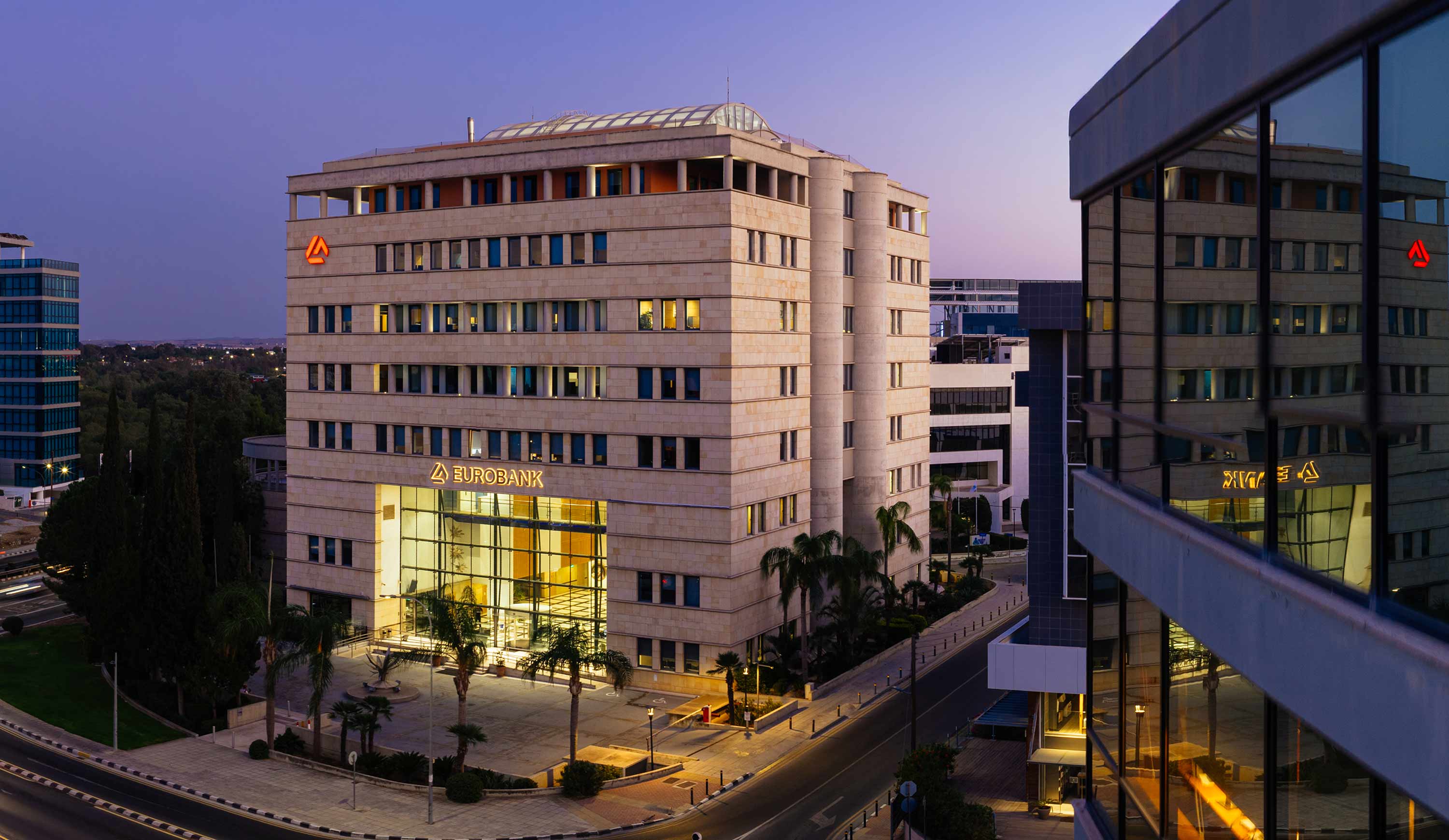
He said recent deals include the acquisition of Hellenic Bank in Cyprus, the island’s second-largest bank, and Cyprus’ largest insurance company, formerly a subsidiary of France’s CNP, as well as Eurolife.
The Eurobank CEO explained that integration of these Cypriot entities will be a major priority through 2026, alongside organic growth.
Looking east, Karavias said Eurobank has received approval from the Reserve Bank of India to open a representative office in Mumbai, expected in the first quarter of 2026.
Applications have also been submitted for the UAE, while Saudi Arabia is under serious consideration.
He said “Greece and Cyprus sit at one end of the India–Middle East–Europe Corridor”, making eastern expansion geopolitically and economically significant.
On Eurobank’s share price, up more than 1,000 per cent from its 2016 lows, Karavias declined to comment, saying valuation is for markets and analysts, while management focuses on service, competitiveness, acquisitions and technology.


Click here to change your cookie preferences