
Europe is pressing ahead with plans to strengthen its shipping, shipbuilding and ports sectors, despite stalled global talks on decarbonisation, with the European Commission preparing two major strategies aimed at boosting competitiveness, investment and security of supply.
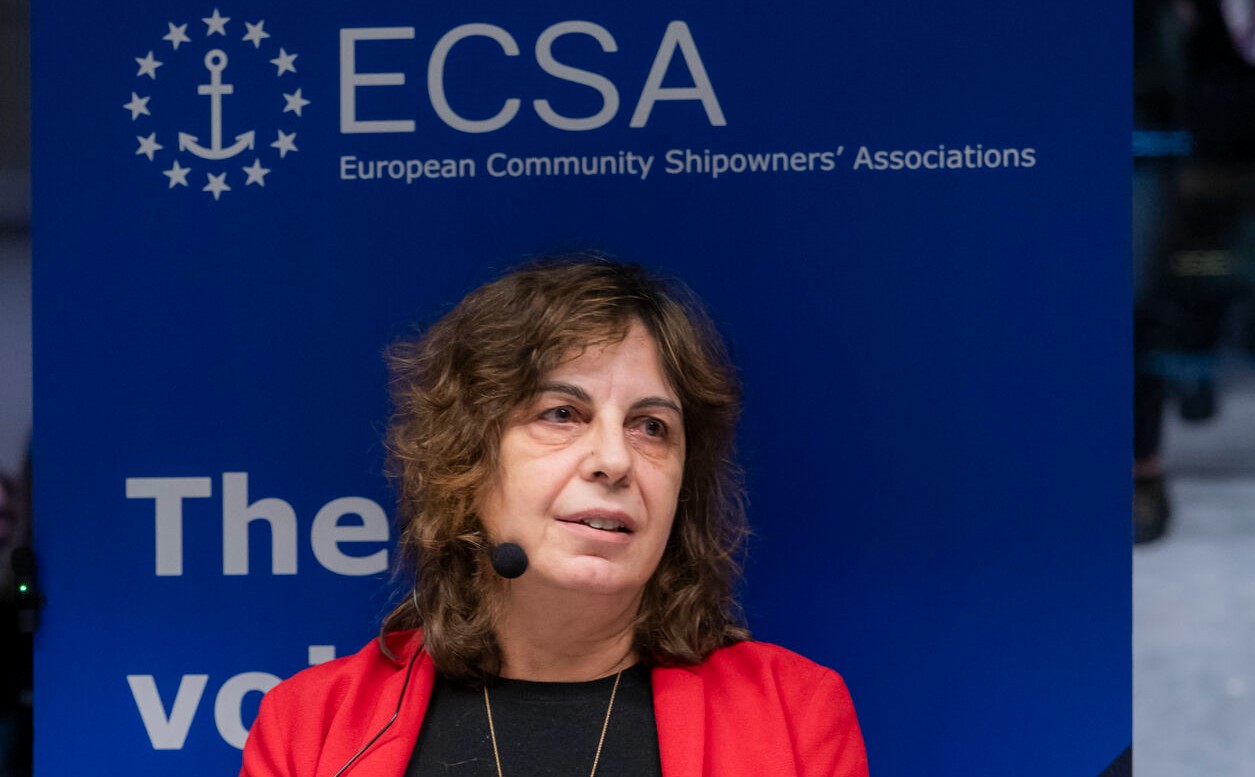
Speaking at the European Shipowners’ Association’s 60th anniversary conference, Fotini Ioannidou, Director of Waterborne Transport at the European Commission’s Directorate-General for Mobility and Transport (DG MOVE), said the creation of a European shipping cluster was now essential.
“Europe is not backing down. The transition is a one-way street and shipping can be the big winner,” she said, referring to the impasse reached at the International Maritime Organisation (IMO) last October on the net-zero framework.
Ioannidou described shipping as a critical pillar of Europe’s economy and geopolitical resilience, emphasising its role in securing energy, raw materials and exports.
Without maritime transport, she said, many European economies would struggle to function.
Against this backdrop, the European Commission is drafting two interconnected policy frameworks: a Maritime Industrial Strategy, expected in early 2026, and a Strategy for European Ports.
The Commission has already launched formal preparatory work and stakeholder dialogues in Brussels to feed into both strategies, as it looks to reinforce the competitiveness and resilience of Europe’s waterborne sectors while driving the green and digital transition.
The timing is particularly relevant for Cyprus, one of Europe’s major maritime services centres, which is preparing to assume the Presidency of the Council of the European Union in the first half of 2026, with shipping and transport policy expected to feature prominently on the agenda.
Cyprus’ interest is not only institutional. The shipping sector is a significant pillar of the local economy, contributing about 7 per cent of GDP, with more than 9,000 onshore jobs and around 80,000 seafarers serving on vessels managed by Cyprus-based companies.
Competitiveness, financing, innovation and the human factor sit at the core of the Commission’s approach, Ioannidou said, as pressure intensifies in globally exposed sectors such as shipping.
For the first time, Brussels is adopting a comprehensive ecosystem view, seeking closer coordination between shipping, shipbuilding, ports, defence and security.
The maritime industrial strategy is expected to cover shipbuilding, shipping and their links to security and defence, with a focus on safety at sea, decarbonisation, digitalisation and automation, while also addressing regulatory burden, a long-standing concern for shipowners.
It is also expected to emphasise financing at a moment when fleet renewal is accelerating and many European shipping companies remain small or medium-sized.
Ports, meanwhile, are being positioned as “Europe’s interface with the world”.
The forthcoming ports strategy is set to target efficiency, digitalisation and security, while pushing ports towards a larger role as energy hubs through better hinterland links and simpler procedures.
In Cyprus, the same themes have featured prominently in recent industry-government messaging ahead of the EU presidency.
President Nikos Christodoulides has said shipping will be among the priorities during the 2026 presidency, linking the sector’s competitiveness and long-term sustainability to Europe’s wider policy choices.
The policy overlap was also visible in Limassol in October at Maritime Cyprus 2025, the biennial forum organised by the Shipping Deputy Ministry with industry partners, which has grown into one of the world’s largest shipping conferences since its launch in 1989.
The official conference programme and press material framed the agenda around decarbonisation, digitalisation and geopolitical uncertainty, the same pressures now shaping Brussels’ strategy work.
Ioannidou did not shy away from disappointment over the October IMO impasse, but made clear that Europe’s direction would not change.
The transition, she said, is irreversible, adding that European shipping stands to benefit if it continues to lead in new fuels, technologies and safety systems.
Her message to the industry was framed around cooperation, investment and trust in people, the combination she said would allow European shipping to withstand mounting pressures, and to shape the next chapter of global maritime trade.



Click here to change your cookie preferences