
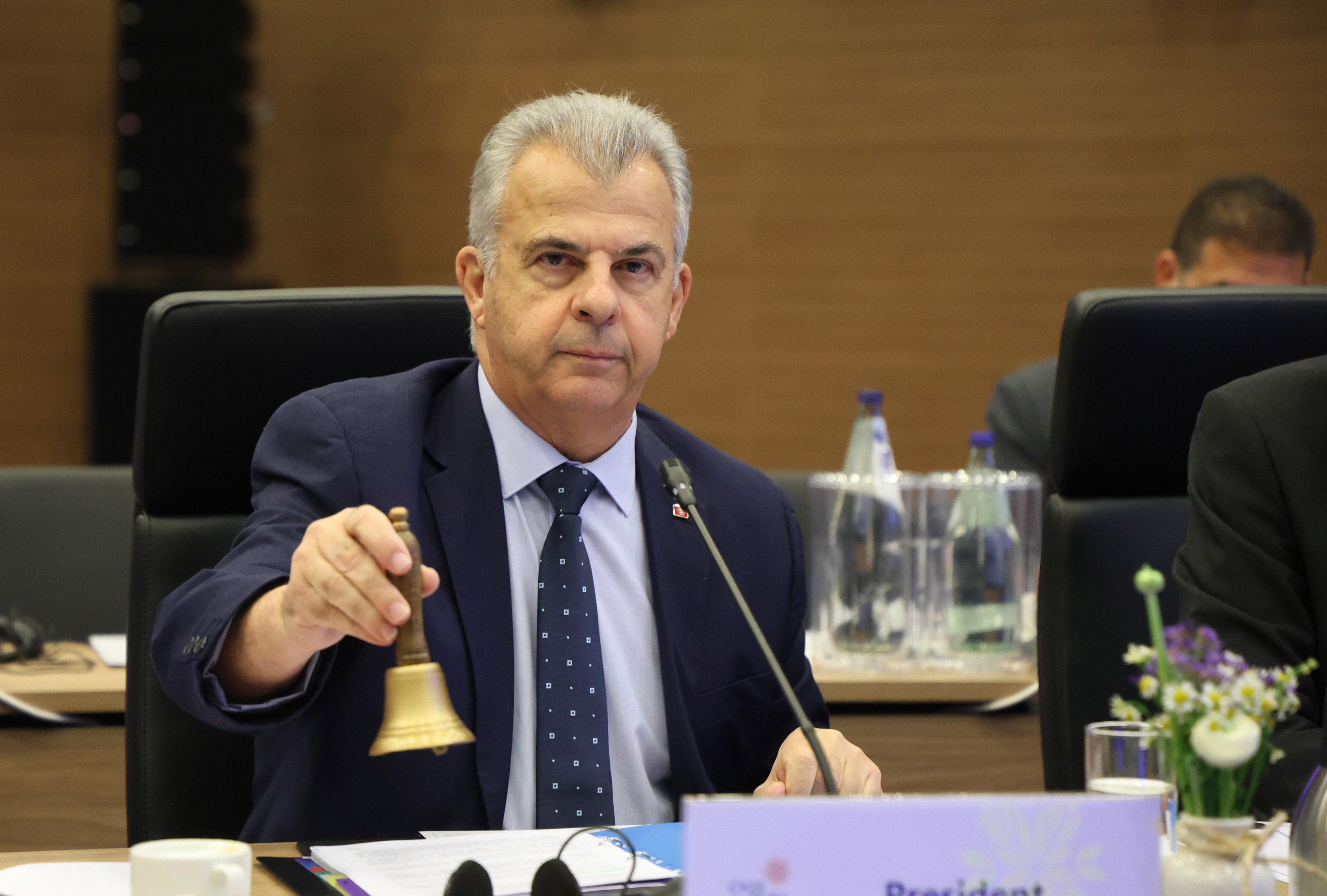
Closer coordination of forces across the EU are essential to combating organised crime, Justice Minister Costas Fitiris accounted on Friday.
Speaking at the end of the two-day informal meeting of EU justice ministers in Nicosia, Fitiris said organised crime was the common thread linking all issues discussed, from asset recovery and cultural heritage protection to the treatment of young drug users.
“To get one step ahead of organised crime, to confront it, we need to join forces, respond quickly and utilise all the information that any state agency may have,” he said.
“There should be an exchange of information in order to combat organised crime in all member states.”
Fitiris acknowledged that modern challenges in justice require European level solutions and coordinated action, involving not only police and judicial authorities but also economic and regulatory bodies.
“Together we can build a system that can be one step ahead of organised crime,” he claimed, adding that “this is the goal and this is what we will do”.
He remarked that organised criminal activity generates an estimated €188 billion annually across the EU, driven primarily by drug trafficking, arms trafficking and extortion by criminal networks.
He added that the illegal trade in cultural goods alone amounts to around €5 billion, fuelled by theft of antiquities to countries with more favourable legal frameworks.
On asset recovery, Fitiris said ministers agreed that depriving criminal organisations of illegally obtained wealth is central to dismantling their operations.
“As long as illegal assets remain in the hands of criminal organisations, they are the main driving force behind the consolidation and expansion of their activities,”
Discussions on cultural heritage protection highlighted disparities in the EU legal framework, which Fitiris said are exploited by traffickers who move stolen artefacts to jurisdictions with more permissive regimes.
Ministers called on the commission to carry out impact studies to address these weaknesses, with Fitiris stressing that cultural heritage protection remains a priority of the Cyprus presidency.
Fitiris also said strong agreement emerged on the need for interdisciplinary approaches to minors and young adults drawn into the criminal system through drug use.
“Detention should be a last resort, especially for minors,” he said, emphasising treatment over punishment and recognising substance use as primarily a health and social issue.
He said the conclusions of the meeting would feed into the EU action plan on drugs currently under consultation.





Click here to change your cookie preferences