
Cyprus holidays are deeply connected to religion, history, and community life. While the island observes a full calendar of public holidays, some celebrations are far more important than others and can significantly affect travel plans, opening hours, and daily routines. For visitors, these occasions provide an excellent opportunity to experience authentic Cypriot culture—provided you know what to expect.
This guide explores the most important local holidays in Cyprus, their traditions, etiquette, and how they impact travelers.
Why holidays matter so much in Cyprus
In Cyprus, holidays are not simply days off work. They are social anchors centred around family, faith, food, and local identity. Religious holidays, in particular, take priority over commercial activity, and entire towns or villages may slow down or close completely.
Travellers visiting during major celebrations should expect fewer services—but richer cultural experiences.
Greek Orthodox Easter (Pascha): The most important holiday in Cyprus
Easter Sunday: April 12th 2026
Orthodox Easter is the most important religious and cultural event in Cyprus, shaping village life, family routines, and public activity for an entire week. The celebrations combine solemn religious rituals with deeply rooted folk traditions, many of which remain unchanged for generations.
Traditions and celebrations
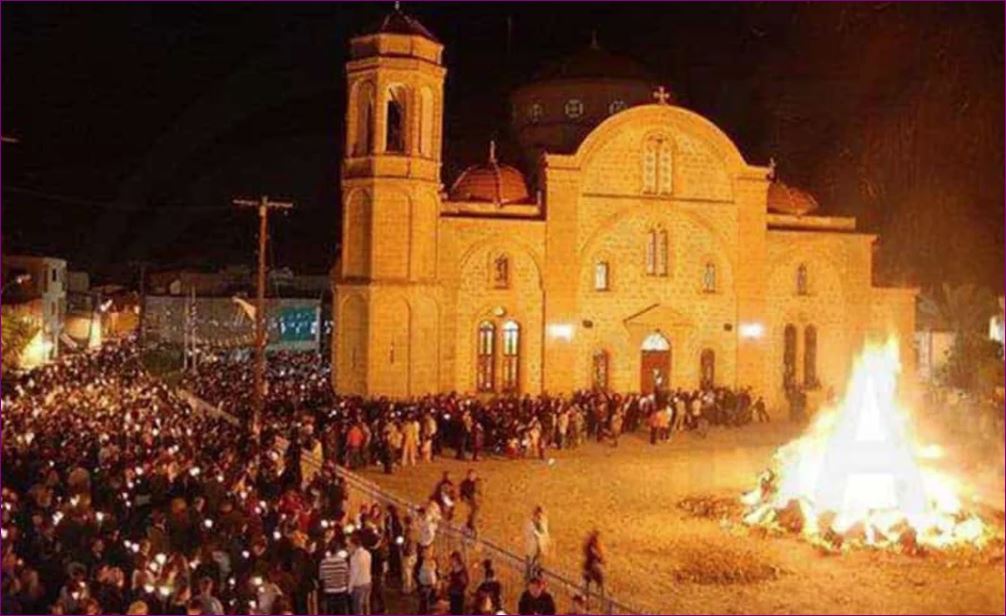
Megali Evdomada (Holy Week) is marked by daily church services, fasting, and preparation. On Holy Saturday night, churches across Cyprus hold midnight services, where worshippers gather with candles to celebrate the Resurrection. Fireworks, church bells, and processions fill towns and villages.
Easter Sunday is celebratory and family-focused, with roasted lamb, traditional dishes, music, and village games.
Holy Week and the Epitaph (Good Friday)
Easter week begins quietly, with daily church services and fasting. Good Friday is one of the most emotional days of the Orthodox calendar and is marked by the Epitaph (Epitaphios) procession. In every town and village, the flower-decorated bier symbolising Christ’s tomb is carried through the streets, accompanied by candlelight, hymns, and large crowds.
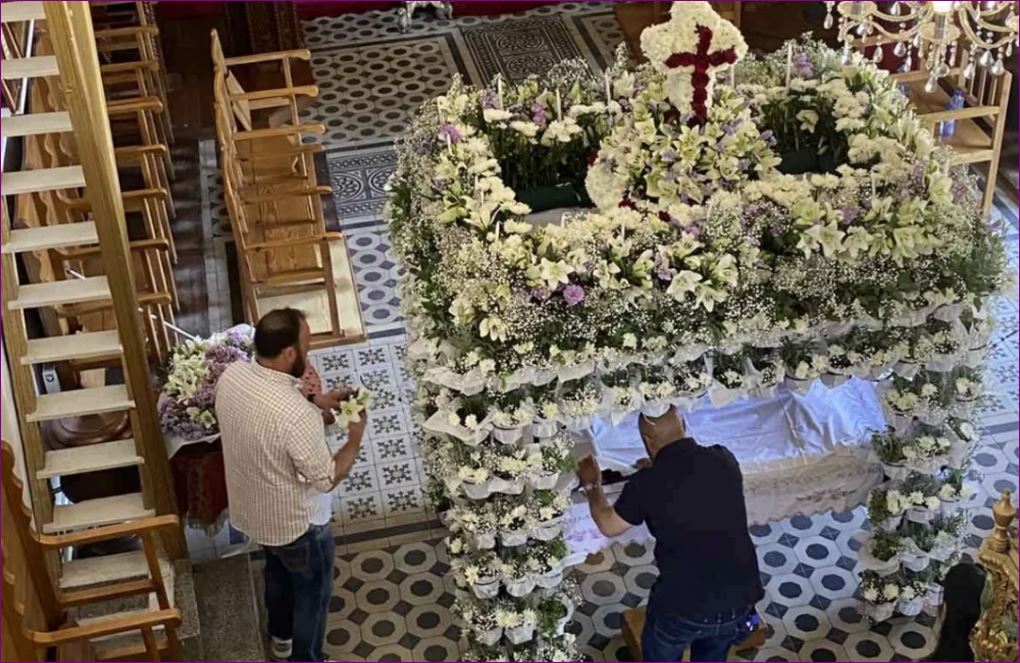
Locals follow the procession on foot as a sign of respect and mourning. Shops often close early, and the atmosphere is solemn and reflective.
Traveller etiquette:
- Dress modestly and avoid loud conversation
- Photography is generally acceptable but should be discreet
- Visitors are welcome to follow the procession respectfully
Holy Saturday and midnight resurrection service
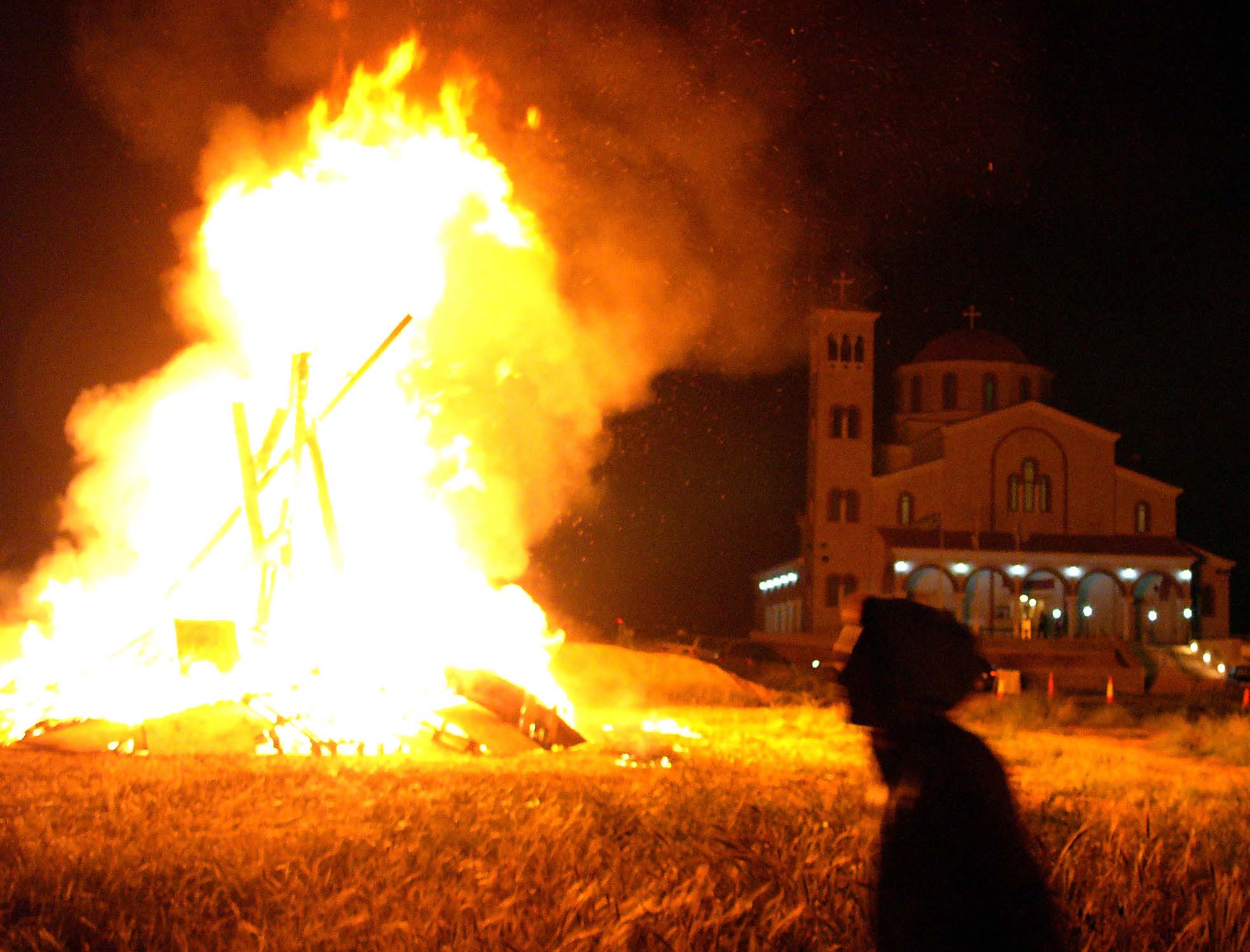
On Holy Saturday night, churches fill for the midnight Resurrection service. Just before midnight, the church lights are extinguished, symbolising darkness before the Resurrection. At midnight, the priest announces “Christos Anesti” (Christ has Risen), candles are lit, church bells ring, and bonfires (known as lambradjia) are set alight.
Families carefully carry the flame home to bless their houses, often marking a small cross with candle smoke above the door.
Traveller expectations:
- Crowded churches and lively village squares
- Fireworks can be loud, especially in rural areas
- A powerful cultural experience even for non-religious visitors
Easter Sunday: Food, family and red eggs
Easter Sunday is celebratory and entirely family-focused. The centre piece is souvla (pieces of lamb cooked on skewers, accompanied by traditional dishes like makaronia tou fournou (similar to pastitsio), koubebia (stuffed vine leaves) and plenty of local wine.
One of the most recognisable Easter traditions is the use of dyed red eggs. There are several explanations behind this with the most popular being that the red dye represents the blood of Jesus Christs and his sacrifice on the cross.
Families and friends do what is known as the tsoungrisma, a ‘game’ during Easter Sunday where each person chooses his egg and taps it against another’s, saying Christos Anesti (Christ has Risen) with the other person replying Alithos Anesti (Indeed He has risen). The eggs are then eaten!
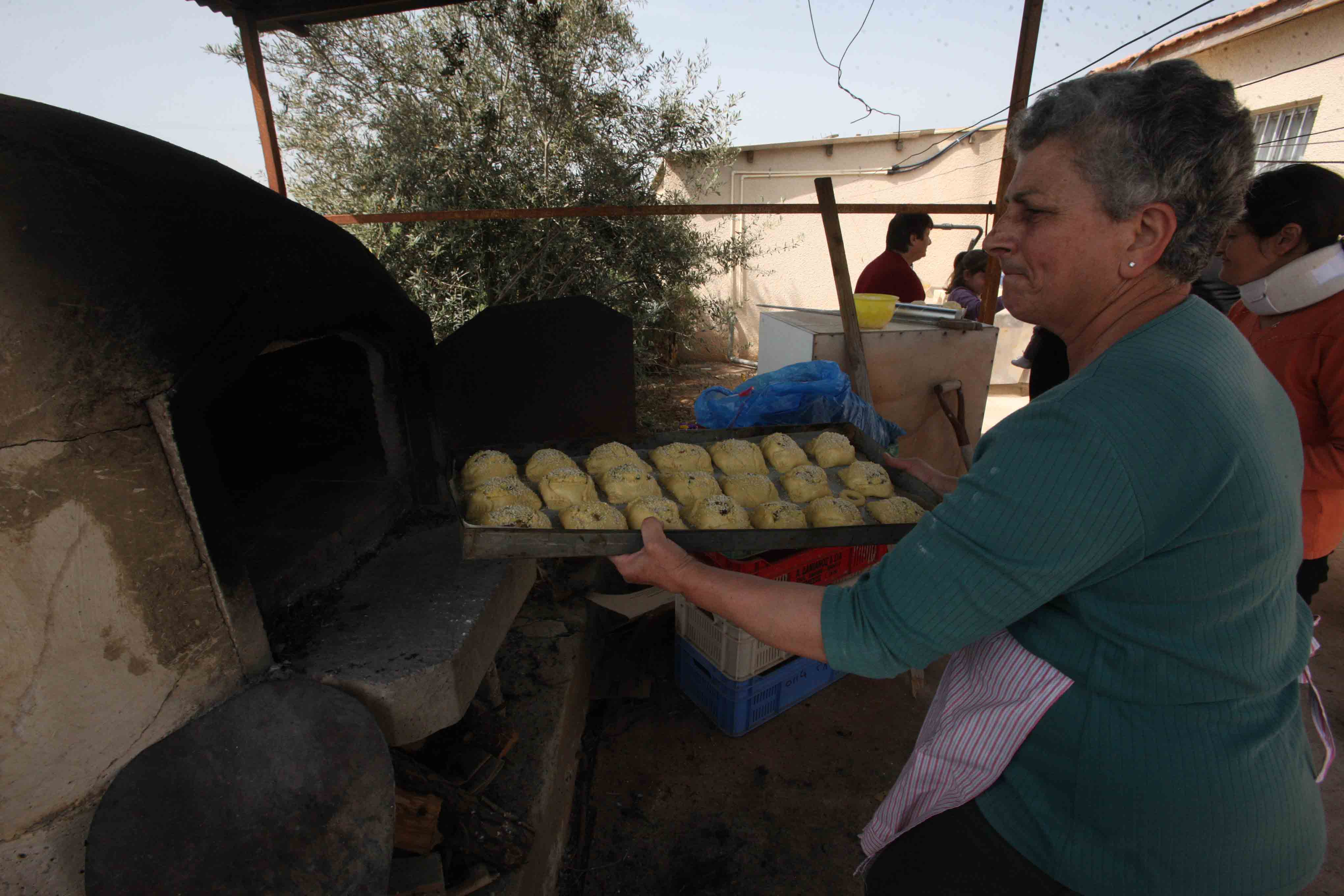
Another essential Easter food is flaounes—a traditional Cypriot Easter pastry made with local cheese, eggs, mint, and sometimes raisins. Prepared in large quantities before Easter, flaounes are shared with neighbours and guests as a symbol of hospitality.
Traveller expectations:
- Restaurants may be closed or fully booked
- Invitations into family homes are common in villages
- Accepting food is considered polite and appreciated
Easter Monday: Village games and community life
While Easter Sunday is reserved for family, Easter Monday is when celebrations move into village squares and community spaces. Traditional games, music, dancing, and informal competitions are organised by local councils or churches.
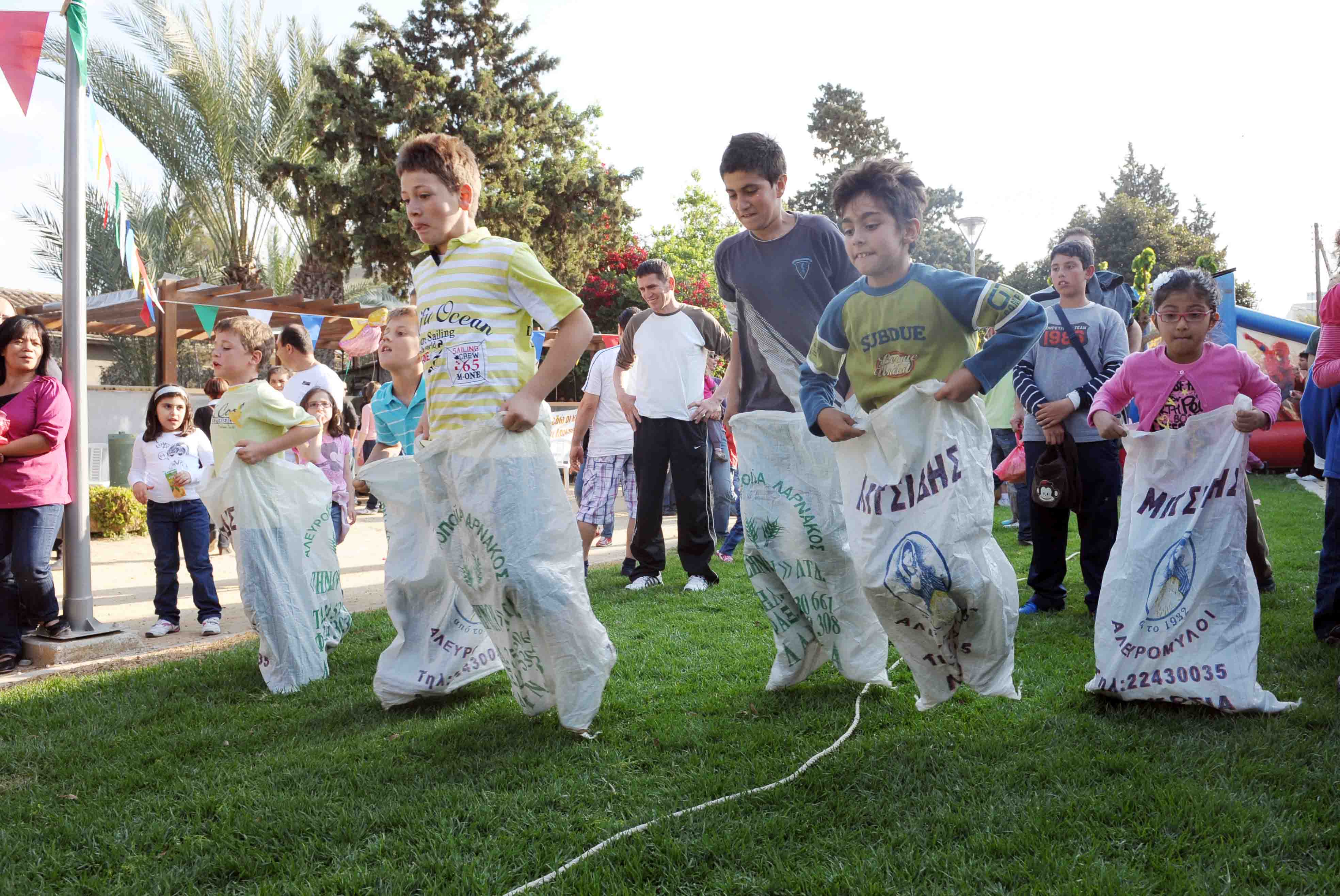
These events are particularly common in rural areas and smaller villages, where Easter Monday serves as a social gathering for residents returning home from cities.
Traveller expectations:
- Lively village atmospheres and open-air events
- Free or low-cost local entertainment
- A relaxed and welcoming environment for visitors
What Easter means for travelers in Cyprus
Easter in Cyprus is not just a holiday—it is a collective cultural experience. Transport schedules, shop opening hours, and services may be limited from Good Friday to Easter Monday, but the depth of tradition on display is unmatched at any other time of year.
Travelers who plan ahead and approach the celebrations with respect will experience Cyprus at its most authentic—rooted in faith, food, and community.
2027 Easter Sunday: May 2
Christmas in Cyprus
Christmas in Cyprus is a family-focused, tradition-rich celebration that blends religious observance with warm hospitality and home-centred customs. Christmas remains one of the most meaningful holidays on the island, offering visitors an authentic glimpse into Cypriot culture.
This guide explores Christmas traditions in Cyprus, including food, social customs, card games, etiquette, and practical travel tips.
How Christmas is celebrated in Cyprus
Christmas is celebrated on 25 December and is preceded by a religious fasting period of 40 days for those who observe it. While modern life has softened strict observance, the spiritual aspect of Christmas remains important, particularly in villages and among older generations.
Most celebrations take place at home, rather than in public spaces, making Christmas in Cyprus feel intimate and more personal.
Religious traditions at Christmas
Many Cypriots attend church on Christmas morning, marking the birth of Christ. but nowhere near the attendances one witnesses during Easter.
Churches are decorated simply, and services are calm and reflective rather than ceremonial.
Visitors are welcome to attend church services, provided they dress modestly and behave respectfully.
Traditional Christmas food in Cyprus
Traditional Christmas food in Cyprus reflects the island’s strong focus on home cooking, sharing, and hospitality. Meals are prepared in large quantities, as families often host relatives and welcome visitors throughout the festive period.
The Christmas table usually features roast lamb, chicken or turkey, with the latter becoming much more popular in recent decades. Dishes are typically oven-baked and accompanied by other local delicacies like koupepia (stuffed vine leaves), makaronia tou fournou (similar to lasagne) and salad, a hearty bowl of greens, chopped cucumbers, tomatoes and onions with a generous portion of fetta going in the bowl last.
Meals are filling, slow-paced, and designed to be enjoyed over long conversations rather than rushed courses.
Traditional Christmas sweets in Cyprus
Christmas sweets are an essential part of the holiday season and are prepared days in advance. Almost every home offers something sweet to visitors.
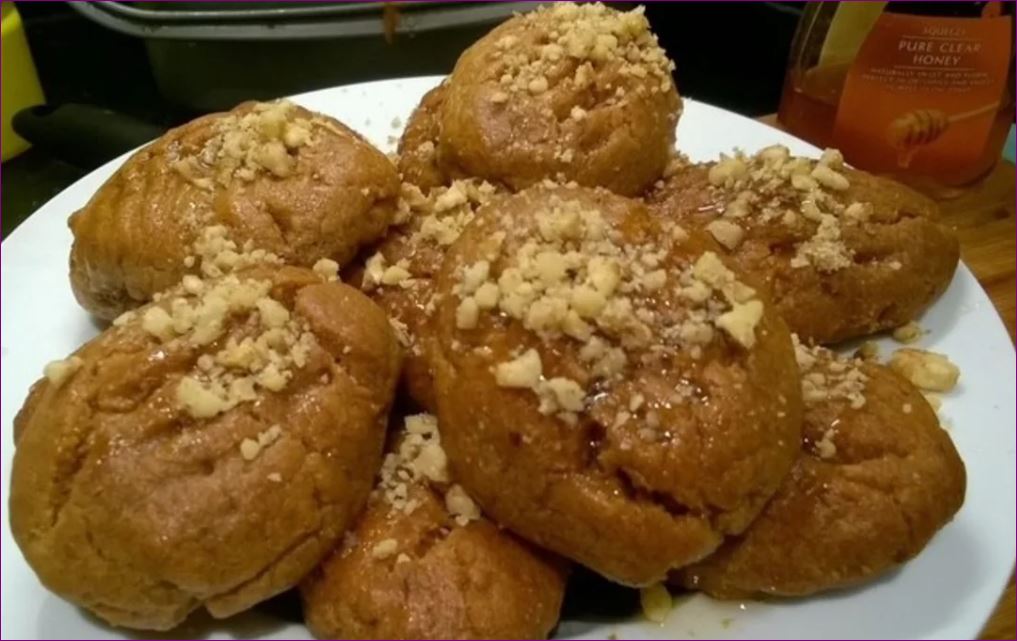
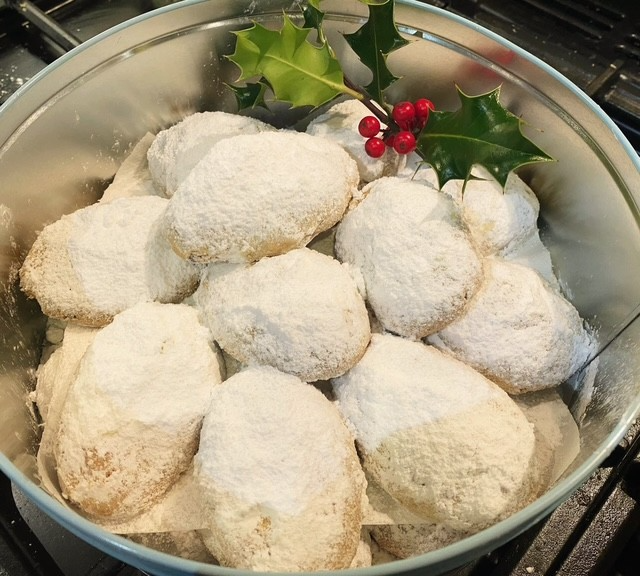
The most common Christmas sweets include melomakarona, honey-soaked biscuits flavoured with spices and topped with walnuts, and kourabiedes, buttery shortbread-style biscuits coated with icing sugar.
For visitors, being offered sweets is a sign of welcome and generosity—and politely accepting is always appreciated.
Christmas Eve and Christmas Day customs
Christmas Eve in Cyprus is typically quiet and family-oriented. Most people stay at home, enjoying dinner with close relatives rather than going out. The atmosphere is calm and reflective, especially compared to New Year celebrations.
On Christmas Day, families visit relatives, exchange gifts, and gather around the table for long lunches. The emphasis is on togetherness rather than formal schedules, and visits often continue throughout the afternoon and evening.
Homes are decorated with Christmas trees, lights, well before the holidays. In cities such as Nicosia and Limassol, streets feature seasonal lighting and there are a plethora of Christmas villages with small markets and activities.
What visitors should expect during Christmas in Cyprus
Visitors spending Christmas in Cyprus should expect a slower pace of life. Shops and businesses close on the 25 December and Boxing Day, while restaurants in tourist areas usually remain open with reduced hours. Public transport may run on limited schedules.
Rather than large public celebrations, travellers will experience a quieter, more intimate holiday centred around food, family, and tradition.
August 15: The Assumption of the Virgin Mary
August 15 is one of the most important religious and public holidays in Cyprus, known as the Assumption of the Virgin Mary (Koimisis tis Theotokou). It is both a deeply spiritual occasion and a major summer break, combining church traditions with family gatherings and peak holiday travel.
For visitors, August 15 offers insight into Cypriot faith and community life—but it also comes with busy roads, closed businesses, and a festive summer atmosphere.
What August 15 means in Cyprus
The holiday commemorates the death and Assumption of the Virgin Mary and holds immense significance in the Orthodox Christian calendar. In Cyprus, it is considered second in importance only to Easter among religious holidays.
The date falls in the heart of summer, which means religious observance blends naturally with annual leave, seaside holidays, and village festivals.
Religious traditions and church services
Church services take place on the evening of August 14 and throughout August 15, with many Cypriots attending liturgy in honour of the Virgin Mary. Pilgrimages to churches and monasteries dedicated to her are especially common, particularly in villages and mountain areas.
The tone is respectful and spiritual, though less solemn than Easter. Families often light candles and attend services together before returning home or travelling for the holiday.
Visitor etiquette:
- Modest dress is recommended inside churches
- Visitors are welcome to attend services quietly and respectfully
Village festivals and panigyria
A panigyri is usually held to honour a village’s patron saint on the saint’s feast day. The celebration typically begins with a church service and continues into an evening festival in the village square or nearby open space.
While rooted in religious tradition, panigyria today are as much social gatherings as they are spiritual events, bringing together residents, returning villagers, and visitors.
Panigyria occur throughout the year, but they are most common between May and September, when villages are active and weather conditions allow for outdoor celebrations.
Food is a central feature of every panigyri. Temporary stalls or communal kitchens serve traditional Cypriot dishes, often prepared by local volunteers or community groups.
Loukoumades is the most loved traditional sweet at paniyiria.
They are small, deep-fried dough balls, crispy on the outside and soft inside. Once fried, they are drenched in syrup and often sprinkled with cinnamon.
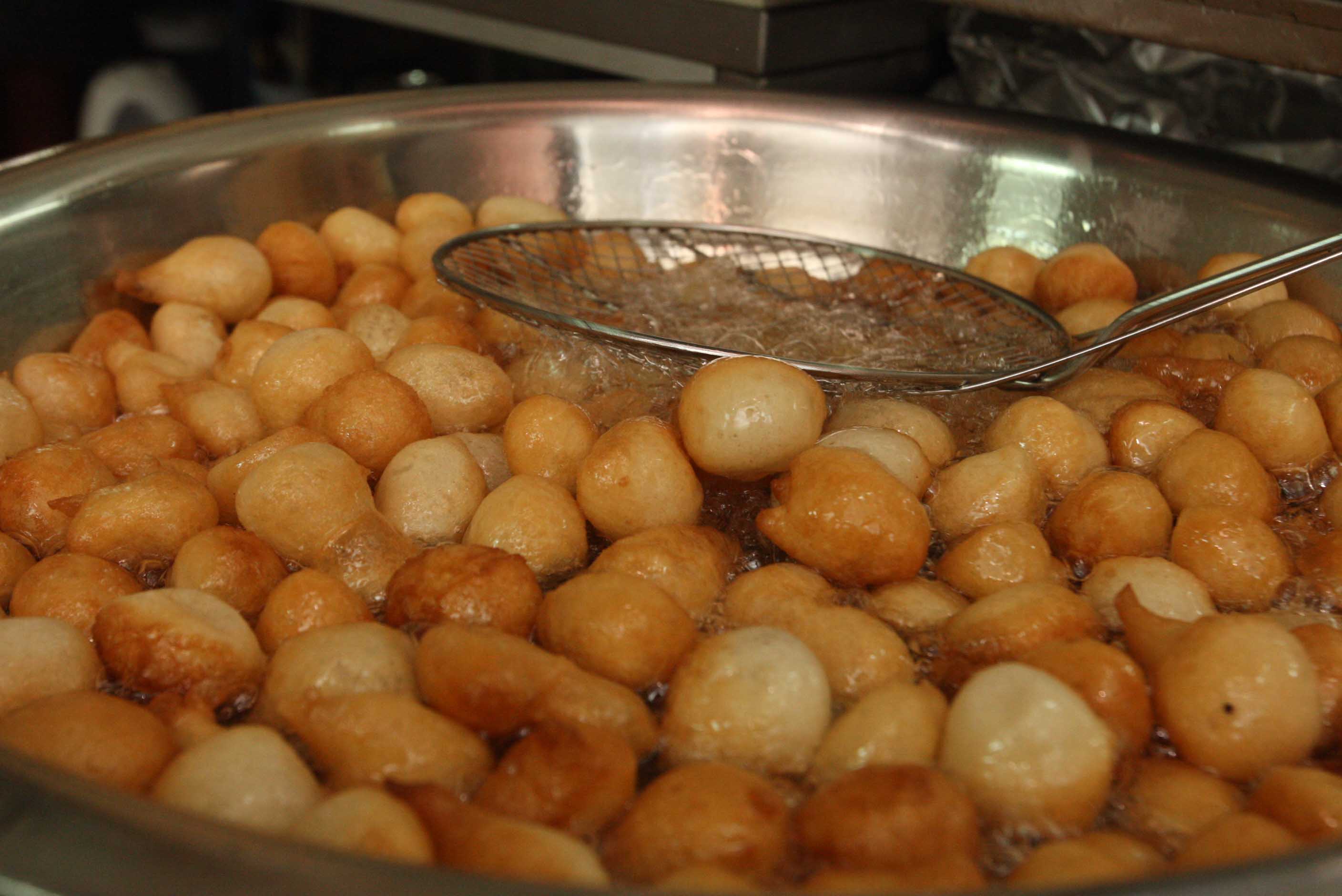
Should be eaten as soon as they come out of the deep pan.
Live Greek and Cypriot folk music is a defining element of panigyria. Traditional instruments and singers perform well into the night, and dancing—both traditional and modern—is common.
The atmosphere is relaxed, festive, and inclusive. Visitors are welcome to watch or join in, even if they are unfamiliar with the dances.
If you are visiting Cyprus during the summer months, checking whether a nearby village is hosting a panigyri is highly recommended.
Some of the busiest panigyria take place around major religious dates such as:
- August 15 (Assumption of the Virgin Mary)
- Saints’ feast days specific to each village
Dates vary by village, and many panigyria are annual highlights of the local calendar.
Green Monday (Kathara Deftera) February 23, 2026: A unique local tradition
Green Monday, known by local as Kathari Deftera that translates to Clean Monday, marks the beginning of Orthodox Lent and occurs 48 days before Easter. It is celebrated outdoors with picnics, kite-flying, and fasting foods such as tahini, olives, legumes, and flatbreads.
Green Monday follows Lenten fasting rules, meaning no meat or animal products. Despite this, the spread is generous.
While Green Monday marks the start of Lent, many Cypriots observe it symbolically rather than strictly. Attendance at church is less central than on other religious holidays, and the emphasis is placed on spending time outdoors and eating simple, traditional foods.
For many, the day represents a pause from routine—a chance to reconnect with nature before the more solemn weeks of Lent begin.
Families gather in parks, countryside areas, and beaches, turning the day into a nationwide outdoor celebration.
What visitors should expect on Green Monday
- Most shops and businesses are closed or operate limited hours
- Public parks and picnic areas are crowded and festive
- Supermarkets and bakeries are very busy the day before and some on the morning of
- A friendly, inclusive atmosphere where visitors are welcome
Travellers are encouraged to join locals outdoors rather than plan shopping or city-based activities.
Tsiknopempti (Stinky Thursday) February 12, 2026
Tsiknopempti is one of the most popular and festive food-centred celebrations in Cyprus. The name comes from the word tsikna, meaning the smell of grilled meat, and Pempti, meaning Thursday.
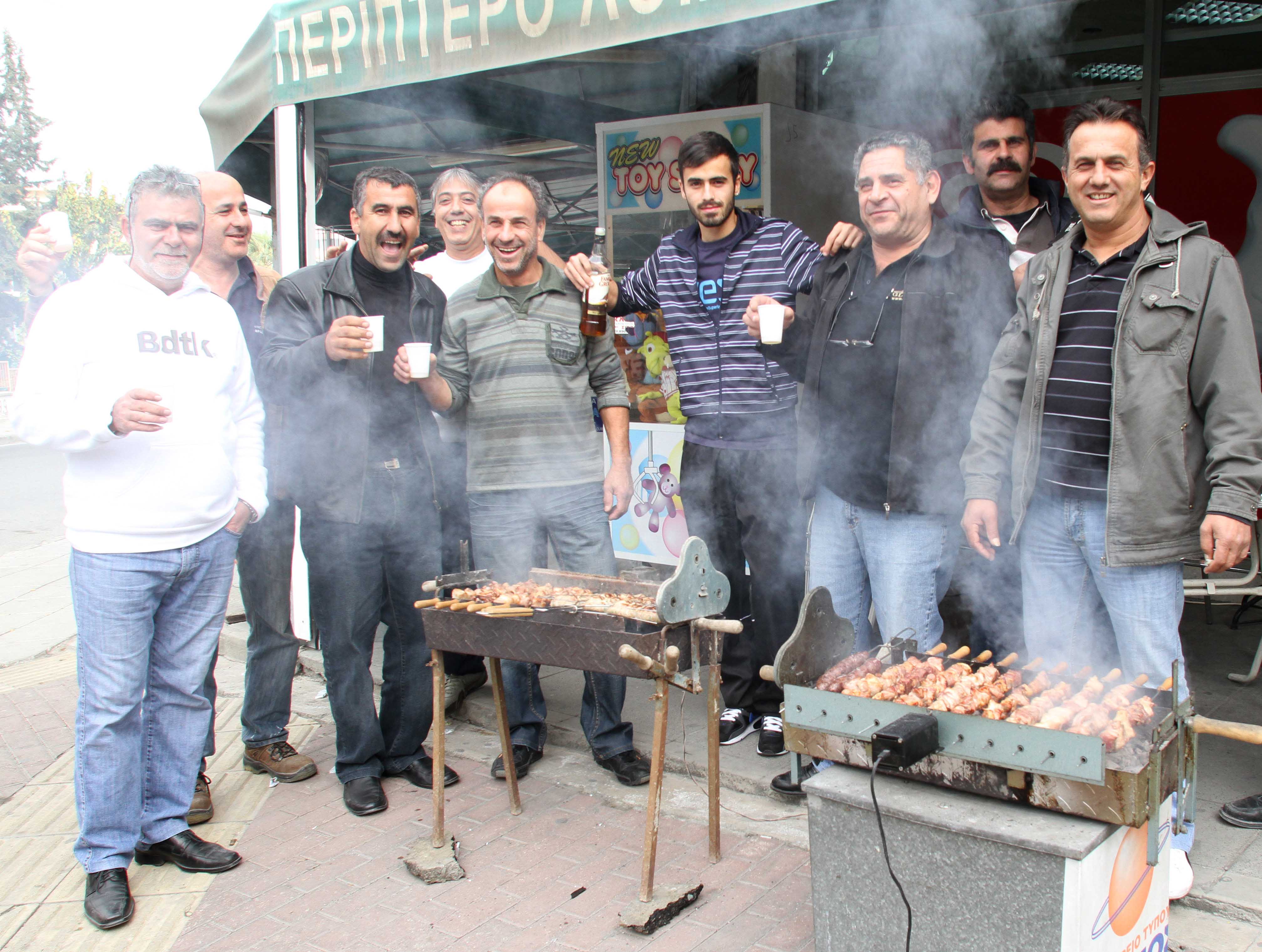
It is celebrated on the Thursday before the start of Lent, usually falling in February or early March, and marks the last major meat-eating day before the fasting period begins.
Across Cyprus, Tsiknopempti is instantly recognisable by the smell of charcoal grills filling streets, courtyards, schools, and workplaces. From early morning, people light barbecues outside homes, shops, and offices, turning entire neighbourhoods into open-air feasts. The day has a relaxed, celebratory feel and is enjoyed by people of all ages.
Food is at the heart of Tsiknopempti. Typical dishes include souvla, sheftalia, pork chops, sausages, and grilled chicken, usually served with pitta bread, salads, and zivania, wine or beer. Meals are informal and communal, with food shared freely among neighbours, colleagues, and passers-by.
Tsiknopempti also marks the unofficial start of the Carnival season in Cyprus. In many towns, people dress up in costumes, play music, and gather in the streets or village squares. Schools and businesses often organise small celebrations, and children commonly attend dressed in fancy dress.
For visitors, Tsiknopempti is an excellent opportunity to experience Cyprus at its most sociable. Travellers can expect busy streets, friendly invitations to join barbecues, and a lively atmosphere that blends food, humour, and community spirit—long before Lent brings a quieter, more reflective mood.
Official holidays 2026
January 1 – New Years Day
January 6 – Epiphany Day
February 23 – Green Monday
March 25 – Greek Independence Day
April 1 – Cyprus National Day
April 11-April 13 Easter
May 1 – Labour Day
June 1 – Kataklysmos/Pentecost
August 15 – Assumption Day
October 1 – Cyprus Independence Day
October 28 – Greek Ochi Day
December 25 – Christmas Day
December 26 – Boxing Day




Click here to change your cookie preferences