
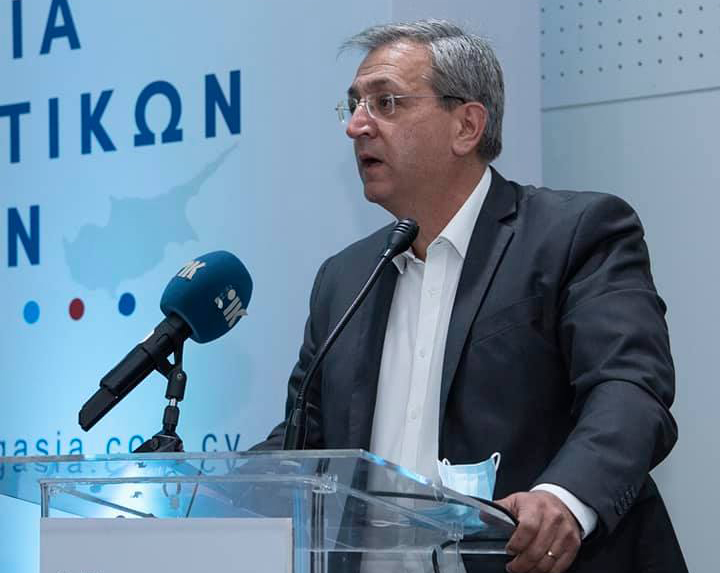
The government aims to submit legislation reforming the first pillar of the pension system to parliament by early June, with the objective of implementing the changes by 2027, labour minister Marinos Mousiouttas said on Tuesday after a two-hour session of the labour advisory body.
According to the minister, four additional meetings of the advisory body have been scheduled for March to advance technical discussions and build the widest possible consensus among the state, employers and trade unions.
“The differences on the first pillar are not so great and can be overcome,” he asserted.
The reform concerns the first pillar of the pension system, linked to the social insurance fund, while discussions on the second pillar, covering provident funds, will follow on a longer timeline.
Mousiouttas explained that while the immediate focus remains on the reform’s first stage, the government intends to outline a general framework for the second pillar during the current discussions.
The minister accepted that implementation of the second pillar would require at least three to four years.
Mousiouttas also addressed one of the most sensitive aspects of the reform, the reduction of 12 per cent applied to pensions for those retiring before the age of 65.
He confirmed that the reduction will be revised downward under the new system, indicating that for some pensioners it could fall to as low as 2 per cent, while for others it may reach up to 10 per cent.
Any final decision, he added, will apply to both current and future pensioners.
Responding to concerns about possible pension cuts, the minister said scenarios involving small reductions for a limited number of pensioners remain assumptions at this stage.
Beyond pensions, the advisory body also examined an updated draft law on the adequacy of minimum wages for 2026, as well as an amending bill on the settlement of overdue debts to the social insurance fund.
Moushiouttas said the latter seeks to improve the legislative framework, enhance transparency and protect already registered debtors through transitional provisions.
A fourth agenda item, concerning the formulation into national law of a European directive regarding equal pay for equal work, was postponed due to time constraints and will be discussed at the meeting in March alongside the pension reform.
Concluding the session, Mousiouttas said the breadth of issues reflects the government’s commitment to a modern, fair and sustainable labour framework.
“We look forward to cooperation and consultation with social partners in order to bring the best possible results,” he said.





Click here to change your cookie preferences