
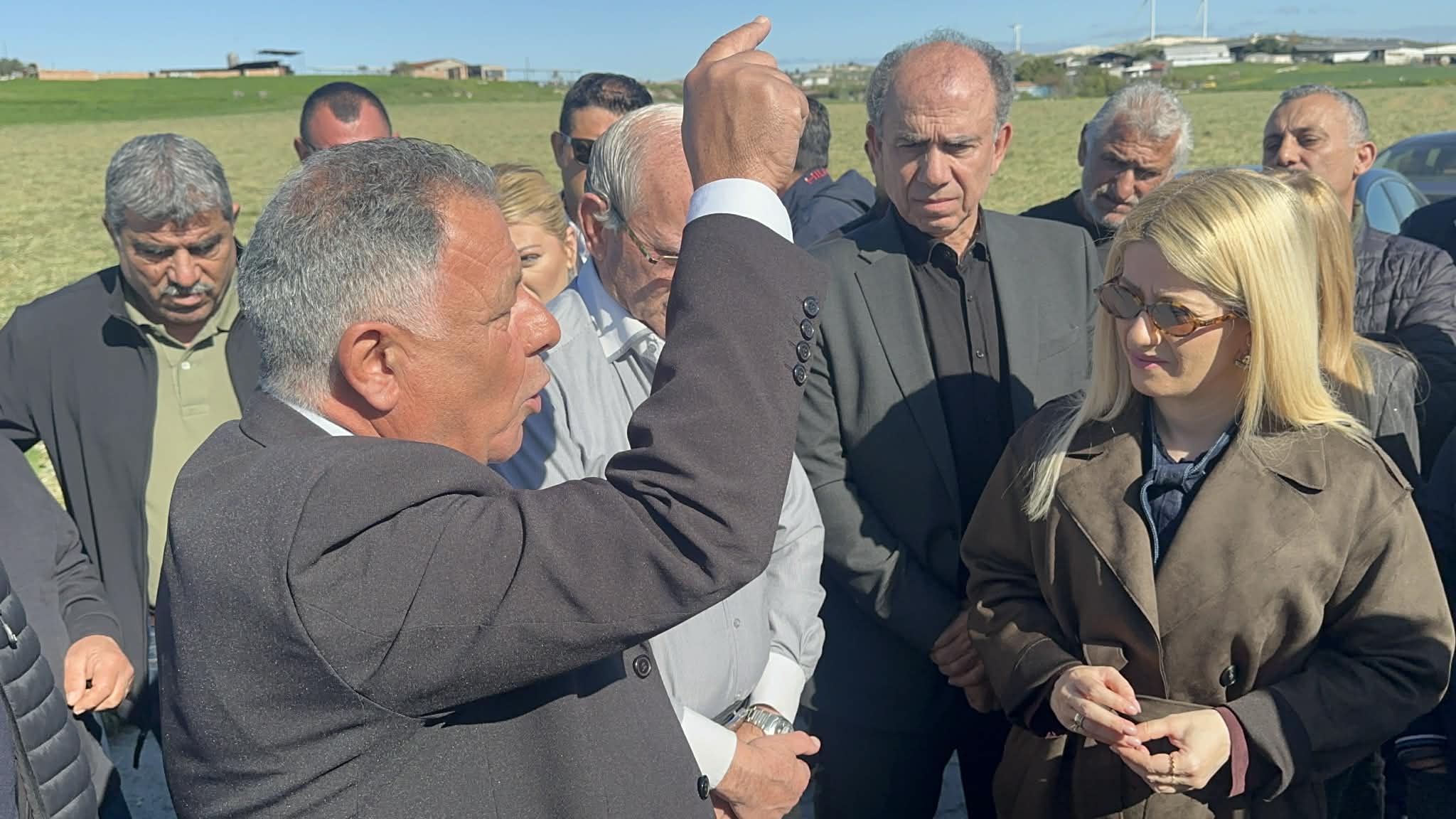
Disy leader Annita Demetriou met farmers in Aradippou on Wednesday morning to hear directly from livestock farmers facing what has been described as ‘the gravest threat in living memory’ to their professional lives, as the state seeks to accelerate emergency measures against foot-and-mouth disease.
Demetriou warned that the country was confronting “a major disaster” that threatened livestock farming, exports and economic stability, insisting that “absolute priority must be the immediate and effective containment of the infection”.
Her visit came as the government launched an island-wide vaccination campaign, while criticism grew over whether authorities acted with sufficient expediency after early warnings from the north.
Demetriou called for immediate and fair compensation, suspension of loan and tax obligations for affected farmers, and a comprehensive recovery plan.
“Everything that can be saved must be saved,” she insisted.
“Producers, exports and jobs cannot be left unprotected.”
She also demanded a full and transparent investigation into whether protocols were followed and where responsibility lay, arguing that accountability was unavoidable when warnings had preceded a “catastrophic scenario”.
Akel secretary-general Stefanos Stefanou, speaking in Aradippou later on Wednesday, said the situation required seriousness, speed and clear responsibility, warning against attempts to deflect blame.
“There are issues here that are dangerous and highly relevant, and there are guidelines that should have been enforced by the competent services,” he said, adding that public discussion had become distorted by efforts from “some competent authorities to shift responsibilities elsewhere”.
Stefanou stressed that the state must act “very seriously, effectively and quickly” on three core priorities, those being the containment of the disease, ensuring immediate and substantive support for affected farmers, and restoring confidence in the handling of the crisis through clear coordination and accountability.
Akel secretary-general Stefanos Stefanou is expected to attend the containment area later today to further address farmer’s concerns.
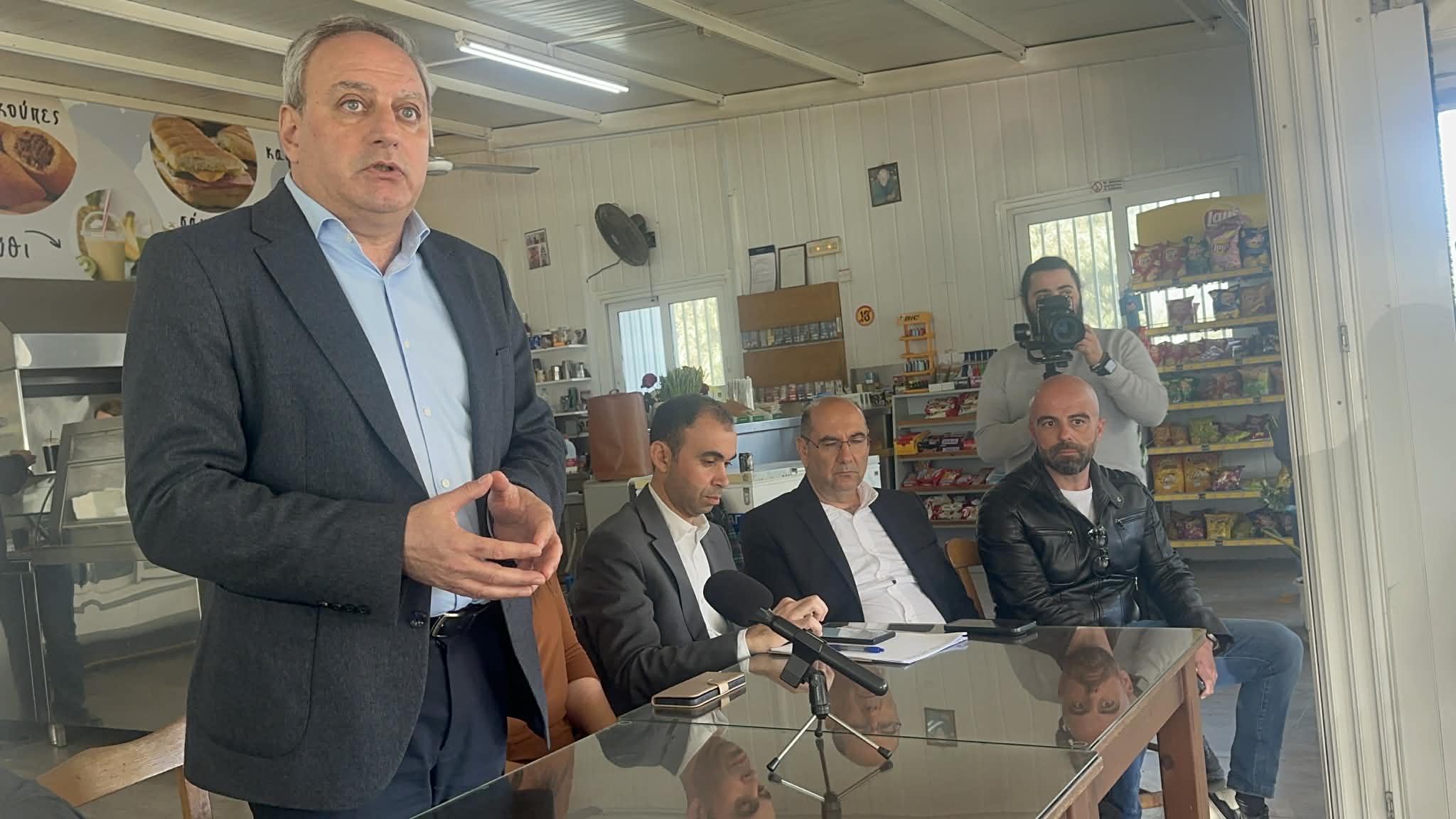
Agricultural minister Maria Panayiotou, whose absence from an extraordinary session of parliament’s agriculture committee this week, has faced accusations of avoidance and dereliction of office.
Livestock organisations and opposition parties argue that, despite awareness of cases in the north since December, preventive measures were limited and guidance to farmers insufficient.
The outbreak has already forced authorities to order the culling of animals in 11 infected livestock units, affecting an estimated 13,000 animals, in a bid to prevent wider losses.
Emergency vaccination began on Tuesday, starting in a 10-kilometre zone around confirmed cases in Larnaca district, before expanding island-wide.
Veterinary services are working in coordination with the European commission and international experts, with an initial delivery of 10,000 vaccine doses from the north and a further 529,000 expected from Europe in the coming days.
While the government insists that testing and surveillance had been under way along the Green Line since early January, epidemiological findings suggest the virus was circulating in government-controlled areas from early February, helping to explain its rapid spread.
Authorities have urged farmers to impose strict biosecurity measures and bar third-party access to livestock units, warning that any lapse could worsen the situation.
Farmers speaking at the House agriculture committee on Tuesday described scenes of devastation, with one breeder telling MPs that his family’s third-generation operation had been “destroyed within a day”.
Cyprus has temporarily lost its foot-and-mouth disease-free status, leading to a suspension of exports of live animals and unprocessed animal products.





Click here to change your cookie preferences