
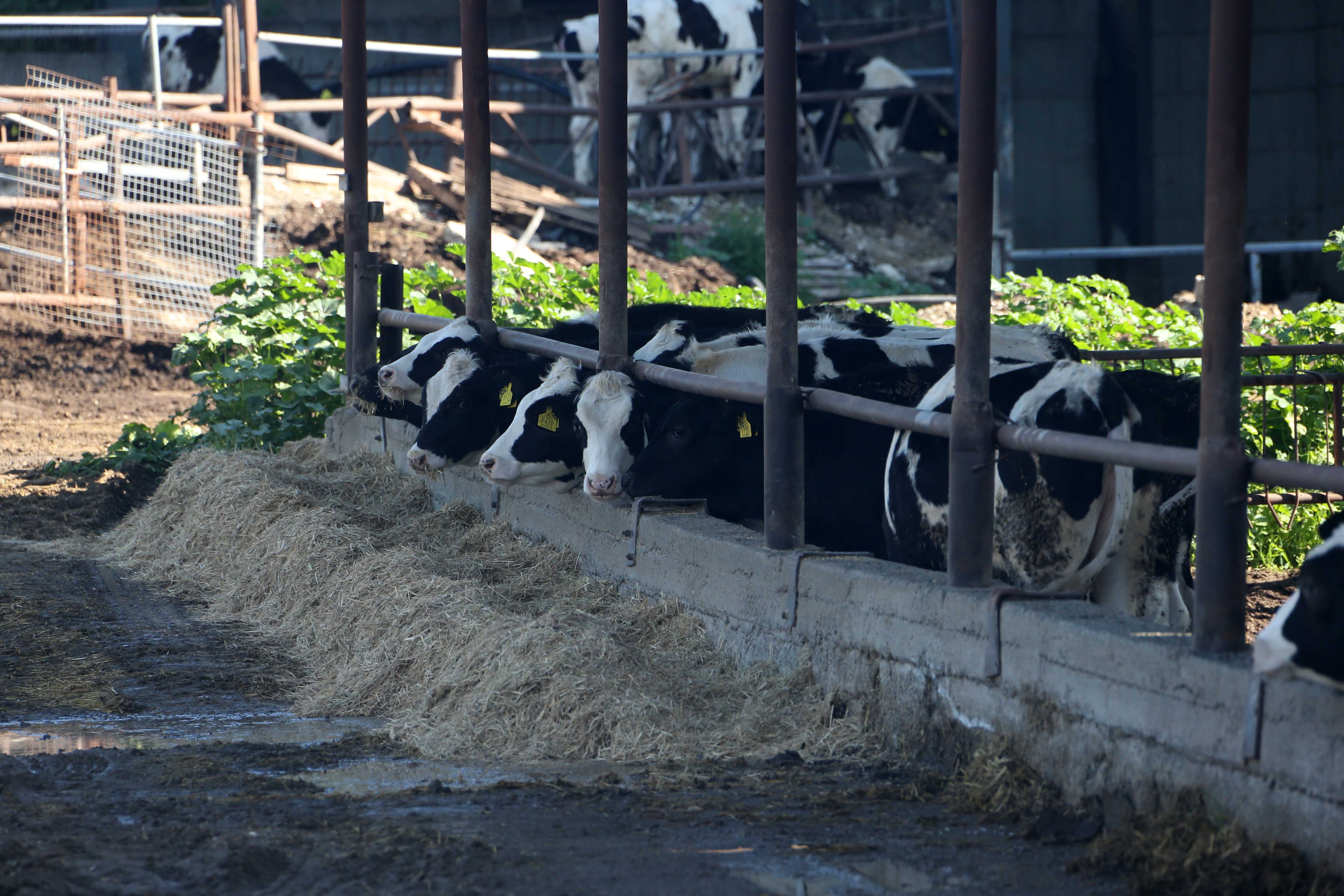
Three experts from the European Commission are expected in Cyprus on Tuesday and Wednesday to help deal with the foot and mouth outbreak, while the culling of cows, sheep and goats has begun, with 13,000 animals expected to be put down over the next few days.
Senior officer of the Veterinary Services Soteria Georgiades said the experts would discuss the situation on site and on paper, and help take the necessary decisions.
Commenting on remarks that the Veterinary Services had not taken measures in December, when an incident had been reported in the north, Georgiades said that no vaccinations take place if a country is free of the disease.
“We have no control over what happens in the north,” she said, adding that the south lost its disease-free status on February 21.
“When the incident appeared on February 20, we informed the World Organisation for Animal Health, on February 22 the Veterinary Services contacted the Commission for vaccines and on February 23 the agriculture minister requested them, so that their delivery could begin, along with a team,” she added.
Georgiades pointed out that other measures had already been taken, such as disinfections at the crossing points, notifying farmers and taking samples.
Regarding the concerns voiced regarding dairy products and particularly halloumi, Georgiades said Cyprus is no longer a disease-free country, vaccinations will begin and discussions will take place to determine the products affected.
She said some countries had stopped imports from Cyprus, however they resumed when Cyprus certified that halloumi had not been affected. Large markets such as Canada, the UK and Australia have not reacted, Georgiades added.
“Exports continue with various certificates and I hope that we will continue in this manner,” she said.
Georgiades spoke of 11 incidents, all in the Larnaca area around Livadia, Oroklini, Troulli and Aradippou.
The fact that all incidents are within a 5km radius from the initial incidents in Livadia and Oroklini is positive, she said.
In the meantime, Georgiades added, the culling of cows began on Monday and continued on Tuesday, and sheep and goats are to follow.
Over the next few days, about 13,000 animals are to be put down out of about half a million livestock on the island, so the situation is still manageable, she said.
“This process takes a few days. Animal evaluations will be made and farmers will be compensated,” Georgiades said.
The damage, she added, has not yet been calculated.
The virus is transmitted through direct contact with infected animals, contaminated fodder, or airborne particles, often over long distances.
Any reports by farmers will be investigated by the police, Georgiades said.
Recently, incidents appeared in Slovakia and Hungary, as well as wild bovines in Germany. Foot and mouth is also endemic in parts of Asia.





Click here to change your cookie preferences