
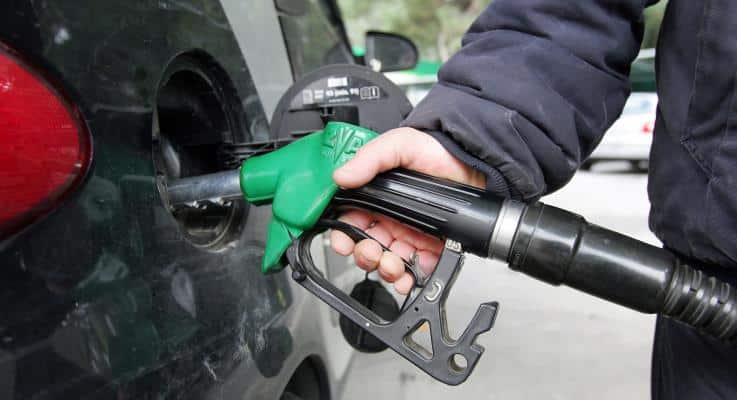
International market turbulence is keeping pressure on fuel prices in Cyprus, even as oil eased on Tuesday after surging to its highest level in more than three years a day earlier.
Data from the consumer protection service showed fuel prices in Cyprus rose by between 2.6 cents and 4.7 cents per litre over the past 10 days, depending on the type of fuel.
But the sharper increase may still be ahead, as the recent spike in crude prices has yet to fully pass through to the retail market.
Oil had climbed from around $90 a barrel a week ago to above $115 on Monday, raising expectations of further increases at petrol stations across Cyprus.
Part of the pressure is coming from refinery prices, which relevant bodies in Cyprus say have risen by as much as 55 per cent over the past week. The increase has been compounded by higher charges and insurance premiums.
The impact is expected to go beyond fuel. Oil remains a major cost factor across the economy, and a competent source said the latest rise could also push up electricity prices, food costs, transport and other goods and services in the coming period.
Speaking to the Cyprus News Agency (CNA), petrol station owners’ association chairman Savvas Prokopiou said consumers should expect staggered fuel price increases in the weeks ahead, following the sharp rise in international oil prices.
Asked whether this week’s increases would be higher than those seen last week, he said “Based on experience, I think they will be higher.”
He added that it remained difficult to predict the exact scale of the increases, as market conditions can shift rapidly during periods of geopolitical tension.
Internationally, oil prices fell sharply early on Tuesday after hitting session highs of $119.50 a barrel for Brent and $119.48 for US West Texas Intermediate on Monday, their highest since mid-2022.
By 0018 GMT, Brent futures were down $6.51, or 6.6 per cent, at $92.45 a barrel, while WTI was down $6.12, or 6.5 per cent, at $88.65, after US President Donald Trump said he believed the war in the Middle East could end soon, easing some concerns over prolonged disruption to global oil supplies.
Prices had surged on Monday as supply cuts by Saudi Arabia and other producers, during the expanding US-Israeli war with Iran, fuelled fears of a major supply shock.
Later in the session, however, markets pared gains after Russian president Vladimir Putin reportedly shared proposals with Trump aimed at a quick settlement to the war.
Still, the broader outlook remained highly uncertain. Iran’s Revolutionary Guards said Tehran would determine the end of the war and would not allow “one litre of oil” to be exported from the region if US and Israeli attacks continued.
At the same time, reports said Trump was also considering easing oil sanctions on Russia and releasing emergency crude stockpiles as part of efforts to contain the rise in global energy prices.
Meanwhile, supply pressures in the Gulf continued to build. Iraq has cut production at its main southern oilfields by 70 per cent to 1.3 million barrels per day, Kuwait Petroleum Corporation has also begun reducing output and declared force majeure, while Saudi Arabia has also reportedly started trimming production.
The G7 said on Monday it stood ready to take “necessary measures” in response to rising oil prices, though it stopped short of committing to release emergency reserves.
At the same time, European natural gas prices also jumped sharply. The Dutch TTF contract, the benchmark for Europe, rose by as much as 30 per cent to €69.50 on Monday before trimming some of its gains.




Click here to change your cookie preferences