
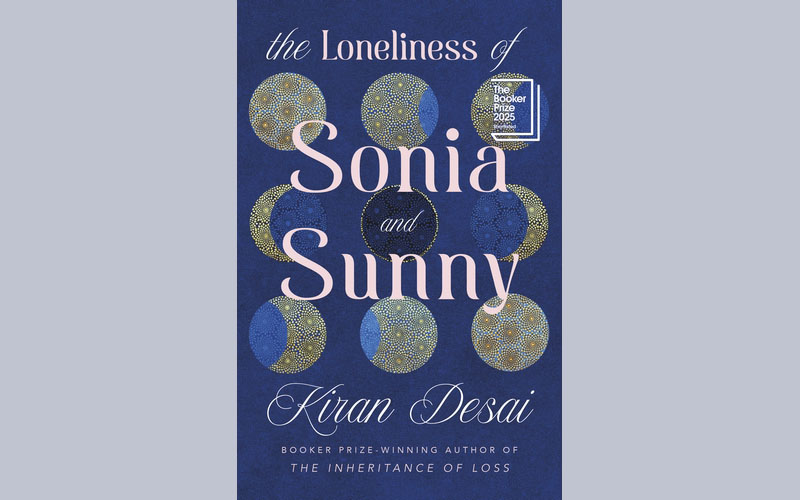
The Loneliness of Sonia and Sunny by Kiran Desai
By Philippa Tracy
In an extended read of nearly 700 pages, the two eponymous protagonists, Sonia Shah and Sunny Bhatia, navigate a complex journey across two continents during which a failed matchmaking attempt becomes an exploration of identity, culture, loneliness and love. Set primarily between India and the US, the values of each place shape the immigrant experience as much as the return home. There are lush descriptions of Goan beaches, Himalayan mountain mists, Delhi dinner parties, grand, old houses and the smells and tastes of the food.
Sonia is lonely, and depressed, during the cold winter break at her college in Vermont. Vulnerable, she meets a narcissistic older man, Ilan de Toorjen Foss, and learns “the indolent pleasure of walking about naked under someone’s gaze.” Ilan is an artist who believes that all women want to possess him. He has strong opinions about Sonia’s ambitions to be a novelist, warning her “not to orientalise” her writing for the West. This controlling and emotionally abusive relationship will frame her future relationship with Sonny. Before leaving for America, her mother gave Sonia an amulet that was meant to keep her safe. Ilan steals the amulet, as he steals part of Sonia’s ability to love.
Torn between the freedom that the US offers and the pride that her parents will feel if she returns to Delhi, Sonia returns to India when the relationship with Ilan ends. She meets Sunny on an overnight train. Sunny is a struggling copy editor living in New York City. He sees an opportunity to get a story published by writing about a retired railway clerk in Mysore who has grown his fingernails so long he has made it into the Guinness Book of World Records. When the resulting article makes the man feel humiliated, he writes to Sunny, accusing him of being an “Outsider pretending to be an Insider.” Sunny blames his mother, accusing her of bringing him up in a Westernised manner, so that he will always be “a foreigner in his own country, unable to reach important stories.”
Sunny struggles with questions of identity, as well as relationships. His best friend, Satya, wants his help to find an Indian wife, but then rejects his help, at times feeling jealousy and even hatred. His mother, Babita, “a mother in love with her son,” can be overbearing. She struggles with her own relationship with her dead husband, Sunny’s father, as well as his two brothers, who she thinks are conspiring to cheat her out of her home. Babita thinks men are often better dead, so that “you could resurrect them as Ideal Father or Ideal Husband.” Sunny keeps his American girlfriend, Ulla, a secret from Babita, the cultural misunderstandings in their relationship suggest it is doomed. Ulla, however, thinks she understands Indian men, their entitlements, and why they are attracted to white American women.
In this engrossing family saga, there is a strong supporting cast, particularly of female characters. Sonia’s aunt, Mina Foi, once proved herself unlucky, over 30 years earlier, by returning home after being married for only six months; her father, despite having arranged the marriage, thinks she is to blame. She tries to warn Sonia, about men being “wolves concealed behind quite normal exteriors.” Sonia sees obstacles to love everywhere, partly explored through magical realism at points in the book. Sonia’s mother, Seher, decamps to a family cottage in the mountains, to escape her loveless marriage. Babita tries her best to keep Sunny and Sonia apart but is, in the end, a resilient and redeemable character. Then there are Babita’s two servant girls, that she refers to collectively by one name, Vini-Puni.
Shortlisted for the Booker Prize 2025, this is a novel of ideas. When Sonia writes an article about the Indian kebab, she later says that the kebab story “is a Hindu-Muslim romance.” As well as a core theme of loneliness, identity and alienation, it addresses issues of wealth and class, different kinds of feminism, the legacy of colonialism, the partition of India, racism and the immigrant experience in the US post 9/11.





Click here to change your cookie preferences