
High-profile Turkish Cypriots on Tuesday expressed displeasure with Monday’s signing of a status of forces agreement between the Republic of Cyprus and France, which will, among other things, allow France to station troops on the island.
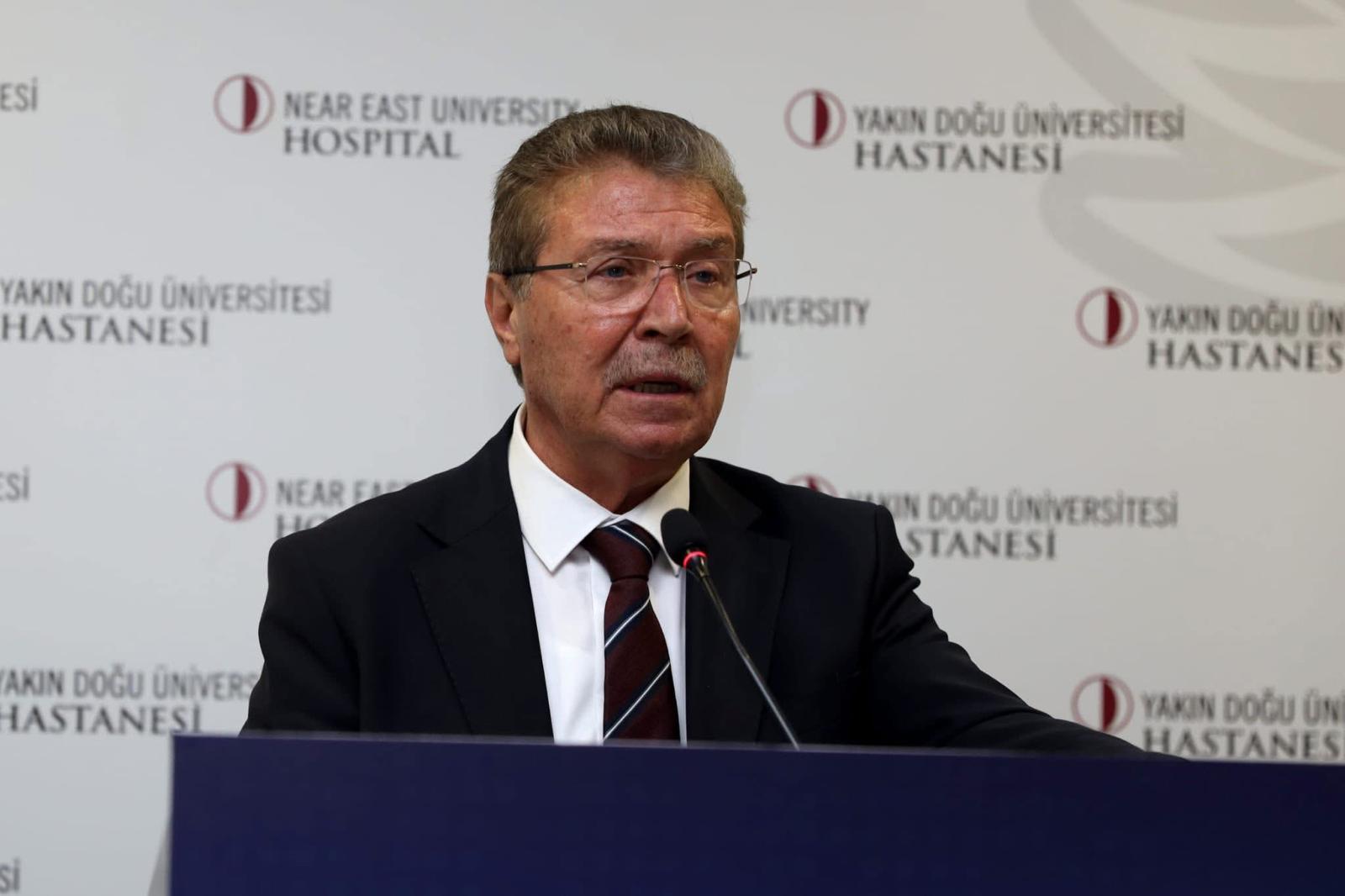
Turkish Cypriot ‘prime minister’ Unal Ustel accused the Greek Cypriot side of “increasingly intensifying” the buildup of military assets in and around the island “under the guise of humanitarian purposes”, while instead aiming to “gain military advantages”.
This, he said, “disregards the Turkish Cypriot people’s inherent rights to sovereign equality on the island” and “is intended to disrupt the delicate balances established concerning the security and stability and our region”.
He added that the agreement “holds no validity whatsoever from the perspective of the Turkish Republic of Northern Cyprus and the Turkish Cypriot people”.
“The developments reaffirm once again the vital importance of the effective and active guarantee provided by the Republic of Turkey, which is the guarantor of the Turkish Cypriot people’s security, and make evident the need to further strengthen our cooperation with our motherland, Turkey, in the fields of defence and security,” he said.
He went on to say that the “signing of military cooperation and armament agreements with various states … including those which do not even have a coastline in the eastern Mediterranean” on the part of the Greek Cypriot side is a “manifestation of [its] insincerity” with regard to the Cyprus problem.
On this front, he said that the Greek Cypriot side is both “making arrangements which allow the deployment of foreign military elements on our island and enabling the use of Cyprus as a base for various military purposes” but at the same time “insisting on the condition of ‘zero troops, zero guarantees’ in the context of reaching an agreement on the island”.
“It is evidently clear that such provocative steps further deepen the deficit of trust between the two peoples on the island,” he added.
He then said that “the Greek Cypriot leadership is openly demonstrating its true intentions by systematically taking unilateral steps which disregard the Turkish Cypriot people’s inherent rights and lead to faits accomplis on the island”.
“It is absolutely unacceptable for the Greek Cypriot administration, which has no authority to represent the Turkish Cypriot people and the entirety of the island of Cyprus, to enter into unilateral agreements on matters concerning the whole island,” he said.
As such, he added, “the Greek Cypriot leadership must immediately refrain from taking steps which risk turning not only our island but also our region into a target”.
He then turned his attention to France’s decision to sign the agreement, saying that “it is evident that states like France … are continuing to harm the process of creating cooperation and dialogue between the two states on the island”.
This, he said, is as the country “disregarded the current realities on the island of Cyprus and the Turkish Cypriot people’s inherent rights to sovereign equality”.
“We invite France, which has no place whatsoever in the order of security and stability established in the eastern Mediterranean with the 1974 peace operation, to put an end to its damaging initiatives in our region,” he said.
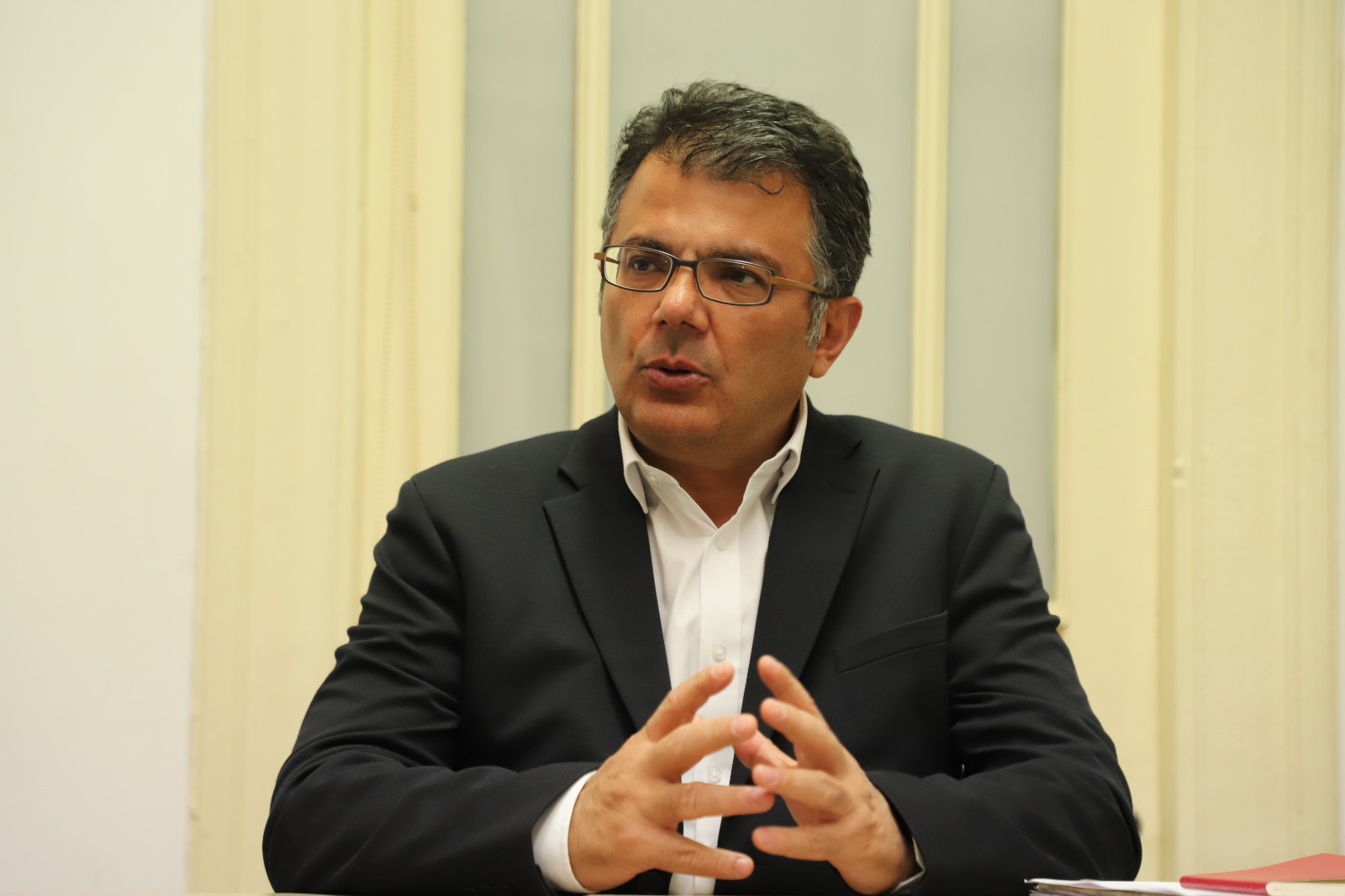
Opposition political party CTP deputy leader Asim Akansoy, meanwhile, described the timing of the agreement as “quite unfortunate” given that it came on a day when United Nations envoy Maria Angela Holguin was on the island and “making efforts for the demilitarisation of [it] and a just and lasting peace”.
“It was a very unfortunate, unacceptable, and strongly reprehensible step,” he said, before warning that it also “has the potential to increase tensions” both between the island’s two sides and in the wider region.
He called for Turkish Cypriots across the political spectrum to “develop a common stance” on the matter.
“If a consensus is reached, we must strongly oppose a third state, a state which is not a guarantor, from stationing troops in these lands, through steps to be taken at the UN, steps to be taken at the EU, and initiatives to be taken at the Turkish level,” he said.
The agreement was signed by French Armed Forces Minister Catherine Vautrin and Cypriot Defence Minister Vasilis Palmas in Nicosia, on the sidelines of the day’s informal European foreign affairs council (Fac) meeting in its defence configuration.
Plans for a status of forces agreement had been announced by Cypriot government spokesman Konstantinos Letymbiotis when French President Emmanuel Macron most recently visited the island in April.
President Nikos Christodoulides had said at the time that the agreement will “strengthen humanitarian military cooperation and joint action at a regional level”, and “provide for the presence of French forces on Cypriot territory for humanitarian purposes”.
Macron had spoken at length on the matter of defence during his visit to Cyprus, saying that the mass deployment of European military hardware in and around Cyprus after the island was hit by an Iranian-made drone in March, “constituted a reaffirmation of our determination to secure Europe’s space”.
“I said it in a simple way on March 9, that when Cyprus was attacked, it was Europe which was attacked,” he said.
As such, he said, “we therefore reinforced defence capabilities in the region with the deployment of military assets, in particular with the French carrier strike group” belonging to the aircraft carrier the Charles de Gaulle, which has been in the region since last month.
“This support and this concrete manifestation of the solidarity which links us as members of the European Union, and in terms of relations between France and Cyprus, was bolstered in December in the form of the strategic partnership,” he said, referring to the deal he had signed with Christodoulides in Paris at the end of last year.





Click here to change your cookie preferences