
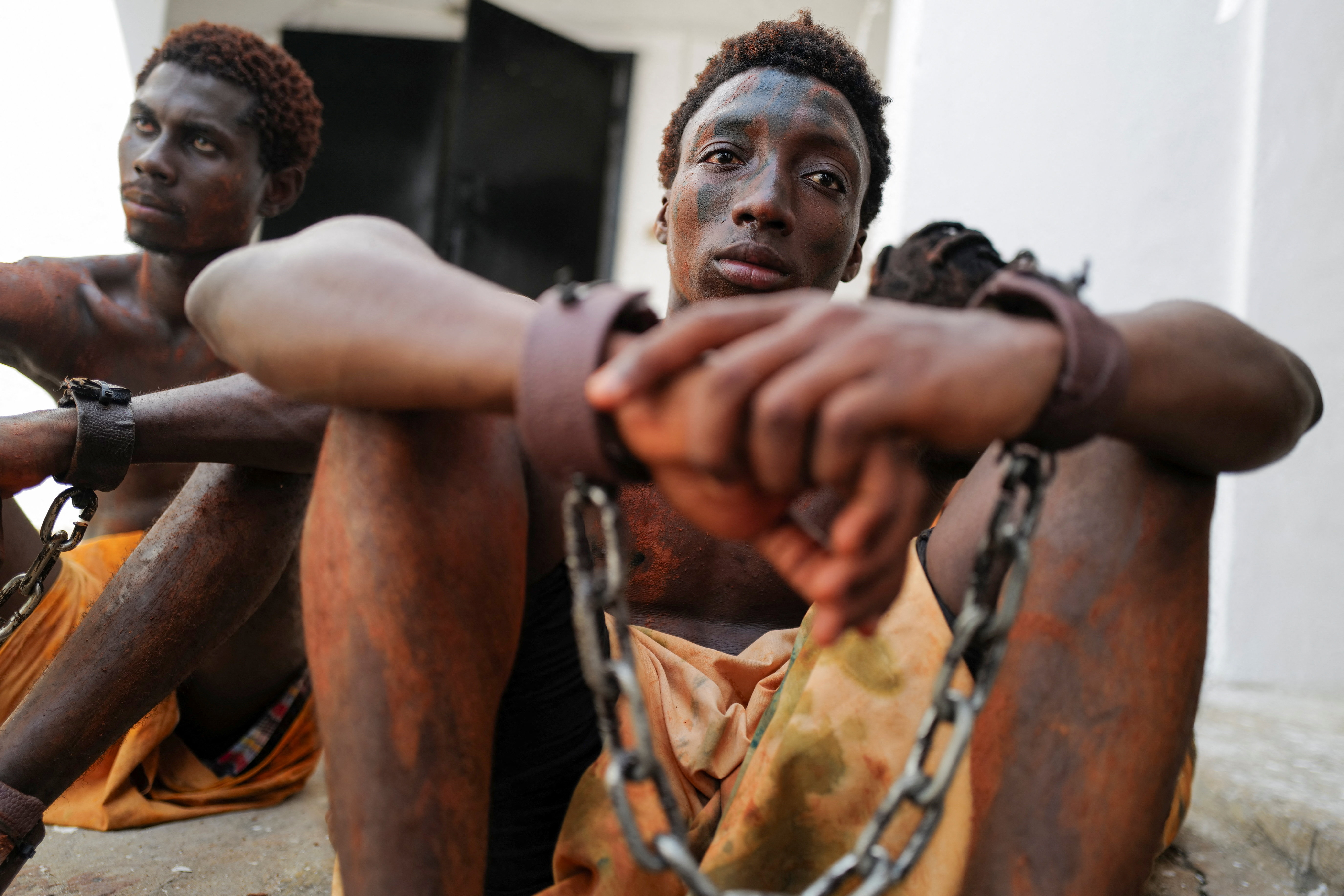
At a ‘high-level United Nations consultative conference’ in Ghana earlier this month, African and Caribbean countries called on the countries that benefitted from the transatlantic slave trade to make a formal apology and pay reparations to the descendants of the enslaved millions (or at least to the countries that the victims had come from).
This meeting followed up on the UN General Assembly’s March resolution declaring transatlantic slavery “the gravest crime against humanity” and urging member states to contribute to a reparations fund. 143 countries voted for it, and only three voted against it: the United States, Israel and Argentina.
However, there was one puzzling aspect to the vote: 52 countries abstained, including the 27 European Union countries and the United Kingdom. The UK’s abstention was particularly striking, because while British merchants were enthusiastic partners in the transatlantic slave trade in the 1700s, it was the British government that ended it in the 1800s.
The Slave Trade Act of 1807 forbade British subjects or ships to take part in the slave trade, and the following year the Royal Navy set up the West Africa Squadron to intercept slave ships of other European countries.
Over the next six decades the weatherbeaten ships of the blockading squadron seized 1,600 slave ships and freed an estimated 150,000 to 200,000 Africans from captivity. At peak times the operation involved 15 per cent of the ships of what was then the world’s largest navy – and in the end there were no more slave ships.
So why would Britain, of all countries, fail to support a resolution offering compensation to the descendants of the Africans who did not escape slavery? Or, to be more realistic, to the governments that now rule the countries where those long-dead ancestors were born?
The answer came in a single, rather cryptic sentence from the Chargé d’Affaires at the UK Mission to the United Nations, James Kariuki (himself of African descent). “No single set of atrocities should be regarded as more or less significant than another,” he said, and that said it all.
He didn’t go into the details, because the truth upsets people who believe – or at least pretend to believe – that the European slave traders actually went ashore to capture and enslave Africans. The truth is that every African in chains on those westbound ships had been sold to the European slavers by some local African prince or merchant or soldier.
It was a business that long predated the arrival of European sailors on the West African coast in the 1500s. Up to one-third of the population of what is now Senegal, the earliest hub of the transatlantic trade, were already domestic slaves, and there was already a thriving business in selling some of them north across the Sahara to Muslim countries around the Mediterranean.
There was an even bigger and older slave trade on the east coast of Africa, where up to 17 million black Africans were sold north to Arab traders over the course of almost a thousand years. (The transatlantic slave trade involved 10-12 million slaves over about 350 years.)
Then there’s the slave raids that the Crimean Turks were making into Russia and Poland right down to the 18th century (they called it ‘harvesting the steppe’), and the ‘Sallee Rovers’ from the Barbary coast (Moroccan pirates) who were ‘harvesting’ fishermen from the Grand Banks of Newfoundland during the early 17th century. And dozens of other examples elsewhere.
The past is a different country, and they do things differently there. Trying to recompense the victims of long-past injustices is a fool’s errand, partly because both the villains and the victims are beyond help or harm, but also because “No single set of atrocities should be regarded as more or less significant than another.”
The specific set of atrocities and injustices that are being privileged by the UN are seen as somehow worse because Western countries were involved, and because the descendants of the Africans who sold the slaves were subsequently colonised and oppressed by the same Western countries. This is a specious argument.
And how did slavery get mixed up with racism? Most slave-owning societies – the Roman empire, Ming China, the Ottoman empire – were equal-opportunity tyrannies where people of any colour or ethnicity could end up as slaves. Too much debt, a lost battle, just being in the wrong place at the wrong time, and bingo! You’re a slave.
Whereas slavery died out in Europe during the Dark Ages. If everybody is a subsistence farmer, there is no need or use for slaves. So when 16th century Europeans realised that slaves could make them profits in the newly discovered lands, they were happy to buy them – but they had to justify this behaviour by pretending that the slaves were genuinely inferior.
We’re still dealing with that five centuries later, but ‘compensation’ is not the answer.
Gwynne Dyer’s new book is ‘Intervention Earth: Life-Saving Ideas from the World’s Climate Engineers’. The previous book, ‘The Shortest History of War’, is also still available.





Click here to change your cookie preferences