
The idea of a sovereign wealth fund in the US, once unthinkable, is now gaining traction
As the World Cup comes to an end today, so will the euphoria that most of us have experienced start to fade. The distraction – similar to the Colosseum gladiator games in ancient Rome – will not last long.
That is not good news for Donald Trump as the November Congressional elections are fast approaching without any tangible benefits to the American consumer.
The US/Israel war with Iran has reignited and with it, oil prices have again started to rise. This will bring little comfort that inflation will come back under control. Increasingly this appears to be the defining moment where people are realising that the emperor has no clothes.
At the Federal Reserve (the US central bank) meanwhile, there is much anxiety about what direction interest rates should take. The Federal Reserve itself, has gone through its Succession phase without coming too much into the foreground, given that public attention was drawn elsewhere.
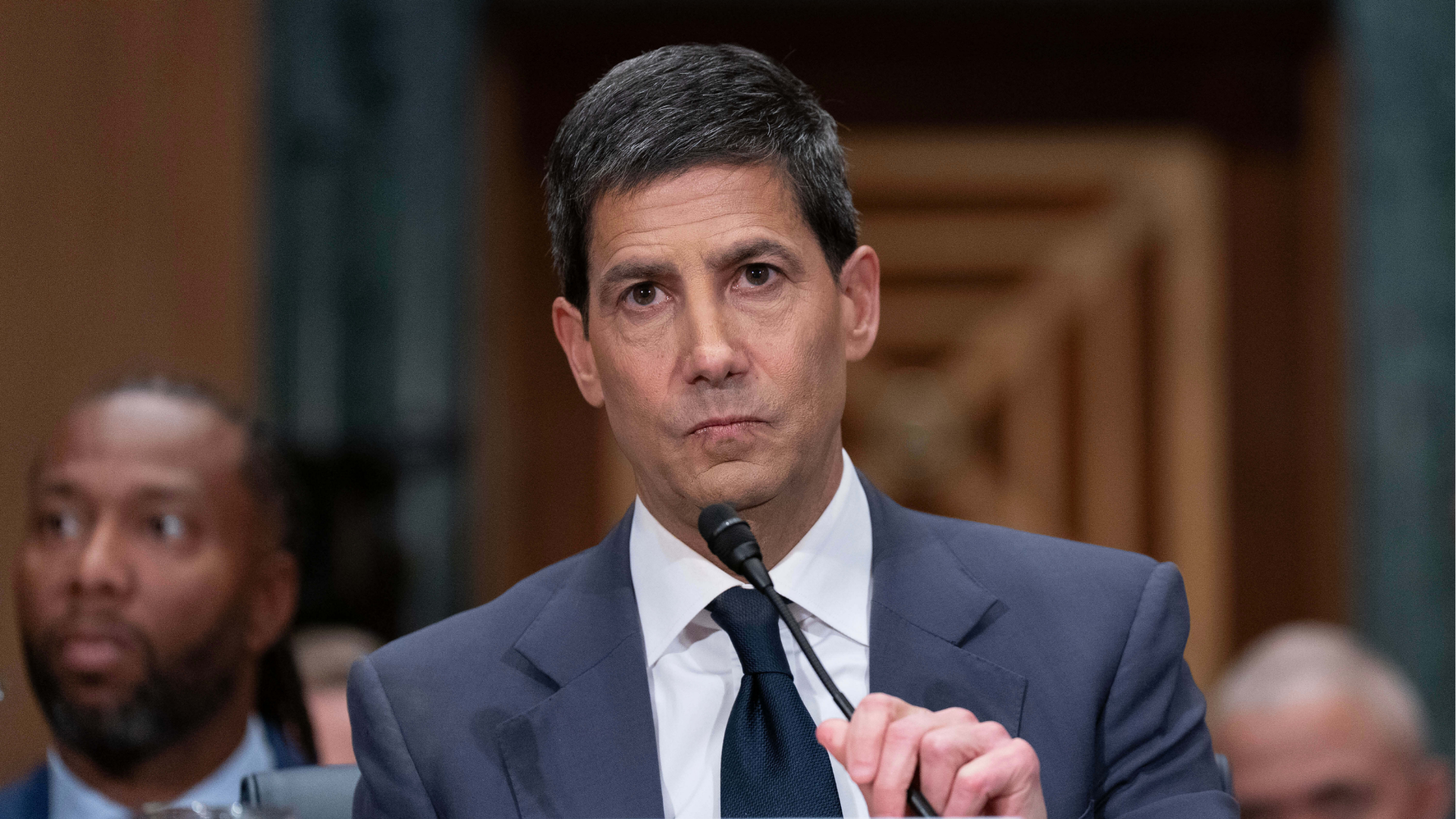
Chairman Powell was succeeded in May by Kevin Warsh after Donald Trump’s Department of Justice (DOJ) relented and dropped the legal proceedings against Powell which was the condition set for Warsh’s appointment. This was demanded by Republican Senator Thom Tillis who, free from reelection worries, decided to stand firm against Trump.
As a possible payback to the President, Powell himself chose to remain on the Federal Reserve Board despite the common practice by past chairmen to vacate their seat when their term as chair expired.
Moreover, the Supreme Court added to the Succession saga by protecting Lisa Cook, another Federal Reserve Board member that was being threatened to be fired by Trump, recognising the independence of the Fed as an institution – at least for now.
Warsh’s vote in his first board meeting as chairman, not lowering short-term interest rates – a long-standing Trump demand – was an acknowledgment that dogma needs to be set aside when faced with cold facts.
Warsh himself appears to be an intriguing character. His appointment comes at a time when deeper questions are being asked about what kind of central bank will be needed in the decades ahead.
He has questioned two key aspects of Fed policy. The first relates to the Fed’s forward guidance policy, indicating that he would rather go back to the Alan Greenspan years of cryptic communication (Greenspan famous for his opaque statements passed away earlier this year at the ripe old age of 100) rather than the transparency principle instituted by Ben Bernanke. The impact of such a change is unlikely to be groundbreaking.
Warsh’s approach at reducing the Fed’s balance sheet, however, is more of a conundrum. This view, which is shared by Treasury secretary Bessent, implies reigniting quantitative tightening (reducing the Fed’s holding of Treasury securities) and is far more controversial. It will possibly lead to a rise in long term interest rates. It’s not hard to guess how Trump will feel about that.
The debate over the Fed’s balance sheet however, could be influenced by another idea now gaining political traction – the creation of a sovereign wealth fund.
Surprisingly it is a policy matter that both Donald Trump and the left-wing Senator Bernie Sanders have in common. I know how improbable that sounds, but it is a path that many governments have been considering.
A sovereign fund is a state-owned investment fund that buys financial assets on behalf of the public and in this way benefits society as a whole. Some see sovereign wealth funds as a form of public-private partnership, allowing governments to participate in long-term wealth sharing.
The idea has gained attention of late from the huge increase in capitalisation of the tech sector in the US and elsewhere.
The way this links to the Fed’s balance sheet is that conceivably the Fed could transfer a part of its Treasury bill portfolio to the sovereign wealth fund. Such a move would be indeed groundbreaking.
Sovereign funds are not new. There are three notable examples in Norway, Singapore and Saudi Arabia. However, the likely adoption in the US is unheard of. The concept is at odds with the principles of unfettered free market thinking that is held so dear in the US.
Yet, the continuous concentration of wealth in the hands of a few tech barons has sharpened the minds on the need to tackle extreme inequality.
The recent example of the public share offering of Elon Musk’s SpaceX company, making him the world’s first trillionaire made headlines around the world.
The idea that this enormous wealth should somehow be shared with society at large is becoming increasingly mainstream.
How would a sovereign fund work though? Here is where Trump and Bernie differ. Where will the funds to acquire these financial assets come from?
Bernie sees this as a one-off tax on the wealth on billionaires. Trump on the other hand sees it as voluntary contributions made by the ultra-wealthy tech companies.
I dislike both approaches. I have argued before on how a wealth tax would fail philosopher John Rawls’ test of fairness, where he asked us to imagine designing society without knowing our class, race, gender, talents or religion.
Trump’s voluntary contributions idea on the other hand is fraught with risks of undue political influence being given to private companies. OpenAI CEO Sam Altman’s recent suggestion of giving a 5 per cent stake to the US government is a case in point.
I would much rather finance the sovereign fund from a revamped capital gains tax on the profits made from the public offerings of those companies.
The exceptional gains generated when companies first enter public markets owe much to publicly funded infrastructure – money creation, legal systems and scientific research.
Granting society a modest share of those windfalls through a sovereign wealth fund seems a fairer proposition than imposing a broad wealth tax.
The tax, moreover, would be much more likely to be accepted if the proceeds are to be invested in a sovereign fund rather than disappear into general government spending.
Even though the above ideas may appear to be out of a sci-fi TV series rather than a Succession type finance one, they are not as far-fetched as they may appear.
For starters, the central banks in both Japan and Switzerland have long been investors in equities as part of their reserve management. A public-private partnership therefore is not as radical as it sounds.
As a child I loved watching Star Trek. Captain Kirk’s communicator, strapped to his wrist, seemed like pure science fiction. Today as I answer calls on my smartwatch, I realise that yesterday’s fantasy has become today’s reality.
New ideas in economics may seem equally improbable today. Yet history suggests that today’s impossibility often becomes tomorrow’s orthodoxy.
Beam me up, Scotty!
Loukis Skaliotis is an economist





Click here to change your cookie preferences