
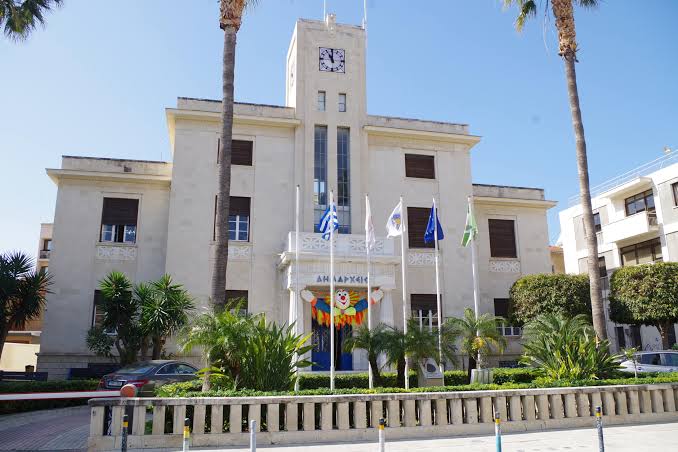
Serious shortcomings in staffing practices and overtime payments at Limassol municipality were identified in a report by the Audit Office released on Tuesday, which warned of a sustained pattern of practices exposing the authority to financial and legal risks.
The compliance audit, which examined personnel management between January 2022 and June 2024 while also reviewing earlier practices dating back to 2017, concluded that the municipality’s failings were not isolated incidents but reflected “a long-term deviation from the current legislative and regulatory framework”.
“The problems in the management of human resources are not isolated failures,” Auditor General Andreas Papaconstantinou said, adding that the findings demonstrated practices inconsistent with “the principles of legality and good administration”.
Among the report’s most significant findings was a sharp increase in overtime expenditure, which rose by 176 per cent from €492,563 in 2017 to almost €1.4 million in 2024 despite repeated assurances by the municipality that measures were being taken to reduce costs.
The audit found overtime payments made without prior approval, compensation that could not be verified through the electronic attendance system and payments made in breach of existing regulations.
One senior official received €114,784 in overtime between 2017 and 2023 paid at the full rate rather than the 60 per cent ceiling set out in a government circular, with approval granted by then mayor Nicos Nicolaides instead of the municipal council.
The report also condemned a series of staffing decisions taken despite legal advice.
Four traffic wardens were reassigned as ‘assistant clerical officers’ and granted personal salary scales, despite legal advice concluding such transfers could not lawfully proceed unless the entire traffic warden category was abolished.
Similar salary arrangements were identified for several other employees.
Auditors also found the municipality had relied on service contracts to cover permanent staffing needs, effectively bypassing established recruitment procedures.
Some contracts remained in force for more than 30 months, resulting in six individuals being recognised as employees of indefinite duration by social insurance services in 2024.
The report identified further deficiencies in job schemes, with the municipality unable to provide published schemes for all positions.
In some cases, existing records did not correspond with salary scales, while the available documentation did not allow auditors to exclude the possibility that appointments or promotions had been made outside the prescribed framework.
Concerns were also raised over financial benefits paid to staff, as according to the audit, collective agreements continued to provide allowances beyond those set out in the municipality’s regulations, including an Easter payment equivalent to 82.93 per cent of basic salary.
Such benefits cost an estimated €1.9 million between 2022 and 2024, while expenditure on allowances increased from €112,641 in 2021 to €162,038 in 2023.
The office further drew attention to outdated attendance recording systems, the continued use of official vehicles to transport staff to and from their homes and the approval of €9,823 in compensation to a retired senior official in lieu of accumulated leave despite regulations prohibiting such payments.
Further concerns centred on the municipality’s internal audit branch, with the report stating that allowing the mayor or municipal secretary to assign investigations undermined the auditor’s independence and conflicted with municipal legislation and international auditing standards.
The audit office in its recommendations, advised that the municipality properly document employee benefits and ensure full compliance with recruitment and overtime regulations.
Papaconstantinou warned that “piecemeal and unstructured decisions” risk fostering a culture of poor administration and undermining the municipality’s financial management.





Click here to change your cookie preferences