
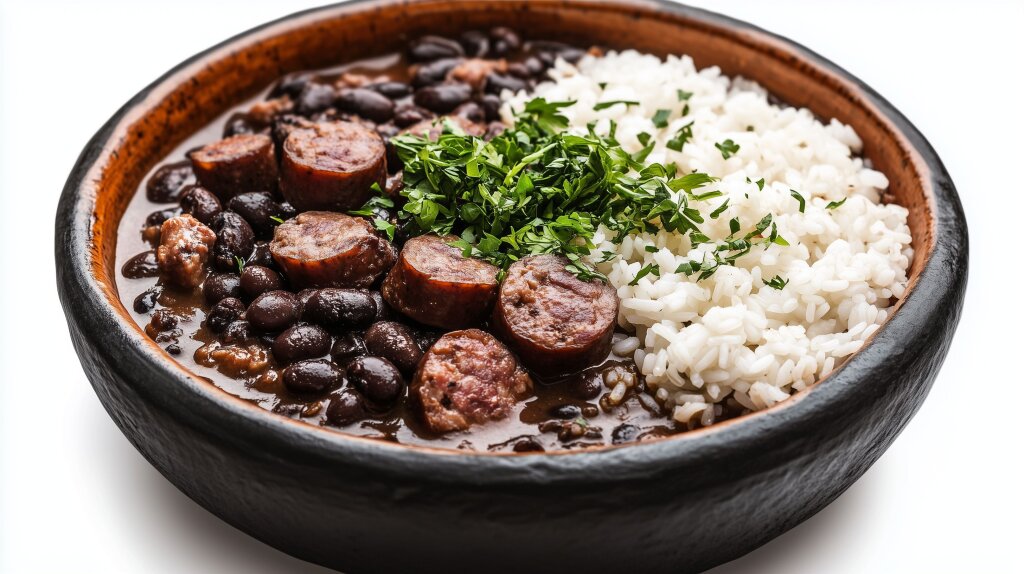
Feijoada is widely regarded as Brazil’s national dish, a rich black bean stew that reflects centuries of cultural fusion between indigenous, African and Portuguese culinary traditions shaped during the colonial period. It is commonly believed to have originated in the 18th or 19th century.
Its precise origins are debated among historians and food scholars. Many accounts suggest that enslaved Africans in Brazil adapted Portuguese bean stews using less desirable cuts of pork and beef, creating a nourishing and resourceful dish that gradually evolved into a national symbol.
Over time, feijoada became associated with social gatherings, particularly weekend lunches where it is traditionally served with rice, farofa, orange slices and collard greens. Its evolution reflects Brazil’s broader history of cultural blending and adaptation as ingredients and techniques from different continents merged into a single culinary identity.
Regional variations exist across Brazil, with some versions using lighter meats or additional spices depending on local preferences. In Rio de Janeiro feijoada is particularly iconic, often served in restaurants on Wednesdays and Saturdays.
In northeastern Brazil variations may include different bean types while southern versions can be richer and heavier in flavour. Feijoada is strongly associated with communal dining and leisurely meals often enjoyed over several hours, reinforcing its role as a social dish.
In Cyprus feijoada resonates with local slow cooked bean and meat dishes such as hearty stews that combine legumes, herbs and citrus elements reflecting a shared Mediterranean appreciation for comforting slow cooked meals.
Across Brazilian society, feijoada also carries symbolic meaning often associated with conviviality, music and cultural expression particularly during weekend gatherings where samba and shared plates define the atmosphere.
Its preparation is often seen as a ritual requiring patience, slow simmering and careful balancing of flavours which contributes to its reputation as a dish that rewards time and attention. In many households leftovers are considered part of the tradition with flavours deepening on the following day making it a dish that extends beyond a single meal.
It remains both a national symbol and a living tradition, uniting Brazilians through flavour, memory and shared celebration across generations. Today, feijoada continues to travel with Brazilian communities around the world, appearing in diaspora kitchens and international restaurants where it is adapted yet remains recognisably tied to its origins.
Whether served in Rio’s bustling eateries or prepared at home abroad, it retains its role as a dish of gathering and identity, embodying Brazil’s history of resilience, adaptation and cultural richness.





Click here to change your cookie preferences