
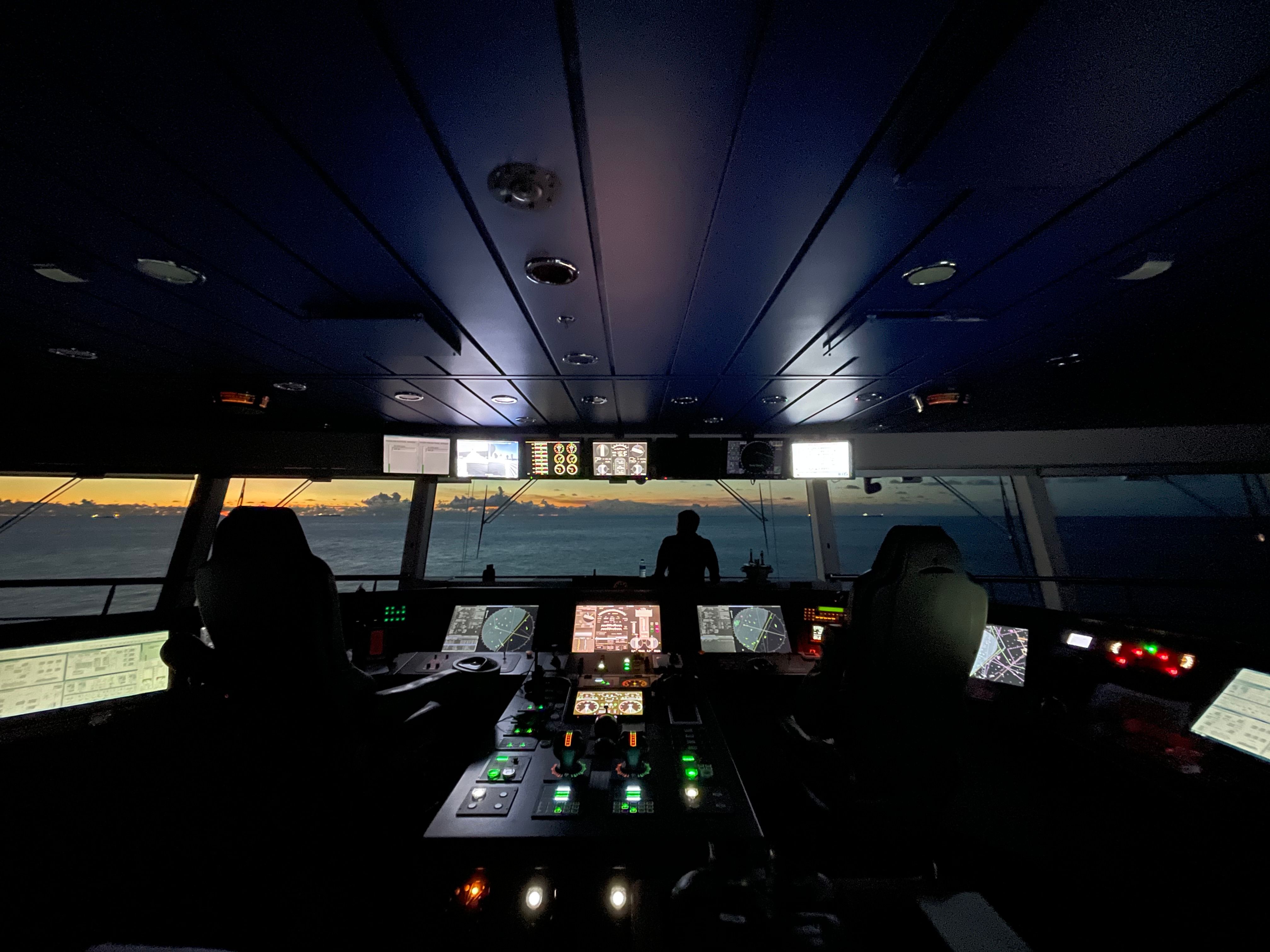
Cyprus may have built one of Europe’s largest shipping centres, but its next competitive test will be decided by the number of young people willing to build a life at sea and whether the industry can draw from the whole talent pool, rather than continuing to overlook much of its female half.
The island’s shipping sector supports more than 9,000 people ashore and over 55,000 seafarers working aboard vessels across international supply chains, according to government figures. Maintaining that position, however, will increasingly depend on whether maritime students reach the bridge and engine room, qualify as officers and remain in the profession.
Cyprus placed those priorities at the centre of the Lefkosia Declaration, signed by EU maritime ministers in April during the island’s presidency of the Council of the EU. The declaration calls for stronger seafarer education, retraining for the green and digital transitions, better promotion of maritime careers and the equal participation of women.
Shipping Deputy Minister Marina Hadjimanolis said the declaration points towards a European maritime sector that “recognises its people as its most valuable asset”, linking Europe’s shipping competitiveness directly to the skills, welfare and inclusiveness of its workforce.
The issue remained high on Cyprus’ agenda in July. During a July 7 address to the International Maritime Organisation (IMO) Council in London, Hadjimanolis again highlighted the need to strengthen seafarer education and training, expand retraining and skills development and promote equal opportunities for women in maritime careers.
In practical terms, Cyprus is supporting the route from the classroom to the first berth through an on-board scheme that pays shipping companies €600 a month per cadet officer for up to six months of training each year. Applications under the current programme can be submitted until October 31, 2027.
Meanwhile, the Cyprus Maritime Academy’s cadet programme provides annual scholarships of €7,200 to eligible Cypriot students, covering tuition and connecting recipients with shipping companies for their required 12 months of sea service and possible employment after graduation.
Efforts to increase the participation of women have also included the Women in Shipping campaign, the Cyprus Shipping Gender Equality Award and two scholarships worth €20,000 each for Cypriot women pursuing postgraduate maritime studies.
The need for such measures is evident in the latest international figures. The IMO-WISTA survey found that women accounted for just under 19 per cent of the maritime workforce covered by its 2024 data, but only 1 per cent of seafarers at sea. Women represented 5 per cent of students taking seafaring courses, pointing to a gap between entering maritime education and securing a lasting career on board.
New figures from Greece show how quickly that picture can change, while also raising questions about the supply of future officers.
According to the fourth annual report of Greece’s Seamen’s Pension Fund, known as NAT, the number of registered Greek seafarers rose by 2.6 per cent to 26,902 in 2025. The total covers crew members for whom at least one day of maritime insurance was recorded during the year.
Of these, 12,841 were officers, accounting for 47.7 per cent of the workforce, while 14,061 were ratings. The largest officer groups were masters, numbering 2,431, and second officers, at 2,180. Among ratings, sailors, including deck boys and pumpmen, totalled 4,456, while stewards numbered 2,808.
The age profile also remained relatively strong, with 70.4 per cent aged between 18 and 45 and more than one in three, or 34.7 per cent, no older than 30.
The most striking increase, however, came from women. Registered female seafarers rose by 6.9 per cent to 2,190, from 2,048 a year earlier, bringing their share of the Greek maritime workforce to 8.1 per cent. Their number has increased by 77 per cent in six years, equivalent to an average annual growth rate of more than 12 per cent.
Most female seafarers in Greece remain concentrated in passenger shipping, which employed 72 per cent of the total in 2025. This reflects the strong connection between female maritime employment and the country’s passenger and tourism sectors, while also showing that progress has not been evenly distributed across tankers, cargo vessels and other parts of the fleet.
The comparison with international figures is not exact, as NAT records registered Greek seafarers while the IMO survey draws on information supplied by participating organisations. Nevertheless, Greece’s figures show a considerably stronger female presence than that recorded across much of the global seagoing workforce.
Women are also becoming more visible at the beginning of the Greek career pipeline. They represented 12.7 per cent of active cadets and trainee seafarers in 2025, a higher share than their presence in the workforce as a whole.
However, the total number of cadets edged down to 3,114 from 3,140 in 2024. The fall amounts to fewer than 1 per cent and followed a sharp increase the previous year, so it does not indicate a collapse. Still, it comes at a time when shipping cannot assume that enough officers will automatically enter and remain in the profession.
Cadet placements were also concentrated in a limited number of vessel categories. Tankers accounted for 59.2 per cent of recorded sea-service positions, followed by dry cargo ships with 25.4 per cent and coastal passenger ships with 9.9 per cent.
At the same time, the Greek data point to a growing route from sea to shore. The number of senior maritime professionals, particularly former captains and chief engineers, working in shipping companies ashore reached 1,905 in 2025, rising by 14.9 per cent in one year and by 144.2 per cent over six years. This offers an important longer-term career path, although it also means the industry must continue producing enough experienced officers to serve both ships and their shore-based operations.
The warning extends well beyond Greece and Cyprus. The latest Seafarer Workforce Report from BIMCO and the International Chamber of Shipping estimates that 2.57 million seafarers currently serve aboard 85,148 merchant ships.
Despite that scale, the industry faces a shortage of 39,100 certified officers in 2026, while demand for officers has increased by 23.1 per cent since 2021. By contrast, the market has an estimated surplus of 56,890 ratings, showing that the shortage is concentrated in qualified leadership and technical positions rather than spread evenly across shipboard employment.
The global fleet is expected to require another 113,735 officers by 2030, meaning almost 22,750 additional officers would need to enter the workforce each year.
International Chamber of Shipping (ICS) Secretary General Thomas Kazakos said shipping must “engage with young people early and build a strong pipeline of future talent”, adding that “without continued investment in both recruitment and training, the workforce gap risks growing at a time when the industry needs skilled seafarers more than ever”.
However, the latest discussions show that numbers alone will not solve the problem. At a July 23 forum in Tokyo, the ICS and the International Association of Maritime Universities warned that training based only on minimum international requirements is no longer sufficient.
Future officers will require broader technological, environmental and managerial skills to work with alternative fuels, automated vessels and artificial intelligence. Educators also stressed that seafarers must be able to challenge and verify AI-generated recommendations, rather than develop an unsafe dependence on automated systems.
Just days earlier, discussions during Crew Welfare Week emphasised the other side of the shortage. Shipping companies may recruit more cadets, but retaining them will depend on working hours, connectivity, employment security, career development and protection from violence, harassment and discrimination.
Nikolaos Koletsis of the European Transport Workers’ Federation summed up the connection between conditions and recruitment, saying that “if we fix the conditions, then we will fix the attractiveness”, adding that the industry “cannot offer top skills without offering good jobs and strong career prospects”.





Click here to change your cookie preferences