
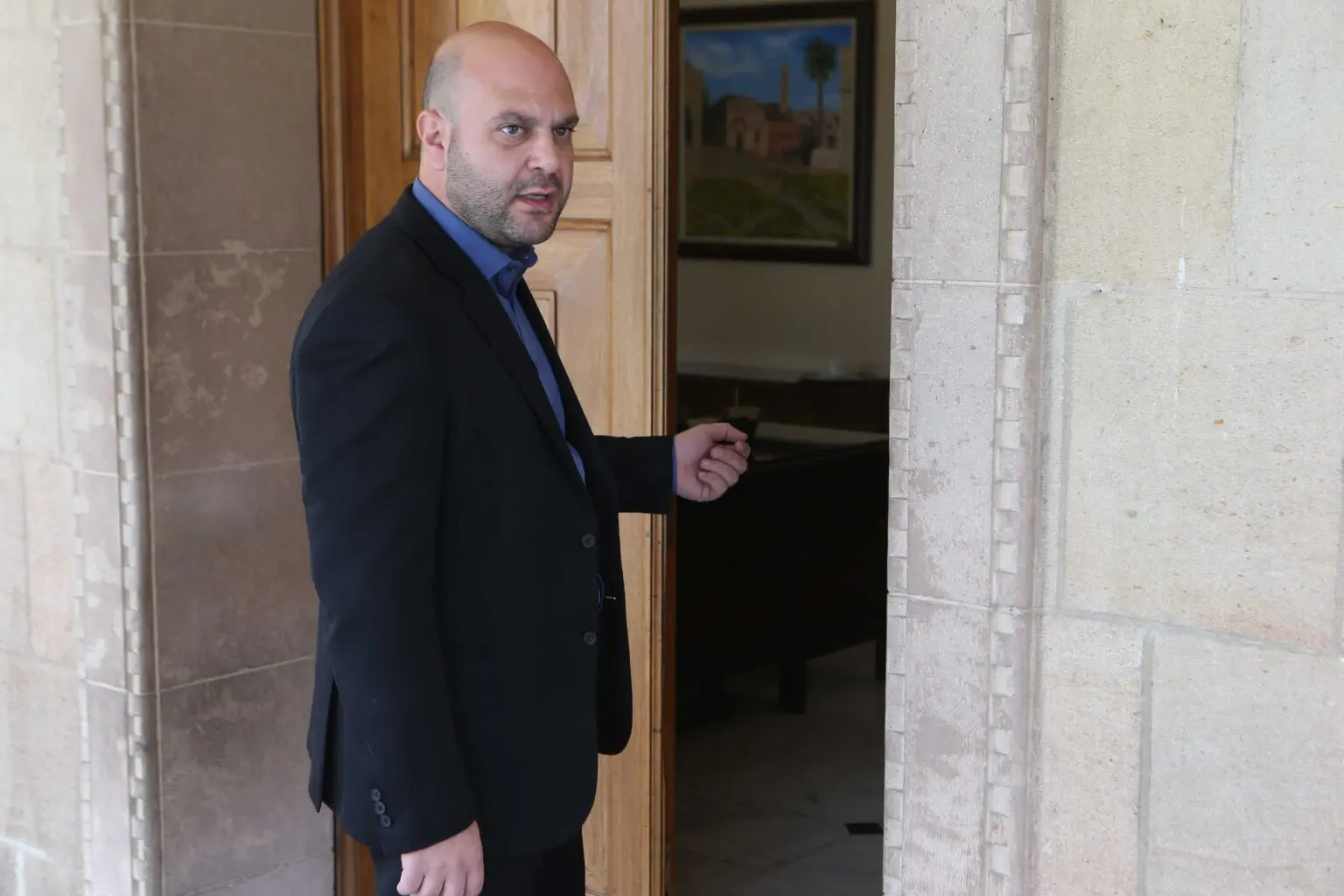
Elam leader Christos Christou on Monday set out his opposition to both confidence-building measures and to the idea of a federal solution to the Cyprus problem as he exited the day’s National Council meeting.
“We are making it clear once again that confidence-building measures or other unilateral actions undertaken by the Republic of Cyprus, simply to get occupying Turkey to accept being led into negotiations, we consider to be in the wrong direction,” he said.
He added that confidence-building measures have been “repeated … for decades without having brought about any substantial result”.
On the matter of a federal solution, he said that “we stand by our firm position that the solution based on a bizonal, bicommunal federation will lead to the creation of an experimental state similar to the one which operates today in Bosnia and Herzegovina”.
However, he said, “in that case, it is based on a trizonal federation, and the result is that it does not function like a normal state”.
Since the entering into force of the Dayton Agreement in 1995, Bosnia and Herzegovina has been a confederal state, with two constituent entities – the majority Bosniak Federation of Bosnia and Herzegovina, and the majority Serb Republika Srpska – as well as the mixed Brcko district, which operates under joint supervision.
The country also has a three-member rotating presidency, which features a Bosniak and a Croat member elected from the Federation of Bosnia and Herzegovina, and a Serb member directly elected from the Republika Srpska.
The implementation of the Dayton Agreement is overseen by a foreign-born high representative.
Away from the question of the solution’s model, Christou also charged that United Nations Secretary-General Antonio Guterres “did not achieve the main objective” of his visit to the island last week, “which was to convince Turkey to change its attitude and disposition and help resolve the Cyprus problem”.
“We estimate that various reports which are being made about an almost immediate resolution of the Cyprus problem in the coming months are unfounded at this stage, and it is good to limit ourselves to what we know and not what we assume,” he said.





Click here to change your cookie preferences