
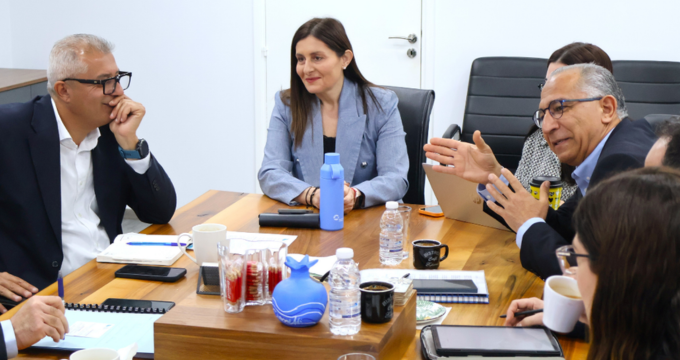
Additional measures to strengthen inspections and improve the response to marine pollution were agreed on Thursday following a broad meeting in Limassol, as Shipping Deputy Minister Marina Hadjimanolis insisted Cyprus’ waters were clean but acknowledged there was room for improvement.
The meeting came amid complaints from residents over foam, unpleasant smells and unidentified substances or waste appearing along Limassol’s coastline. Affected areas included Armonia beach in Ayios Tychonas, where a white substance covered the sea, while on August 15 people found themselves swimming among nappies, sanitary pads, waste materials and possible sewage or effluent.
Earlier this month, it was reported that sewage was overflowing into the sea at Moni in the Limassol district from the sewerage treatment plant.
Hadjimanolis chaired the meeting, which was attended by Limassol mayor Yiannis Armeftis, Amathus mayor Kyriakos Xydias and representatives of the environment department, the district local government organisation, the fisheries department and the Cyprus Ports Authority.
Speaking afterwards, Hadjimanolis said incidents of marine pollution had been recorded this year and dealt with, while further measures had now been agreed to improve monitoring and allow authorities to respond more quickly.
These include more intensive inspections, greater use of technology including drones and additional equipment aboard vessels carrying out checks.
The measures were presented by academic and shipping deputy ministry adviser Angelos Menelaou and are aimed at ensuring greater operational readiness and better coordination between the relevant authorities by next summer.
Hadjimanolis said complaints from members of the public would continue to be assessed and investigated but stressed that reports should be accompanied by specific information wherever possible to help authorities trace the source of pollution.
She also referred to a cabinet decision to establish a coastguard, which she said would contribute to more effective monitoring of Cyprus’ waters.
The mayors, however, called for more immediate action and clearer responsibilities among government agencies.
Armeftis described marine pollution as a “very serious” issue and said Limassol residents were angry about the situation.
“We demand solutions. Not tomorrow, but yesterday,” he said.
Although tackling marine pollution does not fall within the municipality’s responsibilities, Armeftis said the local authority had a duty to exert pressure for action.
“For the citizen, what matters is not which authority has responsibility, but how the problem is solved,” he said.
He called for central coordination and an operational mechanism with clearly defined responsibilities, so that it was clear who coordinates, carries out inspections, polices the area and intervenes when an incident occurs.
Armeftis also reiterated the municipality’s proposal for the creation of a rapid-response marine pollution unit operating under the coordination of the relevant state authority.
“There is no longer any room for further delays. The problem is known and citizens are rightly complaining. What is needed now are decisions and solutions,” he said.
Xydias also stressed that responsibility for protecting Limassol bay ultimately rested with the state.
He described the bay as an important factor in Limassol’s contribution to the Cypriot economy and said the government had an obligation to safeguard it.
“The more pressure placed on Limassol bay, the greater the risks of pollution will become,” he warned, calling for measures to be based on scientific evidence.
“Only if we do this on a scientifically documented basis, with everyone taking responsibility and being held accountable, will we get somewhere,” he said.
The meeting also saw moments of tension, particularly over the division of responsibilities, with the mayors pressing the government to assume the central coordinating role and responsibility for tackling marine pollution.

Click here to change your cookie preferences