
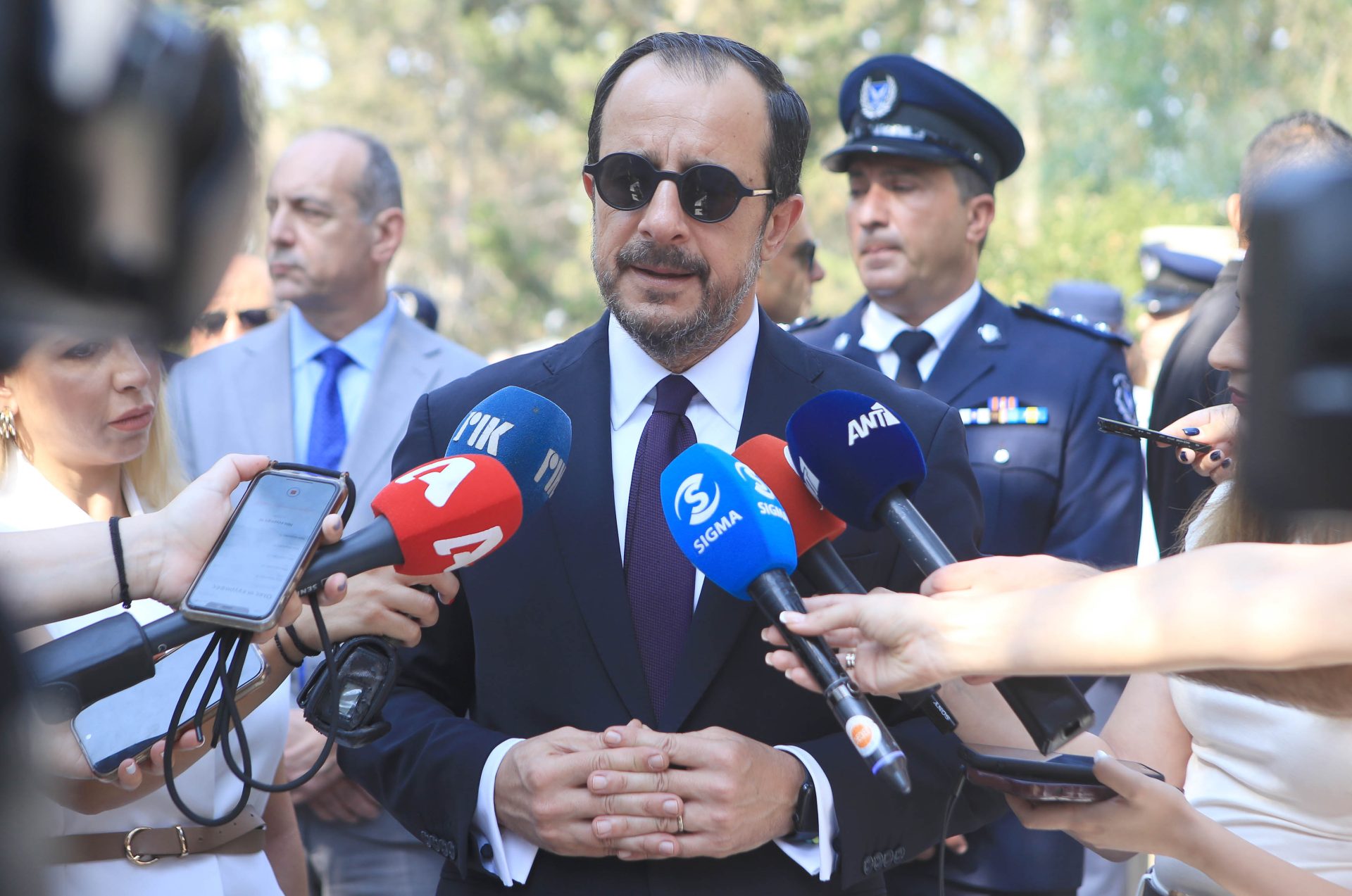
Cyprus will account for a total of €3.5 billion from the European Union’s next multiannual financial framework, President Nikos Christodoulides said on Friday, before announcing that “projects” costing the same amount would be carried out across the island over the budget’s corresponding seven-year period.
The multiannual financial framework is the EU’s budget for the period covering the years between 2028 and 2034, and Christodoulides said that his discussion with European Council President Antonio Costa, who visited the island earlier in the day, “largely concerned” budgetary matters.
“We are in the final stage of negotiations. We aim to have a political agreement by the end of the year and from this budget, as the data currently stands, our country accounts for approximately €2.5bn plus €1bn, which is the Republic of Cyprus’ contribution,” he said.
As such, he added, “cabinet will within 2027 decide, we will announce projects throughout free Cyprus amounting to €3.5bn, and for this reason I want to take advantage of today’s opportunity to call on all our villages” to present him with ideas for projects which can be undertaken.
“As a government, we place particular emphasis on our countryside, to mature projects, so that they can be approved by the government in 2027,” he said.
Negotiations are ongoing in the hope of reaching an agreement before the end of the year, with Irish European Affairs Minister Thomas Byrne having said on Thursday that he is “absolutely confident” that this will be achieved, with Ireland holding the Council of the EU’s rotating presidency during the second half of this year.
“The reason we need to is because we need to have funds in place by January 1, 2028, and if we don’t conclude the negotiations this year, we wont have time to do all the legislation that goes with the figures that we could agree,” he said upon his arrival at a meeting of EU European affairs ministers in Dublin.
Meanwhile, European Budget Commmissioner Piotr Serafin said that he can “feel a lot of excitement” regarding budget negotiations, and that this is a “good sign”.
“It’s a good sign that the member states have started to engage, and without serious engagement, even the best presidency, and the Irish presidency is one of the best, will not be able to solve it, but I’m optimistic, so if you are looking for signs of optimism, this is the level of emotions,” he said.
As well as the issue of completing and passing the relevant legislation, it is widely understood that the EU and its 27 member states plan to do this to ward off the risk of elections next year in France and Poland – and the possible election of the far right in both countries – derailing efforts to reach an agreement.
Previously, Costa had said in June, upon the conclusion of Cyprus’ six-month term as the holder of the Council of the EU’s rotating presidency, that with the island having submitted a budget proposal and consensuses beginning to be found among member states on aspects of it, the EU was “one step closer to a new European budget … that meets our ambitions”.




Click here to change your cookie preferences