
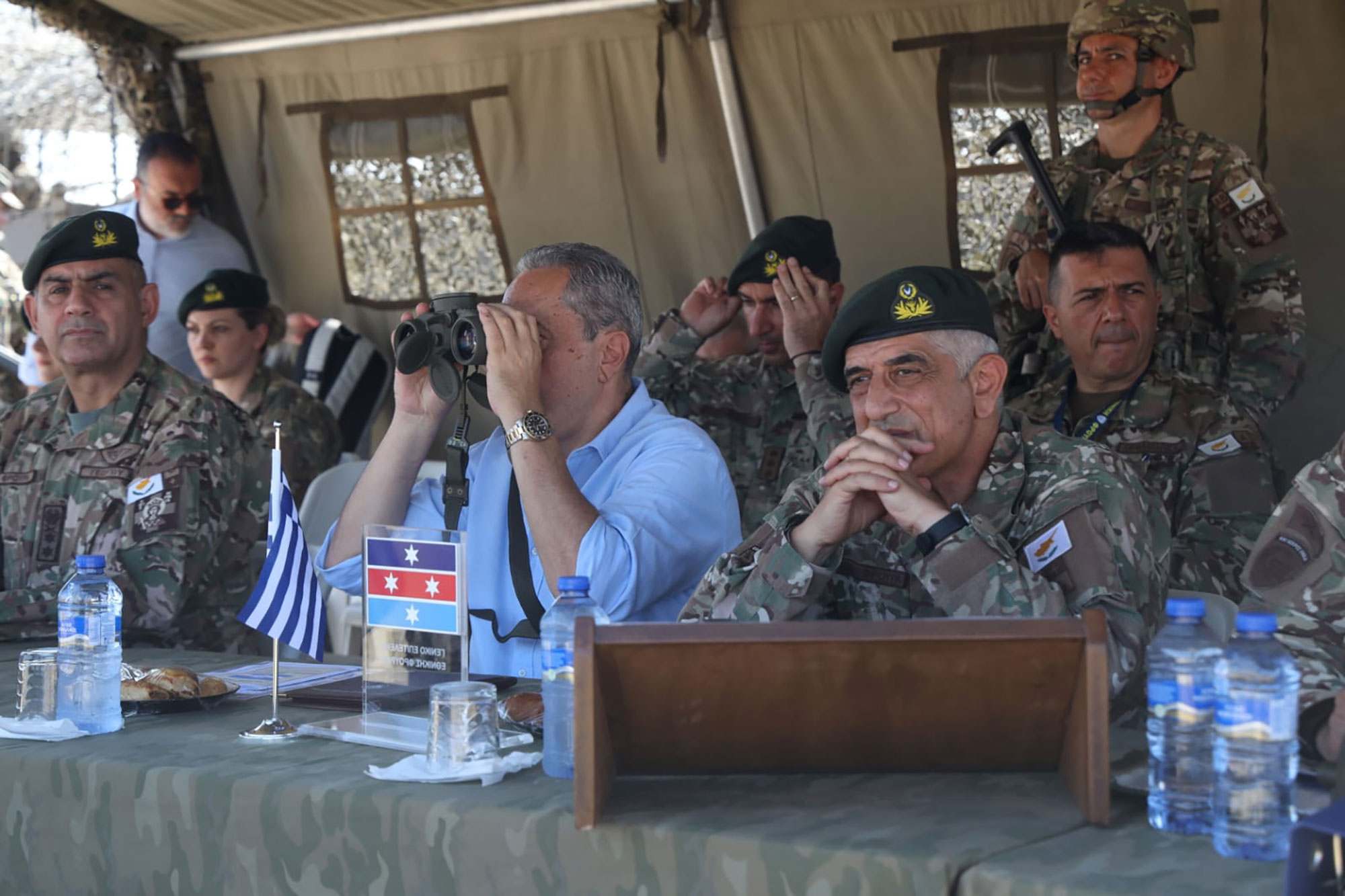
Israel sees Cyprus as an increasingly important defence partner and believes there is clear potential for the two countries to deepen cooperation between their defence industries, including through joint projects and technology, the Israeli embassy in Nicosia has told the Sunday Mail.
Describing the relationship as one based on “mutual trust, shared interests and a commitment to regional stability”, the embassy said Cyprus’ importance as a trusted partner had grown as defence cooperation deepened.
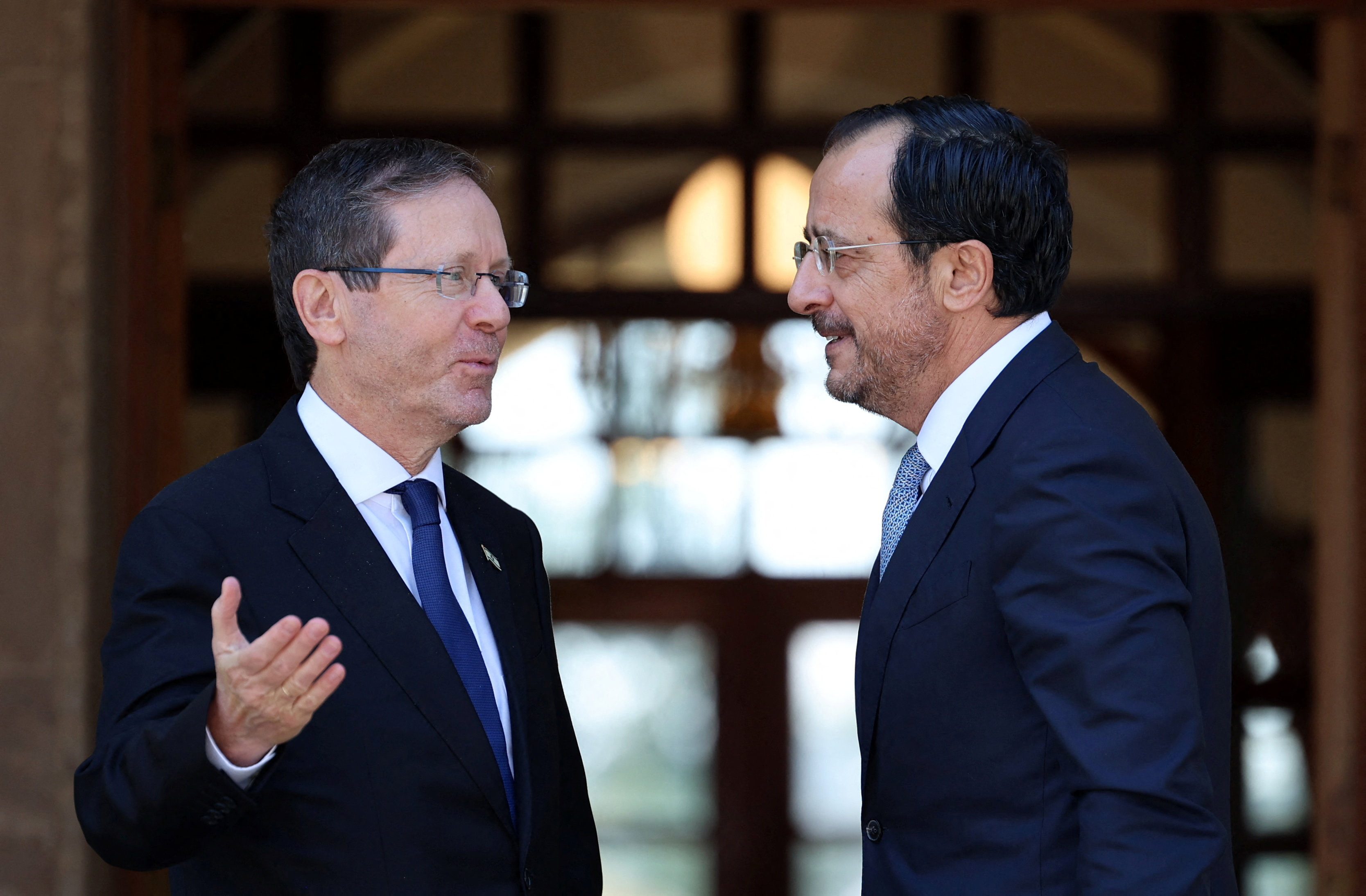
The comments come just over a week after Israeli President Isaac Herzog visited Cyprus, with defence among the areas President Nikos Christodoulides said the two countries wanted to develop further.
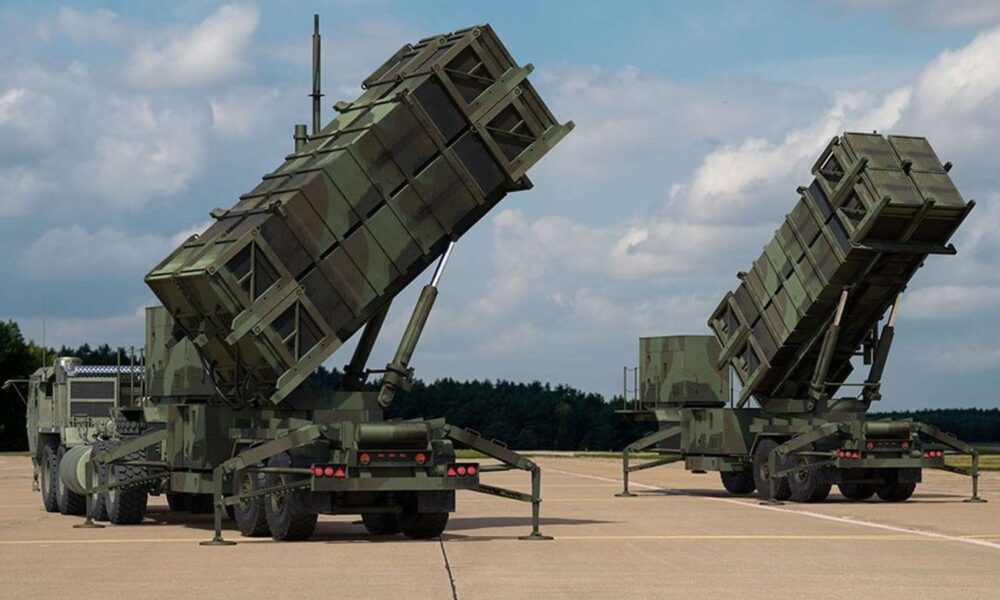
They also come at a time when Cyprus is buying Israeli systems, including the Barak MX air defence system, Greece is moving ahead with the €3.035 billion Achilles Shield, much of it based on Israeli technology, and almost €1.2 billion is available to Cyprus through the EU’s Safe defence mechanism.
Israeli defence companies are also looking at opportunities on the island.
“Israel welcomes Cyprus’ efforts to strengthen its domestic defence industry,” the embassy said, pointing to potential “partnerships, joint projects and technology cooperation”.
“We encourage Israeli and Cypriot companies to explore opportunities together.”
Greece is increasingly part of the same conversation.
“The trilateral cooperation between Israel, Cyprus and Greece adds an important regional dimension,” the embassy said. “It strengthens our ability to contribute to security in the eastern Mediterranean.”
Speaking to the Sunday Mail, retired Greek Air Force Vice Marshal Ioannis Anastasakis and Dr Marios Efthymiopoulos, director of Strategy International and associate professor of international security and strategy at Vytautas Magnus University, looked at what closer ties with Israel and Greece could mean for Cyprus, from defence and interoperability to industry and Safe.
For Anastasakis, it starts with geography, “The island of Cyprus, both geopolitically and geostrategically, is at the centre of the eastern Mediterranean,” he said, describing it as “the EU’s outpost in this sensitive region”.
When asked what Cyprus brings to its developing relationship with Israel, Anastasakis pointed to its position between Israel and Europe, saying the island has an important role “in connecting Israel with Europe, giving it strategic depth”.
Hydrocarbons around Cyprus and Israel, Egypt’s role in moving regional gas towards consumers and European interest in eastern Mediterranean energy have added to that importance, he said.
Recent conflict has also exposed the island’s vulnerabilities.
Following drone attacks targeting the British bases earlier this year, European countries deployed military assets to Cyprus, with Greece among the first to send F-16s and frigates.
When asked what that means for Cyprus’ own capabilities, Anastasakis said alliances cannot replace the ability to defend the island.
“The military adequacy of Cyprus for reasons of defence and security is clearly necessary,” he said.
“Current and planned procurement should provide the capability for self-defence and the protection of critical entities on the island”, he said, with Cyprus maintaining sufficient capability until wider mutual assistance becomes available.
Cyprus has been allocated almost €1.2 billion through Safe and has already received €177.2 million in pre-financing, when asked about the opportunity this presents, Anastasakis said Cyprus should also be looking at what can be developed at home.
“The development and participation of the Cypriot defence industry in European programmes is imperative,” he said, with Safe potentially supporting its further development. Cooperation with the defence industries of Greece and Israel, he added, should be guided largely by operational needs.
The areas being discussed also overlap with Cyprus’ own defence priorities. In a recent interview with the Cyprus Mail, Defence Minister Vasilis Palmas said particular emphasis was being placed on drones and counter-drone capabilities, surveillance, the protection of critical infrastructure and strengthening air defences.
When asked whether Safe and growing interest from Israeli and Greek companies could turn Cyprus into a regional defence industry and technology hub, Efthymiopoulos was cautious.
“Yes, but we should not overstate what already exists.”
“The opportunity is to build domestic R&D, specialised manufacturing, cyber, counter-UAS, testing capacity and start-up ecosystems,” he said, while attracting Israeli and Greek investment and embedding Cypriot firms in “real supply chains”.
But registering a foreign company in Cyprus is one thing, building an industry is another.
“The practical next step is Cyprus-based consortia and genuinely European corporate structures involving Cypriot, Israeli and Greek companies, fully compliant with Safe requirements rather than nominal registration,” Efthymiopoulos said.
The distinction is important because simply establishing an Israeli company in Cyprus would not automatically open the door to Safe procurement, which includes restrictions on third-country ownership and components.
Greece already offers a nearby example with its Achilles Shield programme which involves 19 Greek companies and more than €750 million in domestic industrial participation, tying a major weapons acquisition to industry at home.
For Cyprus, who is traditionally a buyer of foreign defence equipment, that is a model quite difficult to ignore.
When asked whether Cyprus-Israel cooperation had moved beyond procurement and exercises, Efthymiopoulos said it increasingly includes “training, crisis management, civil protection, intelligence-related dialogue and technology”.
“The next step is to make this more permanent, standing channels, joint planning and practical programmes that continue beyond individual exercises or purchases.”
On whether Cyprus, Greece and Israel are moving towards something more structured, he said bilateral ties still carry much of the weight.
“What is missing is a permanent trilateral mechanism linking governments, armed forces, industry, universities and research centres, with regular working groups, annual priorities and projects that can actually be measured.”
Common or compatible weapons systems could also draw the three closer.
When asked what happens once countries begin operating such systems, Anastasakis said cooperation becomes necessary in “training and exercises, logistics and maintenance”.
“The sharing of capabilities strengthens defence cooperation and the defence of the cooperating countries, while providing flexibility and endurance for the prolonged duration of defensive operations,” he said.
Cyprus does not necessarily need a heavy defence industry to participate.
Anastasakis sees “great possibilities for cooperation in software development, the use of AI, as well as the protection of cyberspace”.
Efthymiopoulos told us that interoperability should mean “ecosystem synchronisation, not only military compatibility”, with defence programmes connecting technology, industry and investment.
Cyprus, he said, in fact, offers “much more than geography”, linking Europe, Israel and the wider Middle East through security, shipping, trade, energy and logistics.
But he added a caveat.
“Geography only becomes strategic depth when it is backed by stronger port, aviation, digital and logistics infrastructure.”
But where does Turkey fit into all of this?
The two experts differed on how central Ankara is to what is developing between Cyprus, Greece and Israel.
When asked about Turkey’s reaction, Anastasakis said Ankara “wrongly perceives it as encirclement”, despite the defensive nature of the systems involved.
He pointed to the rapid development of Turkey’s own defence industry over the past decade.
“Turkey did not wait for the modernisation and strengthening of the defence equipment of Greece and Cyprus,” he said. “It had itself moved ahead at a rapid pace.”
In his assessment, modernisation by Greece and Cyprus, European involvement, US support and cooperation with Israel are now helping to balance the regional military picture.
Efthymiopoulos was on the other hand more reluctant to put Turkey at the centre.
“Turkey is one element in a much wider regional equation, not the defining one,” he said.
Cyprus, Greece and Israel have their own reasons to deepen cooperation, including regional stability, critical infrastructure, energy, maritime safety and security.
The practical priority, he said, should be “coordinated action planning, regular trilateral consultations, common threat assessments and crisis-response mechanisms”.
But he also sounded a warning closer to home.
“We should also pay attention to unnecessary internal rhetoric that can damage trust,” he said.
The United States has meanwhile maintained the lifting of restrictions on arms sales to the Republic, while Europe is pushing to expand both its military capabilities and defence industrial base.
When asked whether the Cyprus-Greece-Israel relationship is a temporary meeting of interests or something more lasting, Efthymiopoulos said much would depend on what happens next.
“It can become long-term, but only if we build structures around it,” he said.
“The real objective should be less symbolism and more structure, connectivity and measurable cooperation.”



Click here to change your cookie preferences