
Decades of emergency governance, patronage and institutional barriers have weakened civic participation and left Cyprus facing a deepening crisis of political legitimacy.
The collapse of civic participation and institutional authority in Cyprus is neither routine voter apathy nor simple elite graft. It marks the terminal exhaustion of an emergency governance model forged under existential duress.
Following the 1974 Turkish invasion, the Republic adopted the posture of a garrison state – living under proximate occupation, enforcing universal conscription, and invoking survival to suppress political dissent. Yet it remained unreformed: unlike functional siege states such as Finland or Singapore, Cyprus developed neither administrative rigour nor civic total defence.
Instead, the garrison framework fossilised into an alibi for clientelism, partisan quotas (rousfeti), and rent extraction. Barricaded behind defensive statutory thresholds, a cartelised elite hollowed out internal resilience while clinging to the fiction that foreign alignment could replace domestic capacity – even as conventional military parity against Turkey remains impossible and armed conflict is not an option the Republic can contemplate.
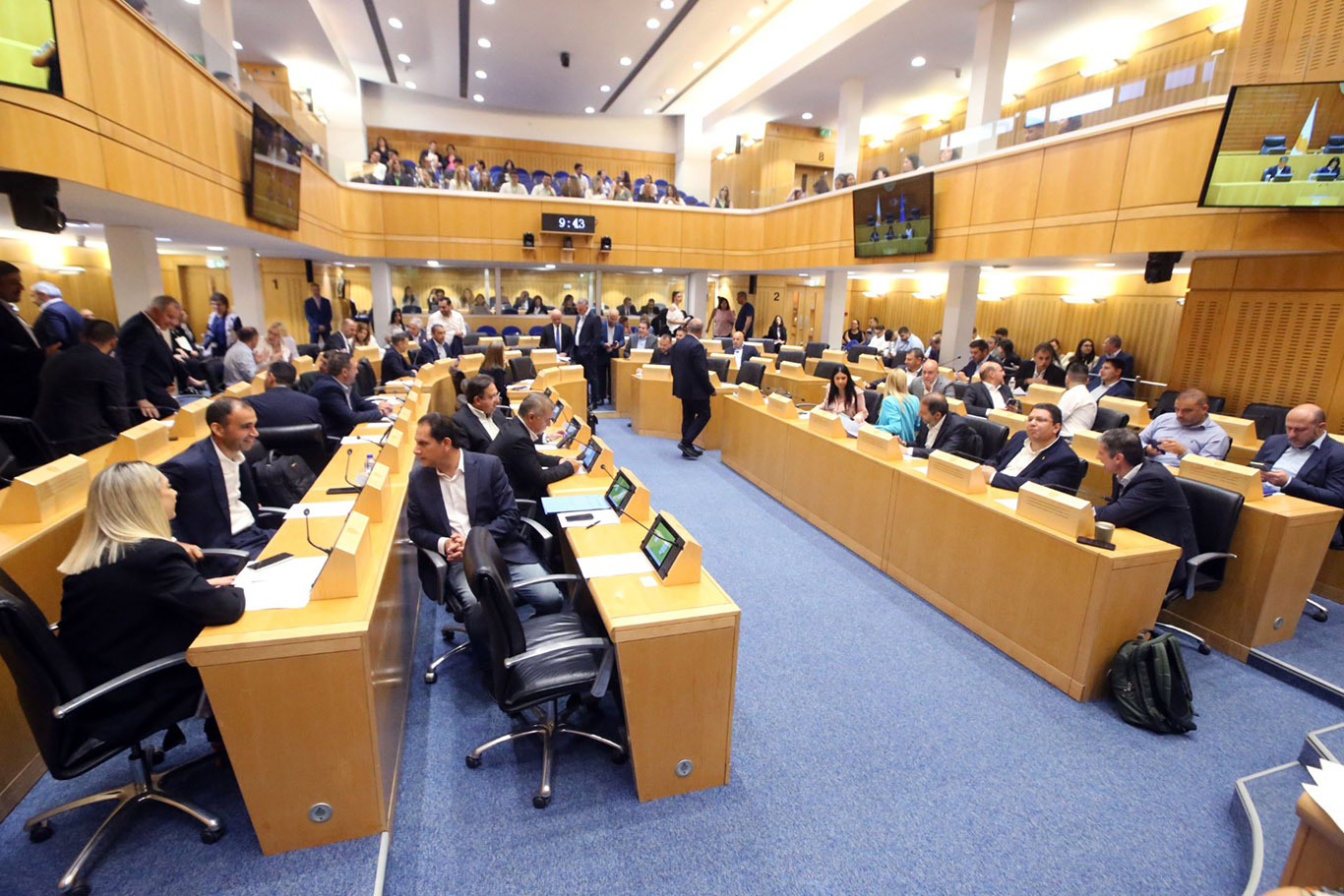
The legislative rupture of May 2026 marks the inevitable reckoning: a regime that cannibalised its civic foundations can no longer manufacture consent or defend its legitimacy.
The May 2026 inflection point
The parliamentary elections of May 24, 2026, exposed a fundamental fracture in the Republic’s institutional architecture. The Gallagher Index which compares the share in parliamentary seats to the vote, climbed to 7.15 among valid ballots, far exceeding European Union norms of two to four points. Turnout settled at 66.91 per cent, leaving abstention at 33.09 per cent, while 16.83 per cent of valid ballots backed minor platforms disqualified by the statutory 3.6 per cent threshold. When non-voters are integrated into a turnout-weighted Gallagher calculation, systemic disproportionality reaches 29.5 points, suggesting a very narrow representation.
This barrier preserved elite dominance at the expense of democratic cohesion. The historic duopoly of the Democratic Rally (Disy) and the Progressive Party of Working People (Akel) secured 32 seats through organisational discipline, while the centrist Democratic Party (Diko) and the nationalist National Popular Front (Elam) took eight seats each. Representing less than half of registered electors, these four parties captured an 85.7 per cent legislative supermajority.
Yet this redoubt proved brittle. Engineered on the premise that political mobilisation requires heavy operational capital monopolised via public subventions, the cartel was outflanked by digital media. By bypassing clientelist media ecosystems, personalist platforms such as Direct Democracy Cyprus and the anti-corruption vehicle Alma slashed voter acquisition costs, securing four seats each. The traditional centre collapsed: the Movement for Social Democracy (Edek) and the Democratic Alignment (Dipa) were eradicated from parliament, stripping the executive of its legislative buffer and stranding a sixth of active voters outside formal politics.
Statutory barricades and cartelisation
The structural roots of this distortion lie in institutional barricades erected over the preceding decade. In November 2015, the legislature passed Law 145(I)/2015, doubling the threshold required to access higher seat-allocation rounds from 1.8 to 3.6 per cent. This was anchored by Political Parties Law 175(I)/2012, which codified an exclusionary financing system allocating 15 per cent of public funds equally among seated parliamentary factions, apportioning the remaining 85 per cent in strict proportion to previous electoral shares.
Structural realists rationalise threshold engineering as necessary elite self-defence to prevent micro-factional paralysis under regional anarchy. However, this ignores the self-limiting nature of domestic extraction. In Cyprus, the ruling elite inverted the small-state survival imperative. Rather than channeling resources into civil defence, the post-1974 establishment treated existential threat as an alibi for rentier distribution and partisan quotas.
Public subsidies replaced voluntary subscriptions, and utility boards became partisan reserves. Real administrative authority migrated to an iron triangle of party leaders trading planning waivers and tax exemptions, real-estate developers capturing offshore windfalls, and corporate law firms brokering state access for foreign capital.
Rentier exposure and constitutional sanctuary
This capture originated in the emergency mobilisation of 1974. Facing an invasion that occupied 37 per cent of national territory and displaced over 200,000 citizens, an administratively devastated Republic ceded ground-level distribution to emergent party machines. Akel, Disy, and Diko acted as survival gatekeepers, directing housing aid, agricultural credits and abandoned properties. Through the 1980s, this emergency triage crystallised into permanent clientelism, subordinating merit to partisan loyalty.
Following the 2004 rejection of the Annan Plan and EU accession, the cartel pivoted to global capital extraction. Lacking an automatic European security umbrella, the establishment commercialised sovereign prerogatives, turning the island into an offshore tax haven. This culminated in a banking sector leveraged to eight times GDP that collapsed in March 2013, forcing an unprecedented 47.5 per cent bail-in of uninsured deposits at the Bank of Cyprus.
Rather than reforming, the cartel expanded the Cyprus Investment Programme. The 2021 Nicolatos Commission documented that more than half of the 6,779 citizenships issued breached statutory standards, granting European passports to international fugitives while speculative luxury construction inflated domestic housing costs.
This architecture was constitutionally insulated. Article 113 of the 1960 Constitution equips the attorney-general with absolute authority to halt criminal proceedings without judicial review. When independent scrutiny challenged this sanctuary, the system escalated: in September 2024, the Supreme Constitutional Court removed auditor-general Odysseas Michaelides for ‘inappropriate conduct’, eliminating external financial oversight to protect state-aligned networks.
The strategic failure of internal rot
For over four decades, the political class deployed the Cyprus problem to suppress domestic accountability, casting elections as ceremonial disputes between rejectionism and pragmatism while partitioning state assets. This alibi collapsed irrevocably in July 2017 at Crans-Montana when Ankara explicitly abandoned the bizonal federation model for a two-state demand and initiated the reopening of Varosha.
By February 2023, traditional party alignments fractured. Nikos Christodoulides captured the presidency without an established party base, constructing a transactional cabinet by trading ministerial portfolios to centrist power brokers and Disy defectors. This patronage coalition left him in the presidential palace without an organic legislative majority.
The May 2026 election brought this constitutional architecture to total gridlock. In a rigid presidential system lacking mechanisms for early dissolution, governance requires either disciplined partisan backing or pliable coalitions.
Cyprus has entered the twilight phase of Katz and Mair’s cartel model. By monopolising rents, commodifying sovereign prerogatives, and disenfranchising a third of the active electorate behind arbitrary thresholds, the leadership hollowed out the core components of national power.
A state that cannibalises its legitimacy, paralyses its executive branch, and severs its citizens from civic defence does not construct an enduring redoubt; it manufactures its own geopolitical marginalisation.




Click here to change your cookie preferences