
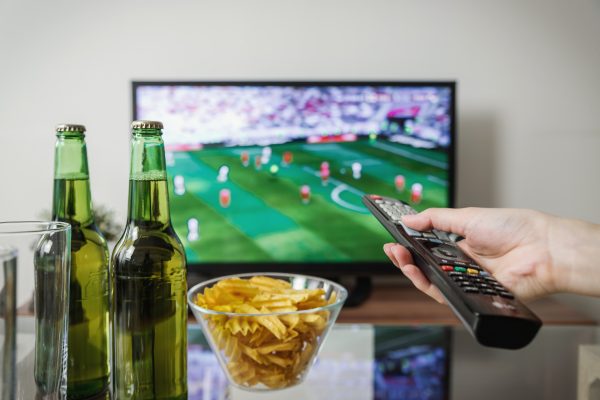
Global television shipments increased 3.6 per cent year-on-year to 48.8 million units in the second quarter of 2026, helped by demand surrounding the FIFA World Cup and the timing of Amazon Prime Day, according to research firm Omdia.
The growth came despite increasingly difficult market conditions, with persistent consumer inflation and tightening memory supplies adding to cost pressures across the television industry.
Omdia said these pressures had only a limited effect on shipment volumes during the quarter, although they are expected to influence the market later this year.
China remained the biggest drag on global growth, with television shipments there falling 15.1 per cent year-on-year after local stimulus programmes ended.
This was offset by stronger performance in major developed markets, with Western Europe recording growth of 9.5 per cent and North America expanding by 4.7 per cent.
North America benefited in particular from the World Cup, with two of the tournament’s three host countries located in the region.
Emerging markets also recorded strong growth, with shipments rising 14.5 per cent in Eastern Europe and 12.8 per cent in Latin America and the Caribbean.
Omdia said the figures continued a trend of Chinese television brands increasing shipments overseas as weak domestic demand encourages manufacturers to pursue growth in international markets.
Memory supply constraints had a relatively small impact on shipment volumes in the second quarter, partly because manufacturers continued promoting older product lines and using existing inventories of cheaper memory.
However, with supply expected to remain restricted and memory prices continuing to rise, television prices are likely to come under upward pressure this year, Omdia said.
The research firm also expects manufacturers to move further away from lower-resolution televisions towards 4K models, as supplies of lower-capacity memory products face particularly severe constraints.
Competition is also intensifying in the Mini LED television market, which saw adoption accelerate sharply during the quarter.
Mini LED televisions accounted for 13 per cent of global television shipments in the second quarter, with Samsung and LG Electronics expanding their ranges and reducing entry-level prices.
The move has increased competitive pressure on TCL and Hisense, which had previously led the Mini LED market.
TCL held a 30.2 per cent share of global Mini LED television shipments in the first quarter, but Samsung moved from third place to the top position in the second quarter, reaching a 28.2 per cent shipment share.
Competition is similarly increasing in the RGB LED television market, where shipments reached 295,000 units in the second quarter.
Hisense had dominated the market at the start of the year, accounting for 77.2 per cent of shipments, while China represented 88.8 per cent of the market amid limited competition.
By the second quarter, however, Hisense’s share had fallen to 42.9 per cent, as Samsung and Sony captured significant portions of the market.
“Prominent promotion of RGB LED televisions during the World Cup has undoubtedly helped increase consumer awareness of the technology,” said Matthew Rubin, research manager for TV Set Research at Omdia.
“As adoption grows, RGB LED will increasingly compete with OLED in the premium segment,” he added.
“Consumer preferences are likely to be shaped by pricing and how clearly consumers can evaluate the differences between the two technologies,” Rubin concluded.





Click here to change your cookie preferences