
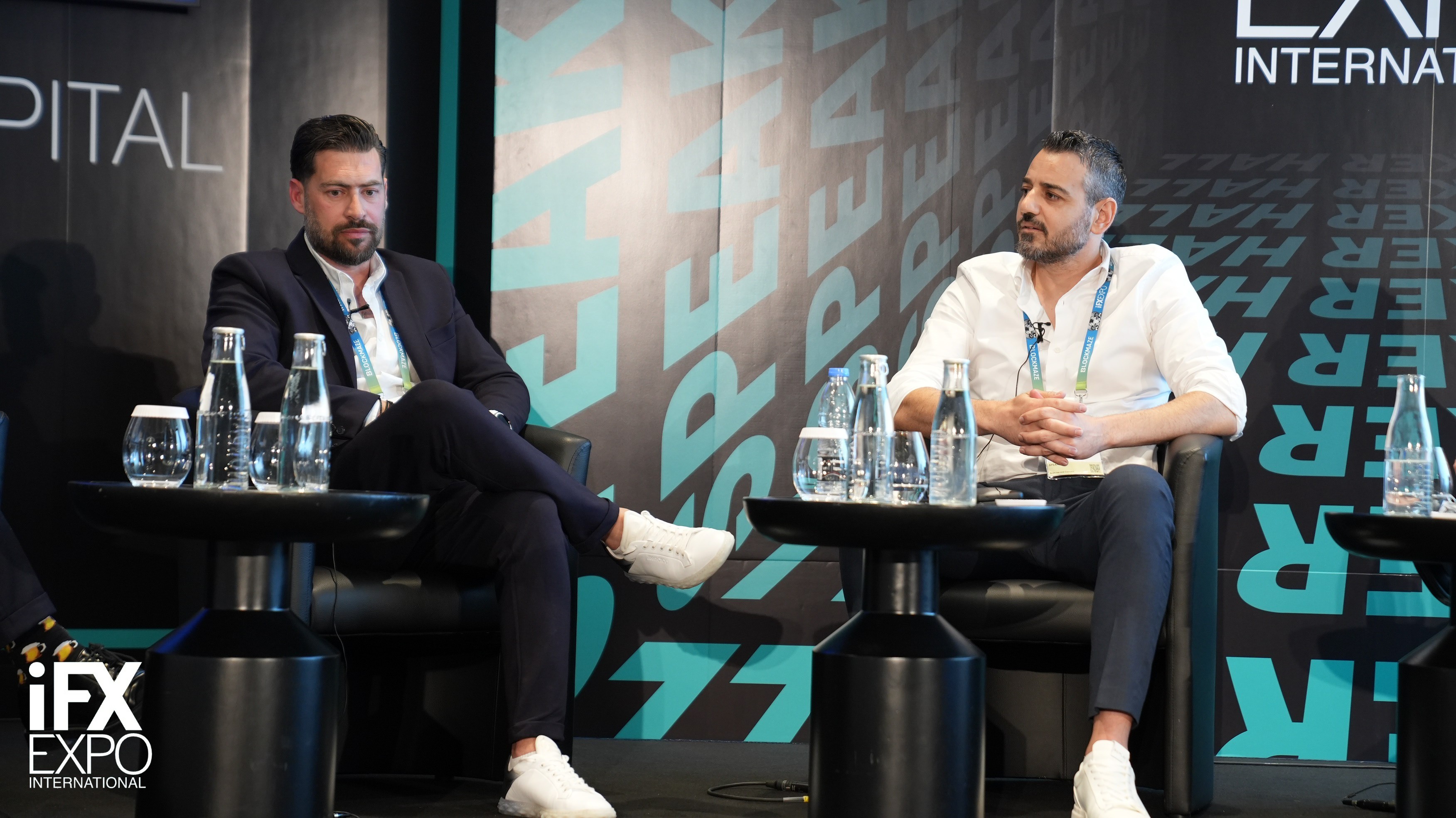
Regulated digital finance can become a new pillar of the Cypriot economy, alongside tourism, shipping and professional services, while creating more skilled jobs on the island, according to Stavros Vassiliades, COO, Executive Director, Payward Europe Digital Solutions (CY) Ltd.
That was one of several issues readers had been raising with us. Some wanted to understand what fintech could mean for Cyprus and how the Cyprus Securities and Exchange Commission (CySEC) fits into the picture, while others were concerned about scams, licences and misconceptions surrounding crypto. Younger readers, meanwhile, wanted practical advice on what to study and the skills needed to enter the industry. Their questions formed the starting point for my conversation with Vassiliades.
Speaking exclusively to the Cyprus Mail, Vassiliades, explained that Kraken is one of the oldest and largest digital asset platforms in the world, founded in 2011. Kraken’s CySEC-regulated Cypriot Investment Firm is at the centre of its European derivatives business, while spot crypto trading in the EU sits under its MiCA hub authorised by the Central Bank of Ireland.
Cyprus, he added, covers MiFID II regulated products, primarily derivatives, including futures, tokenised stocks (xStocks) and most recently traditional stocks. Through its MiCA and MiFID hubs, Kraken can passport services across the 30 EEA countries.
For Vassiliades, however, the importance of the Cyprus operation extends beyond the company’s own expansion, as anchoring Kraken’s European MiFID II business on the island “tells other international fintech groups that Cyprus is a credible base that positions the island as a bridge between US-founded fintech and the EU market”.
Kraken chose Cyprus for regulatory, operational and strategic reasons. Vassiliades explained that CySEC is one of Europe’s most experienced supervisors of MiFID II firms, built up over years of supervising a growing range of retail financial products.
That means the regulator understands complex products, while the local market knows how to staff them with the requisite functions, including compliance officers, AML specialists and risk managers. Larger jurisdictions may offer scale, he acknowledged, but Cyprus offered “regulatory clarity, talent, and a supervisor that engages substantively and constructively”.
Turning to regulation, Vassiliades explained that MiCA and MiFID II cover different products. MiCA is the EU’s new framework for spot crypto-asset services: exchanges, custody, stablecoins. MiFID II is the long-established framework for financial instruments, including derivatives whose underlying is a crypto-asset. A firm offering both needs both licences.
Under the MiFID II licence, Kraken can offer regulated financial instruments, primarily derivatives, across the EU under a harmonised rulebook. Spot bitcoin is a crypto-asset service under MiCA, while a bitcoin future is a financial instrument under MiFID II.
The MiFID II protections cover appropriateness and suitability tests, best execution, conflict-of-interest controls, segregated client money and capital requirements on the firm. Even so, the target client is “the experienced trader who wants regulated access to derivatives, not someone buying bitcoin for the first time”.
The frameworks enable European regulators to apply the right level of protection to the right product and, together, are making crypto offerings in Europe look much more like the rest of regulated financial services.
Vassiliades also explained that MiFID II and MiCA give firms a defined path to authorisation, harmonised across the EEA. Clarity attracts serious firms because it allows long-term planning and real investment in compliance.
Until recently, the bigger problem was the opposite, as uncertainty drove serious operators away and attracted less solid, unregulated business. For this reason, he described a clear rulebook as a “competitive advantage, both for jurisdictions and for firms”.
On investor protection, Vassiliades stressed that spot crypto and leveraged derivatives are very different products. MiFID II already does much of the work with appropriateness tests, leverage limits, negative balance protection and mandatory risk warnings.
Beyond the rules, education matters more in the long run, with Vassiliades explaining that Kraken would “rather a client trade smaller and stay in the market for years than blow up an account in a month”.
Turning to public trust, he explained that what damaged crypto’s reputation was unregulated platforms, outright scams and a handful of failures where customer money was not properly segregated, the kind of conduct that would be unacceptable in any industry.
The response is not to dismiss crypto or derivatives trading, but to distinguish licensed, properly authorised firms from everything else. Before trusting any platform, Vassiliades urged readers to “check who regulates it, where client money is held, and whether the entity on the signup page is the one named on the licence”.
Looking back over the past five years, Vassiliades recalled that there were only a handful of firms, like Kraken, that took regulatory compliance seriously. A lot of other firms opted to take the easier route and offer their services offshore.
Today, however, compliance, risk and governance sit at the centre of the operating model, with budget and authority. The shift came from regulation, from the failures of firms that did not take it seriously and from clients demanding it.
For Vassiliades, this means the “growth at any cost” era is over.
The list of remaining risks is familiar from traditional finance, including money laundering and sanctions risk, fraud, market abuse, custody, cybersecurity and operational resilience. Custody is arguably the most fundamental difference because the asset sits as a cryptographic key rather than a book entry and transactions are immutable. In other words, they can’t be reversed.
That makes cybersecurity integral to operations and explains why Kraken has spent more than a decade assembling one of the world’s leading teams in this field. At the same time, Vassiliades noted that blockchain transactions are “public, traceable and permanent” and that “Analytics tools let us see counterparties and identify exposure to illicit sources in ways simply not possible with cash”.
Turning to the benefits for Cyprus, Vassiliades explained that Kraken’s entry leads to skilled, well-paid, internationally portable jobs in compliance, AML, risk, governance, operations, technology and cybersecurity. Around that, an ecosystem grows: law firms, audit firms, advisory firms, recruiters, training providers.
There is also knowledge transfer through Cypriot professionals working alongside international colleagues on global problems, with Vassiliades emphasising that the “lasting benefit is the human capital that stays on the island”.
However, the biggest risk to Cyprus’ reputation would be becoming known as a place where firms collect a licence and operate from elsewhere. To address this, Cyprus needs strong, consistent supervision, which CySEC is already delivering, and an honest clear definition of real presence: local senior management, local control functions, local decision-making.
The government can also support firms on what they cannot do alone. That includes specialised education, faster pathways for non-EU talent and active international promotion, although Vassiliades insisted that the story should be “about quality, not cost”.
In his view, one firm does not change a country’s image, but a critical mass of well-regulated responsible firms does. Several reputable international fintech players have already established a presence in Cyprus, which he described as encouraging.
At the same time, Vassiliades cautioned that reputations in financial services are “hard won and easily lost”. The story worth telling, he added, is the real one: CySEC supervises with depth and rigour, and that is what serious firms are choosing Cyprus for.
If Cyprus gets this right, Vassiliades believes regulated digital finance can become a new pillar of the economy alongside tourism, shipping and professional services.
When asked about jobs and skills, Vassiliades listed compliance and AML officers, financial crime analysts, regulatory affairs specialists, lawyers, risk managers, internal auditors, cybersecurity engineers, product managers, software engineers, blockchain analysts and the senior management and control functions a regulated investment firm requires. He added that Cyprus has seen sharp demand for these roles in the last decade or so.
For young professionals, Vassiliades said this means “international careers available without leaving the island”. Until recently, he explained, an ambitious young Cypriot in finance or technology often had to choose between a narrow local market or moving abroad. However, he believes this is changing.
Vassiliades argued that universities and professional bodies should be adapting their curricula, with more focus on fintech, compliance, AML and digital finance, because “demand will outpace supply for years”.
As for those hoping to enter the industry, he advised young professionals to build the financial services foundation first. Vassiliades explained that “the strongest candidates we see understand markets, products and regulation, and happen to also understand crypto”, while recommending qualifications that travel, including CFA, ACAMS, ICA and ACCA. He also encouraged them to learn enough about technology to be useful in a room with engineers.
They should then develop the soft skills of judgement, communication and ethics, he added, describing crypto as “now a financial services career” and urging young professionals to treat it that way.
Looking ahead, Vassiliades explained that spot crypto is still core, although client demand has pulled Kraken into derivatives and into the infrastructure that connects traditional and digital markets. He added that the line between a crypto platform and a multi-asset trading platform is less distinct than it once was.
In his view, the platforms that come out of this period strongest will be those offering regulated access to both worlds in one place. Vassiliades said Kraken is already doing that, with Cyprus serving as a key piece on the European side.
On the company’s plans for Cyprus, Vassiliades explained, “We already operate a properly staffed, well-governed regulated business that both the regulator and clients trust,” adding, “We plan to scale so we can offer more skilled jobs and further integrations into the Cypriot professional ecosystem.”
Turning to scams, Vassiliades identified human behaviour as the starting point, explaining that the technology is neutral and the product is rarely the cause. He said scams work because of urgency, greed, fear of missing out (FOMO) and social proof.
Vassiliades described the most sophisticated scams today as “psychological, not technological”, explaining that they run through social media, dating apps and messaging platforms, with fake trading platforms that look entirely professional. He warned that even “experienced people can fall for them if the manipulation is good, not because the victims are naïve”.
Asked to correct one misconception about crypto regulation, Vassiliades identified the belief that “a licence is a guarantee” and stressed that it is not. He explained that a licence “means a firm is supervised, has capital, has controls, segregates client money, and can be held accountable”, but “does not mean markets cannot move against you” or that “every licensed firm is equally well-run”. For that reason, he described licensing as “a necessary condition for trust, not a sufficient one”.




Click here to change your cookie preferences