
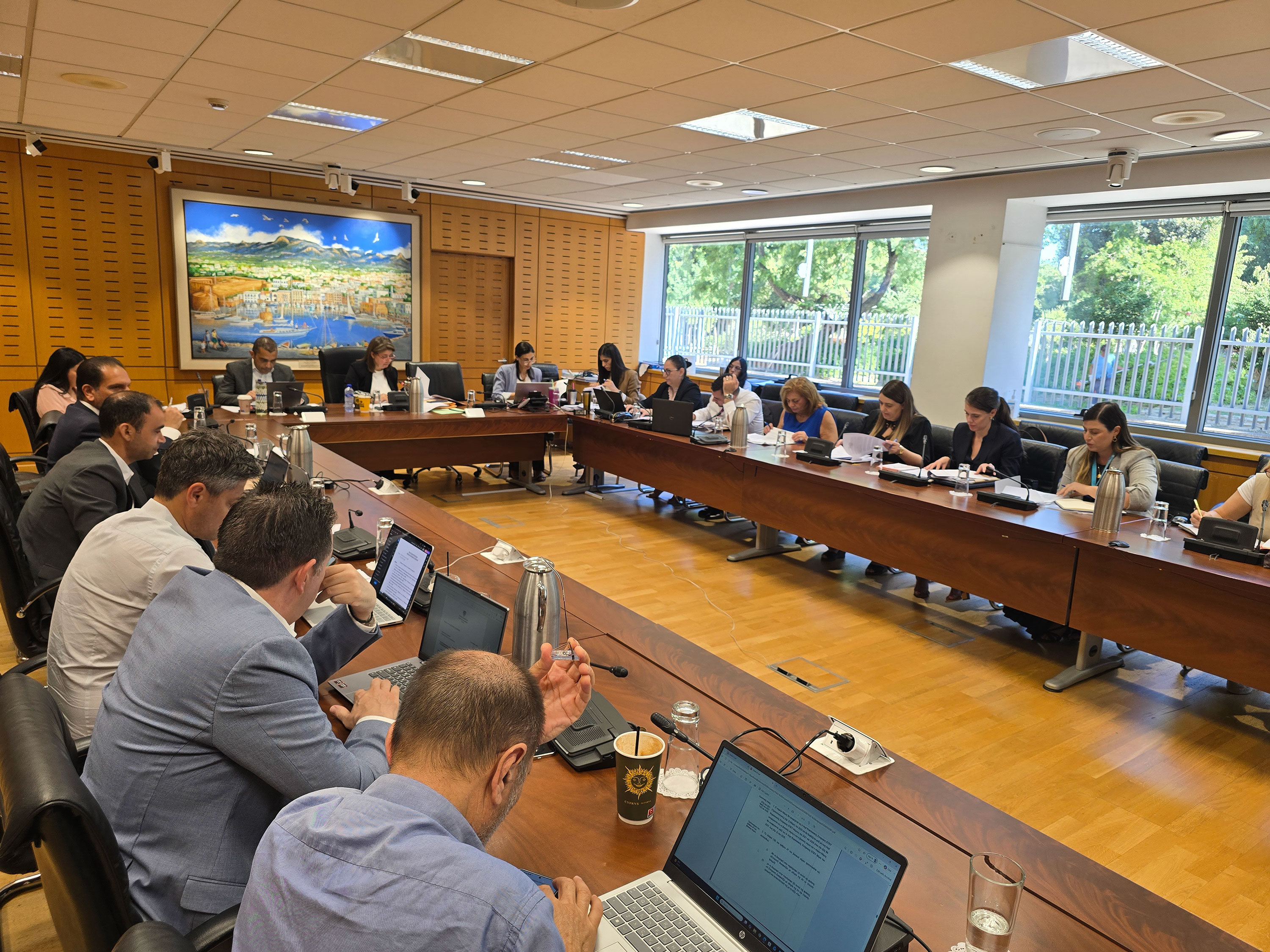
Parliament on Monday took a first look at a batch of bills aiming to rationalise and speed up hiring in the civil service, with MPs objecting to some of the proposals.
The government has tabled three bills amending hiring and examination procedures, including the assessment of candidates. The proposed legislation concerns positions of first appointment.
A finance ministry official explained the main changes.
First, the general written exam will be carried out after the vacancies are published – not before, as is the case now.
In this way, said the official, candidates will know in advance if they’re qualified before deciding to take the exam.
The second change will see all the vacancies published during the first two months of the calendar year, instead of during the first quarter as is currently the practice.
In addition, the Public Service Commission (PSC) will ask candidates to indicate their order of preference for the various positions for which they are applying.
This is so that, in the event a candidate lands the position which he or she listed as their top preference, that person’s name will be withdrawn from consideration for the other positions listed.
“In this way we will put a stop to the practice of candidates moving between jobs, which creates understaffing problems in some positions.”
Another proposed change is that the weighted scoring by department supervisors will be increased from five points to 15 points.
Head of the PSC Giorgos Papageorgiou urged MPs to do their part in ensuring that the final legislation passed will achieve the goal of making the hiring process more effective.
Papageorgiou claimed that the existing legal framework has entrenched the notion among the public that hiring in the civil service is governed by objective criteria.
To back up his argument, he cited the fact that appeals against decisions have dropped to almost nil – just one appeal filed over the past few years.
An official with the attorney-general’s office gave the government bills the thumbs-up, saying they pose no issues of clashing with the constitution.
Complaints came from the Isotita union representing civil servants.
Head of the union Prodromos Christofi said they had not been “invited” for consultations on the bills.
“We just found out about them today.”
Responding, the finance ministry official said the bills relate to first-appointment positions and therefore don’t affect current employees.
Christofi countered that their union includes temps who may wish to apply for a permanent position in the civil service.
Akel MP Aristos Damianou spoke of ongoing “distortions” and a “dysfunctional” hiring system.
In the coming weeks, his party would table their own amendments.
According to the latest data, in July this year the total number of civil service employees came to 22,978.
The civil service is a sub-category of the broader state/government sector, which altogether employs 53,700 people.
Other sub-categories are the security services and public education.





Click here to change your cookie preferences