
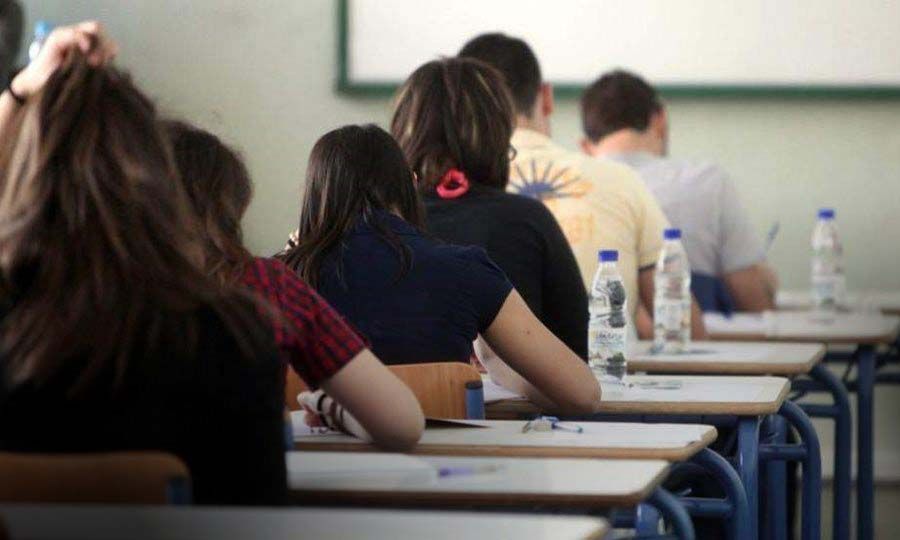
The performance of Cypriot students in the most recent PISA study remains overwhelmingly stable, Education Minister Athena Michaelidou said as results were presented on Tuesday.
“For Cyprus, performance remained essentially stable in the subjects of natural sciences and reading comprehension, while in mathematics there was a decline, as in all countries,” she said.
Meanwhile, the OECD recorded an overall decrease in performance in the standardised tests in all European Union countries compared to the last study carried out in 2022.
“This general trend highlights that internationally there is a need to adapt education systems to the new skills required by the modern era,” said Michaelidou.
She said the results of the study confirmed the “need for serious reforms of our education system”, however, stressing that they demonstrated the value of the ongoing education reform.
“A particularly valuable positive finding for Cyprus is the increase in the percentage of resilient students, who, while belonging to the lowest socioeconomic level, have recorded better performance on the higher scale of the assessment,” Michaelidou said.
The minister said the study had recorded an overall decrease in the difference in student performance according to socioeconomic background across all subjects.
At the same time, the effect of socioeconomic background on student performance in Cyprus was smaller than that in other EU countries.
Optimism about education reform
“[These findings] allow us to be optimistic about the emphases and direction we give to education, horizontally strengthening opportunities for all children and aiming for a more inclusive school, limiting the influence of social inequalities,” Michaelidou said.
She described the results of the PISA study as an “important tool” for the improvement of the education system, reiterating the government’s commitment to improve the education system in public schools.
“[The PISA results] guide our priorities, which, as we have repeatedly stated, have as their core the policy of ensuring quality education for all children,” she said.
Michaelidou said that, while the PISA data confirmed the need for improvements, it also justified the government’s reform choices.
“We do not expect only international research to monitor progress,” she said, adding that the ministry worked closely with experts from the OECD and had since developed a “comprehensive and targeted” action plan to achieve optimal learning outcomes.
“This collaboration guarantees that the interventions we implement will yield substantial results, transforming challenges into measurable progress for our children and public schools,” she said.
The link to the study can be found here.





Click here to change your cookie preferences