
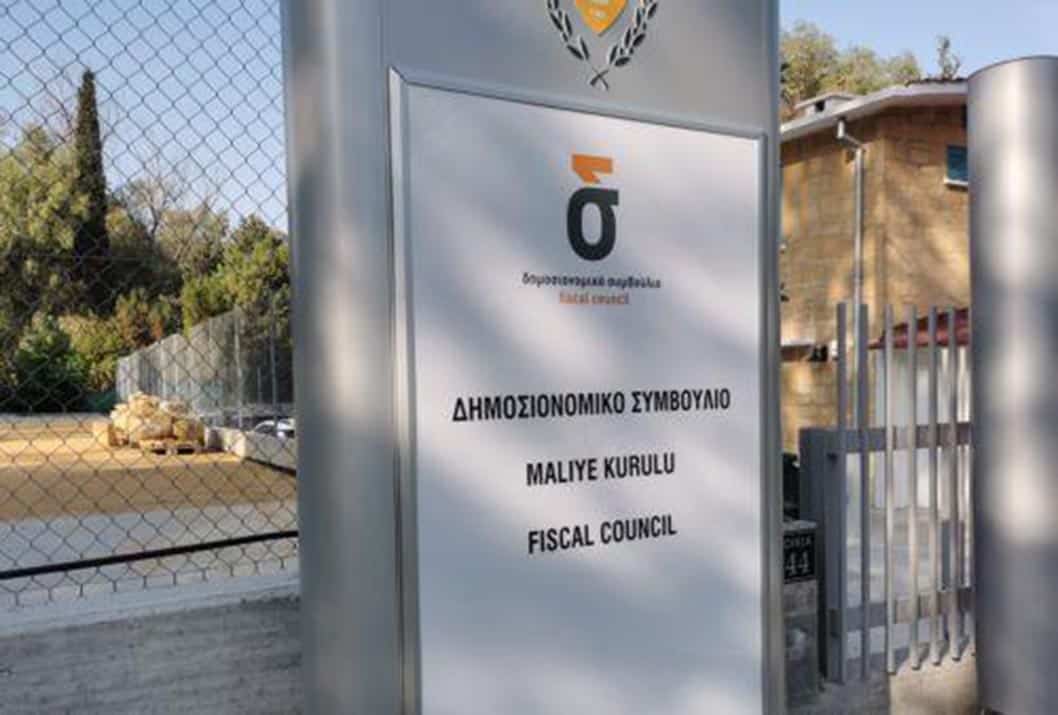
Cyprus’ slow response to climate change and delays in the energy transition could pose a growing risk to the sustainability of public debt, Fiscal Council chairman Andreas Charalambous warned, pointing to shortcomings in energy storage, infrastructure and environmental policy.
Speaking during a discussion at the Cyprus Forum in Nicosia, Charalambous said the Fiscal Council had placed significant emphasis on the economic consequences of climate change in its recently published 2026 interim report, treating the issue as a potential risk to the sustainability of the public finances.
“Generally, the situation is concerning,” he said, adding that Cyprus is “behind on storage”, an area considered particularly important if renewable energy is to account for a larger share of electricity production.
He also pointed to weaknesses in recycling, waste management and energy efficiency, saying Cyprus had fallen behind the targets it has set itself.
Those targets, Charalambous said, are already less ambitious than the broader EU objectives, yet the infrastructure required to meet them is still lacking.
This, he said, showed “a deficit in planning to achieve the lower targets we have set”, with the energy sector and the transition away from conventional fuels among the areas where delays remain particularly evident.
The warning comes as the Fiscal Council places greater emphasis on the longer-term fiscal risks associated with climate change.
Theodoros Zachariadis, professor and acting director of the Energy, Environment and Water Research Centre at the Cyprus Institute, said Cyprus was currently the only EU member state where greenhouse gas emissions continued to increase, linking this mainly to the country’s heavy dependence on fossil fuels for electricity generation.
European Environment Agency (EEA) data also emphasise Cyprus’ longer-term emissions challenge. Total greenhouse gas emissions excluding land use and forestry increased by 59.2 per cent between 1990 and 2022, with energy remaining the largest contributor.
Zachariadis said renewable sources currently provide about 25 per cent of Cyprus’ electricity, but estimated that even at that level their use had saved the country more than €500 million over the past decade.
He also warned that the Eastern Mediterranean is being affected particularly strongly by climate change, saying the region is warming considerably faster than the global average.
Temperatures in the region have already risen by around 1.5 degrees Celsius to 2 degrees, he said, while rainfall has declined. Further increases in temperatures and longer heatwaves are expected, creating additional economic and social costs.
Charalambous also warned that “delaying the transition could shorten the economic life of investments being made today.”
The longer the transition is postponed, he said, the shorter the period during which some investments can generate returns before they themselves need to be adapted to new environmental and energy requirements.
He said that “as long as we continue investing in the way we are investing, there will come a point when the investments themselves, from an economic perspective, will no longer make sense”.
The discussion also turned to how Cyprus should support households facing higher energy and living costs.
Charalambous argued that tax reductions are generally not the most effective tool for assisting vulnerable households, because the benefit also reaches higher-income groups.
He said “the most effective way is through expenditure”, arguing that direct and targeted support gives governments greater scope to reach households that genuinely need assistance.
Zachariadis pointed, however, to the practical difficulties involved in identifying those households. Although Cyprus has established criteria for energy poverty, he said, authorities do not necessarily know precisely which households meet them.
Charalambous acknowledged the difficulty but said improved use of technology and available data could allow the state to identify vulnerable groups more accurately.
He added that Cyprus has a wider problem with the targeting of social expenditure, describing the Guaranteed Minimum Income (GMI) as essentially the country’s only genuinely targeted measure, while other schemes may apply certain eligibility criteria without being fully targeted.
The Fiscal Council chairman also drew a distinction between inflation and a permanent shift in relative prices.
If geopolitical tensions create a lasting disruption to energy supplies and energy prices rise to reflect those new conditions, he said, that should not automatically be regarded as continuing inflation.
Persistent inflationary pressures, Charalambous said, can instead arise from factors including expansionary fiscal policy, inappropriate monetary policy and wage increases that exceed productivity growth.





Click here to change your cookie preferences