
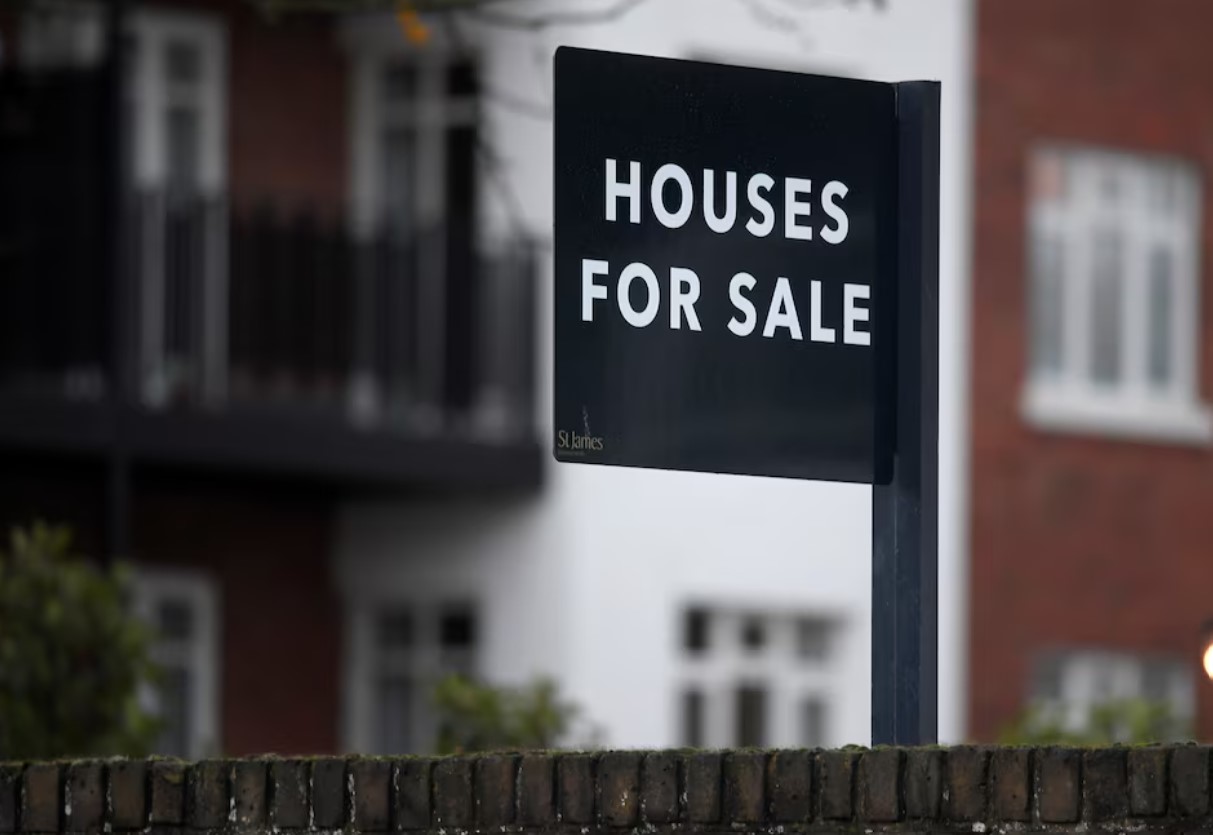
British annual house prices rose at their weakest annual pace since December 2025 last month and unexpectedly fell 0.2 per cent on the month, in a sign that higher borrowing costs caused by the war in Iran hurt demand.
Prices rose by 0.8 per cent in September compared with the same month last year, mortgage lender Nationwide Building Society said this week, the weakest annual growth since December 2025 and halving from August’s 1.6 per cent increase.
The rise was below the 1.3 per cent annual increase which was forecast in a Reuters poll of economists.
In monthly terms, prices dropped at the joint-fastest pace since May, and below the zero growth forecast in the poll.
“Market activity and house prices have remained subdued in recent months, in part reflecting the uncertain economic backdrop,” said Robert Gardner, Nationwide’s chief economist.
“Geopolitical tensions remain high, with the conflict in the Middle East exerting upward pressure on energy prices, fanning inflation concerns.”
He said while there were signs that higher energy prices were not feeding through to underlying price pressures, investor expectations that the Bank of England will raise borrowing costs have kept upward pressure on mortgage rates.
Financial markets expect the BoE to increase the benchmark Bank Rate by a quarter-point in November and another move is priced in for February.
Prime Minister Andy Burnham has announced a new loan program to help first time buyers get on the property ladder.
It will be open to homebuyers with a 2.5 per cent deposit and provide loans of up to 20 per cent of a property’s value, the government said, with further details to be confirmed in finance minister John Healey’s budget later this month.





Click here to change your cookie preferences