
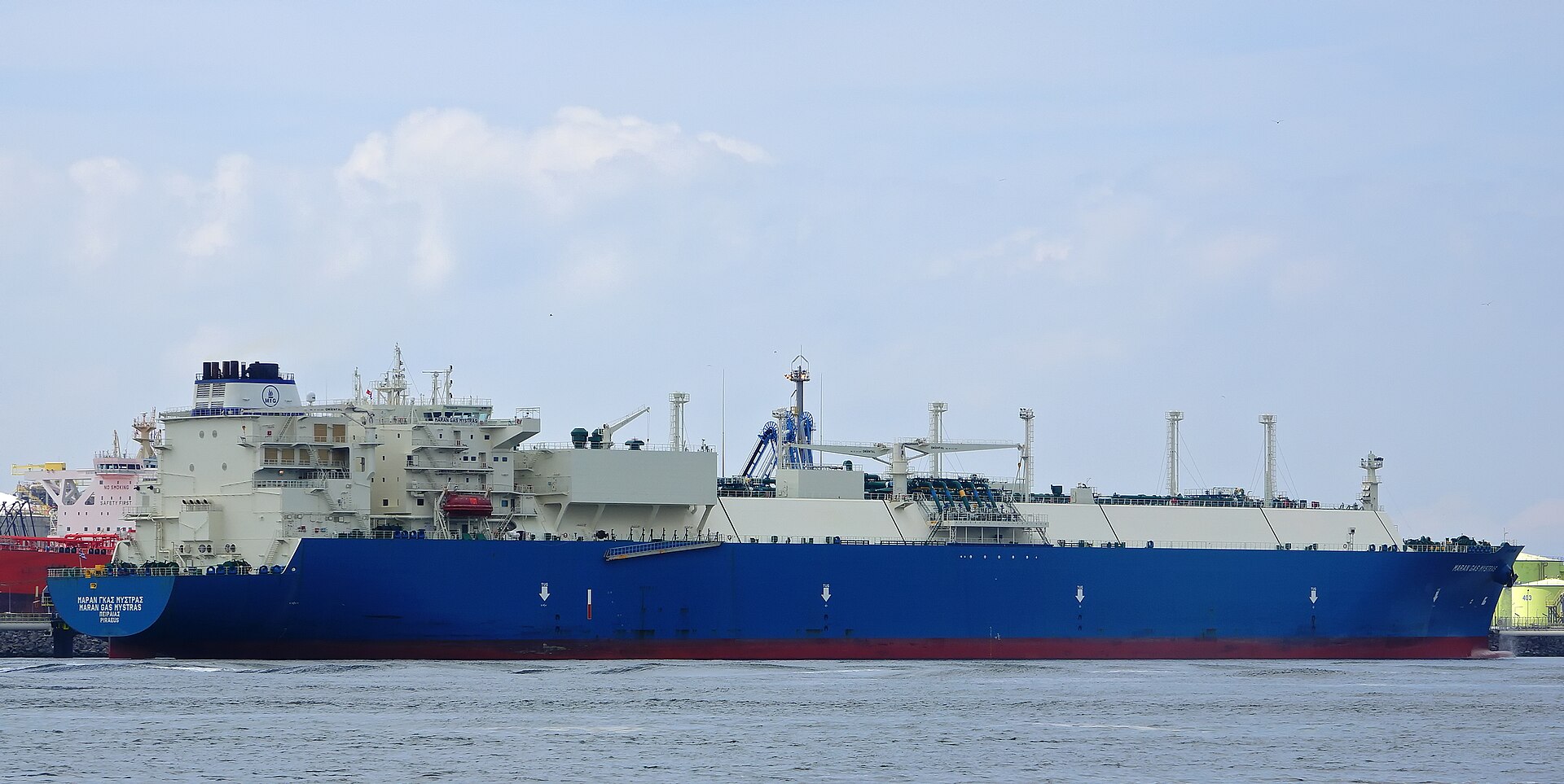
A Greek-flagged LNG carrier controlled by the Angelicoussis Shipping Group was struck by an unidentified projectile while leaving the Strait of Hormuz, in the latest incident to hit commercial shipping along one of the world’s most important energy routes.
The Maran Gas Mystras, operated by Maran Gas Maritime, was hit around the waterline on Sunday, according to initial reports from Greece. Smoke was subsequently seen coming from the vessel, although the ship remained operational and continued under its own power.
Maran Gas later said the vessel and its crew were safe, adding that the LNG carrier was fully operational and continuing its voyage normally. No damage affecting its operation has been reported and there has been no report of pollution.
The origin and type of projectile have not yet been established.
As of Monday morning, the incident had not appeared on the International Maritime Organisation’s (IMO) list of confirmed Middle East incidents, which was last updated on October 5. The IMO list recorded 93 confirmed incidents in the region, including the October 4 strike on the Lipsi, managed by George Prokopiou’s Dynacom, but did not yet list the Maran Gas Mystras.
The latest incident comes only a day after the Dynacom tanker Lipsi, delivered just six weeks earlier, was struck by an unknown projectile in the Strait of Hormuz.
That attack damaged the vessel’s engine room, leaving it disabled and adrift, although its crew was reported safe and no pollution was recorded. UK Maritime Trade Operations issued a warning following the incident.
The attacks form part of a sharp deterioration in security around Hormuz in recent weeks. Three Liberian-flagged oil tankers were hit by unidentified projectiles in the strait on September 29, according to maritime intelligence company Marisks, while several other vessels have been damaged since mid-September.
The IMO’s latest confirmed incident register includes the Al Funtas, Mersin Prosperity, Sinbad, Kazimah III, Promise and Lipsi among vessels damaged between September 28 and October 4. Earlier incidents resulted in deaths, injuries and missing seafarers.
The renewed attacks are particularly significant because LNG traffic through Hormuz has recently begun to recover.
September recorded the highest monthly number of LNG shipments through the strait since the outbreak of the US-Israeli conflict with Iran in February, according to shipping data cited by Reuters. S&P Global Energy counted 19 LNG shipments during the month, while Kpler recorded 21, compared with 15 in June.
Moreover, additional Qatari LNG cargoes passed through the waterway over the weekend despite the security risks, suggesting exporters are continuing to use the route as energy markets prepare for higher winter demand.
Hormuz remains particularly important for LNG because there is effectively no alternative maritime export route for Qatar’s LNG production.
International Energy Agency figures show that just over 112 billion cubic metres of LNG passed through Hormuz in 2025, equivalent to almost 20 per cent of global LNG trade. Around 90 per cent of those volumes were destined for Asia.
US Energy Information Administration data meanwhile show how severely the conflict has already affected traffic. Oil flows through Hormuz dropped from 21.6 million barrels per day in the fourth quarter of 2025 to 14.9 million barrels per day in the first quarter of 2026, before falling to just 4.9 million barrels per day in the second quarter. LNG flows fell from 10.5 billion cubic feet per day to 0.8 billion cubic feet per day over the same period.
The pressure has also fed directly into shipping costs. Tanker spot rates have reached as much as $1.2 million per day in some trades, while reports suggest shipowners are paying seafarers substantial bonuses for voyages through the Gulf as insurance and security costs rise.
The Maran Gas Mystras, IMO 9658238, was built in 2015 and sails under the Greek flag. The 294-metre vessel has a deadweight of about 89,269 tonnes and an LNG capacity of roughly 159,800 cubic metres. It is classed by Lloyd’s Register.
Its registered owner is Blueskies Shipping Company Ltd, while Maran Gas Maritime acts as its manager. The vessel is part of the Angelicoussis group’s extensive LNG fleet.
The incident therefore marks another strike involving a major Greek shipping group within days, following the attack on Prokopiou’s Lipsi, as shipowners face mounting security risks across the Strait.
For now, however, there has been no independent confirmation of who fired the projectile that reportedly struck the Maran Gas Mystras, and the vessel has continued its voyage without assistance.





Click here to change your cookie preferences