
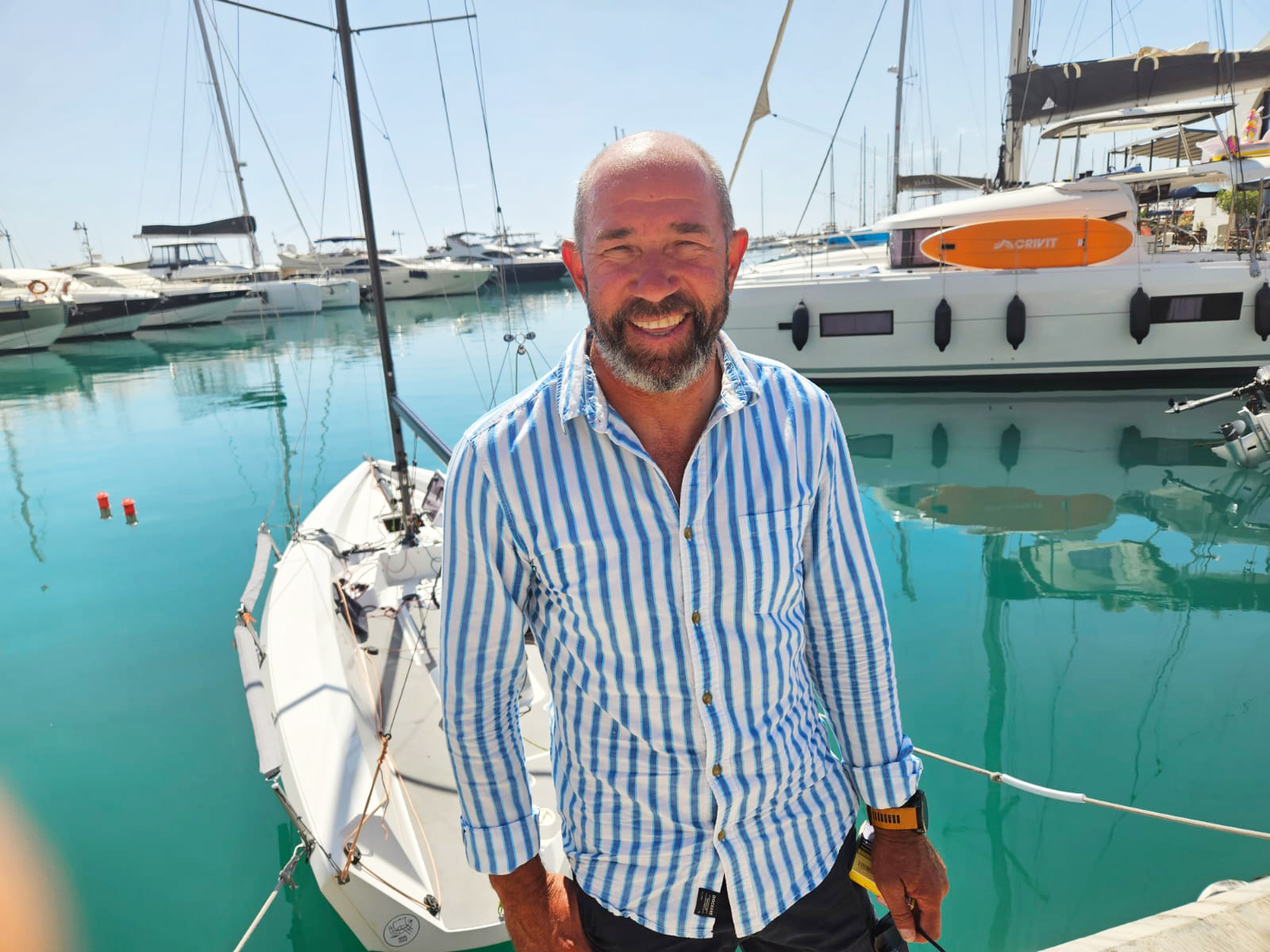
Three decades after winning Ukraine’s first Olympic sailing gold as an independent nation, Ihor Matviienko is coaching, racing and sailing year-round from Limassol
Ukraine at the Olympics is quite a recent development. For decades, its athletes were enfolded into other teams – tagging along with Poland, Romania and Czechoslovakia in the 1930s, then as part of the USSR and, briefly, the ‘Unified Team’ of ex-Soviet republics.
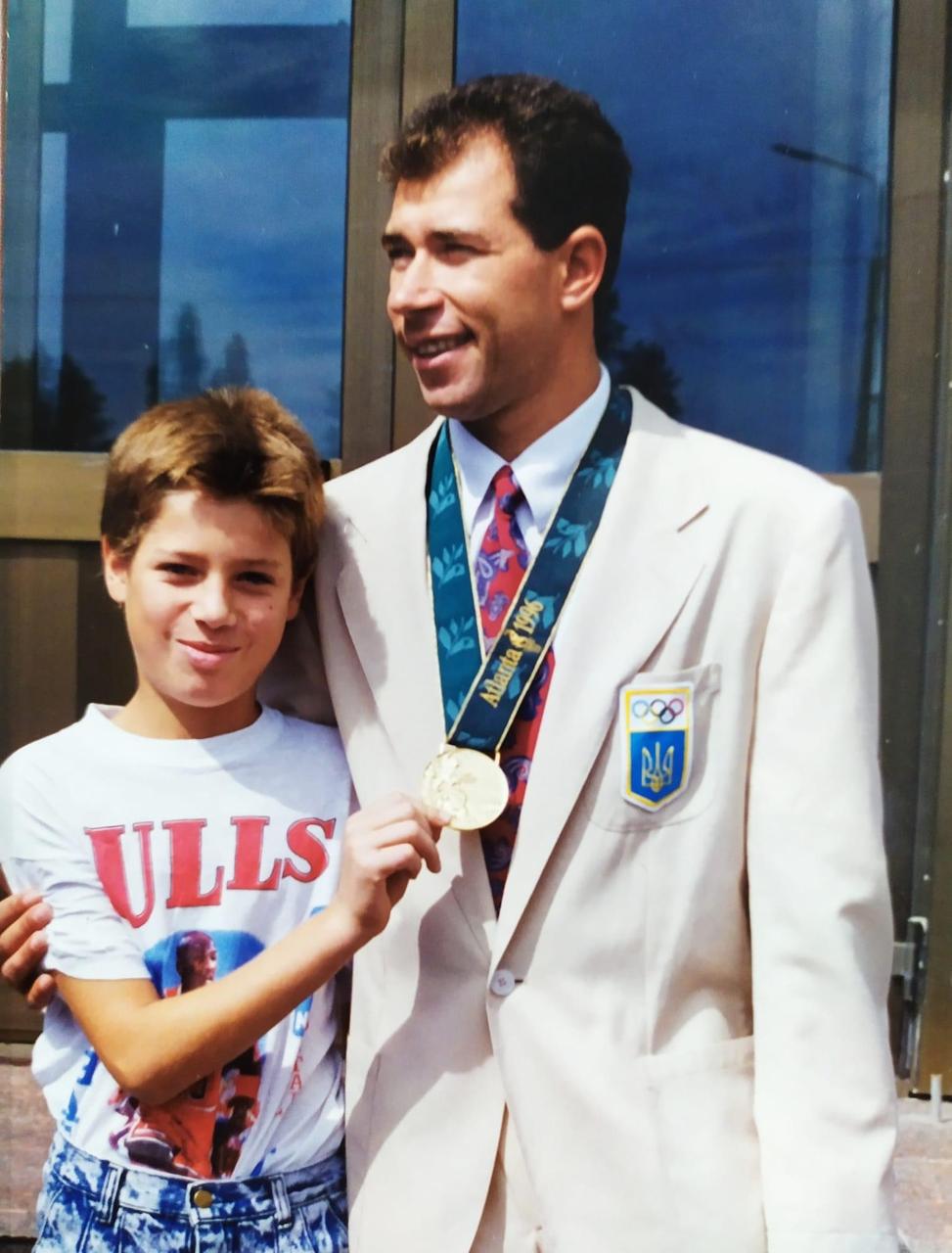
Atlanta 1996, the 100th-anniversary Games, was the first occasion when the newly independent country competed under its own name. It won nine gold medals in those Games – one of them in Sailing, the only gold it’s ever won in that sport. The winners were Ihor Matviienko and Yevhen Braslavets, in the Men’s 470 class.
“Yeah, [in] Atlanta we were mostly lucky,” reckons Ihor with a deep chuckle, sitting in the air-conditioned section of the Caffe Nero in Limassol Marina. “And we got the gold. And in other Olympic Games, we are also fighting for the medal. But we are not so lucky, maybe.”
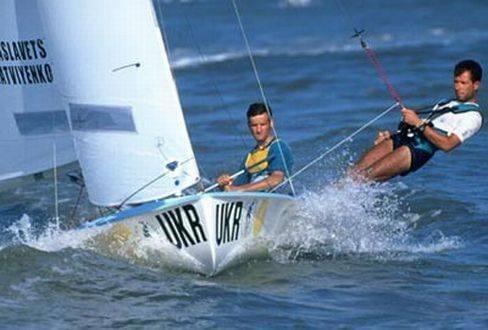
He and Braslavets took part in two other Games, Sydney 2000 (they came sixth) and Athens 2004 (ninth) – always in the 470 class, a type of sailing that looks precarious to non-sailors (and even some sailors). Victor Kovalenko, the legendary Ukrainian coach – known as the ‘Medal Maker’ – whom Ihor cites as a mentor figure, “considers it the most difficult and most satisfying boat to sail,” according to Wikipedia.
YouTube videos are spectacular, showing a rather small dinghy (4.7 metres long, hence the name) with a crew of two, usually half-obscured by big swells.
The crew must be light – their optimal combined weight is 110-145 kg – or the boat might overbalance, but the most conspicuous detail is that one of the two is almost horizontal, at ninety degrees to the sail (to which he’s attached by a line), “feeling the wave, the wind, everything,” as Ihor puts it.
Which one was he?
The harder job of a partnership
“I am the person who is outside of the boat,” he replies, conflating past and present tense in the Slavic manner. “My job is working with the balance of the boat, and working with the jib and the spinnaker. Then my partner is Yevhen, he’s working with the helm – the rudder – and the main sail.”
Looks like his own job was harder, I point out.
“Yeah!” he agrees, with another deep chuckle.
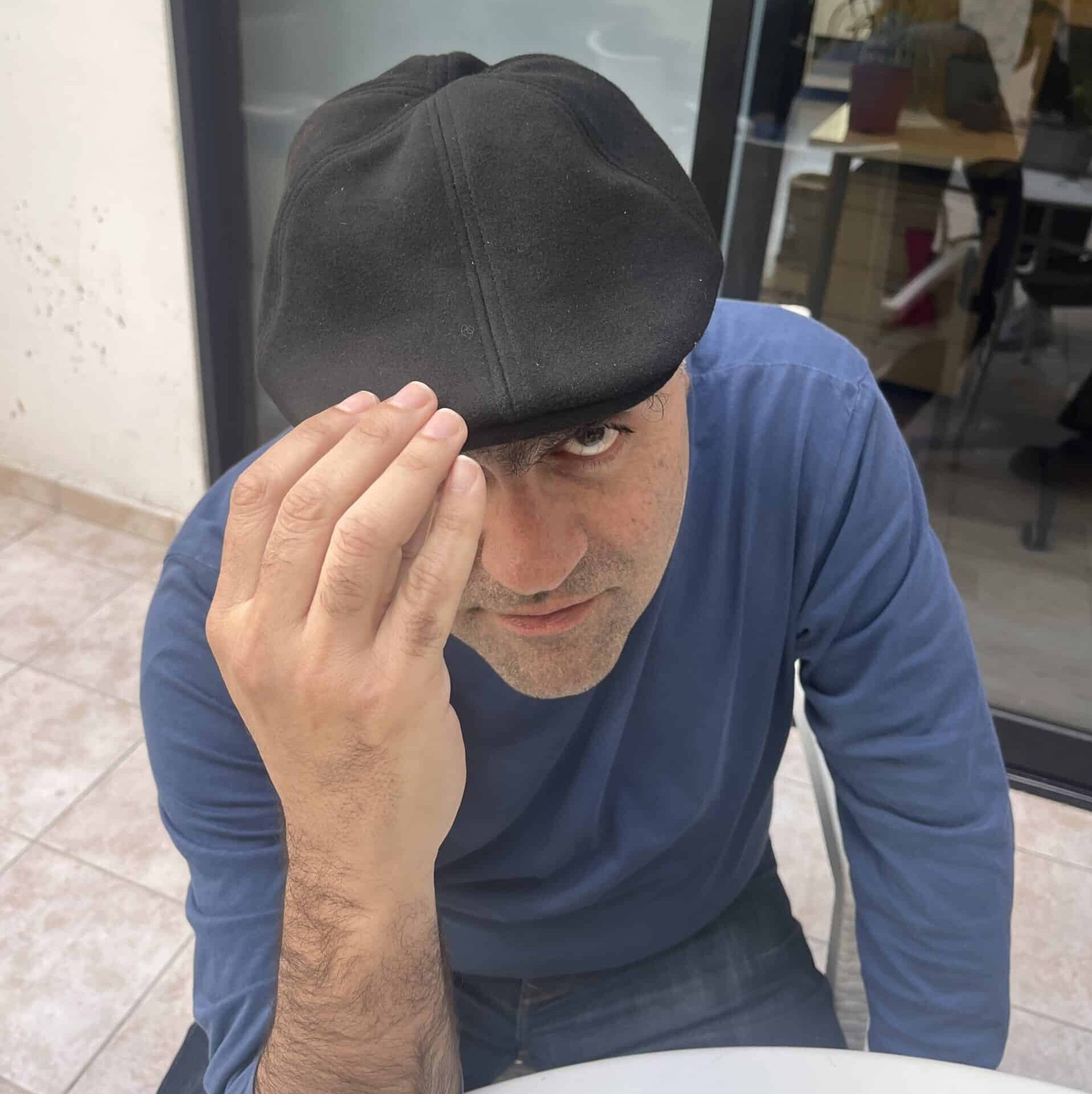
Ihor is now 55, almost bald, with a salt-and-pepper beard. He’s to-the-point, talking so low that I strain to catch the words – but his green eyes are alert and humorous and his smile, when it comes, is surprisingly sweet. He’s not just visiting, indeed the Marina is his base. He’s involved with RS21 Cyprus, a new sailing club – their website describes him as their “Chief Visionary, and Head of Training” – in cooperation with the Nautical Club of Limassol.
To be honest, he’s not the chattiest interview – for three reasons. The first is that his English is imperfect, often interrupted by snatches of Ukrainian which he lobs to his assistant Anna for a quick translation. The second is that he’s… well, a sailor, at his happiest (he admits) when he’s sailing, tending, I suspect, to become a little gruff in the company of landlubbers.
But the third reason is the most intriguing. He’s actually quite tired, explains Ihor, because he’s just back from the L30 World Championship in Trieste (the L30 is another sailing class, a bigger sailboat for regatta cruising) – “a very extreme regatta because there was a very strong wind,” though also an event where his team finished fourth.
I’m a bit confused. I was under the impression he’s a coach and instructor now – he does indeed coach newbies and aspiring sailors at RS21 Cyprus – and he is, after all, middle-aged. Does he still race at world-championship level?
Combining coaching and racing
“Yeah, sometimes I’m racing,” he replies patiently. “Next week I’m again going to Italy and sailing the Italian championship, then after a month I have one more world championship… Last week I was sailing the L30 class, then in one month I’m sailing the RS21 class, which we both have here.”
But he sails… against everyone? I ask clumsily, wondering if he might be taking part in some seniors circuit, like they have in tennis. Young people too?
Ihor frowns, our misunderstanding complete. “No, it was not the young people! It was the adults – a world championship!” Well, yes, I didn’t think he was taking part in the kids’ division.
It seems remarkable, a man in his mid-50s still competing as a world-class athlete – but sailing is one of those sports where experience counts, and his current exploits aren’t as physically extreme as hanging off the edge of the boat in the 470 class. I ask how he manages to keep fit – but Ihor just shrugs.
“Just a lot of working… I sail the boat. I don’t go to the gym.” Sailing keeps him physically active, but it’s not just the sailing – it’s prepping and polishing the boats (they have six at the club), making sure they’re in good condition. He’ll sail every day, weather permitting – and in fact that’s his answer when I ask the big question about life in Limassol. Does he like it? (He’s been here since 2022.) “Yeah, I like it,” he replies shortly. “For me it’s the best – because I can sail all year.”
It’s rare to meet someone so single-minded, but that’s how it is with top athletes. Ihor Matviienko gives the impression of a man who steps on a boat the way other people sit in front of a computer screen, without any need to adjust his body – it’s all muscle memory – or recall where anything is. It’s his life.
The power of the wind
It was always so, from childhood in Dnipro in central Ukraine, a city he’s returned to and indeed given back to. He founded a yacht club there, in 2017, and organised sailing competitions and regattas before the war. It’s not by the sea, but it is on the Dnieper river – and Ihor at 13 found something “romantic” in it all, the spectacle of boats on the big river, and a young boy’s desire to… He throws out a word. “To manage,” translates Anna – a boy’s wish to manage that boat all by himself, and feel the harnessed power of the wind behind him.
His parents worked office jobs, though also seem to have encouraged sports. Ihor’s sister Alexandra sailed too – “she was good” – then was also a swimmer (though she now works an office job). This was in the USSR, of course, the twilight of communism. Were his parents happy? “I think so,” he replies after a pause. “For parents, maybe it was a better time then… Because it was very stable.”
“You could plan,” puts in Anna. “You could plan vacations, or how to buy things… People felt protected. Stability.”
And freedom? What does Ihor think about freedom?
Another deep chuckle, then a stream of Ukrainian. Anna nods, struggling to translate. “He thinks it’s difficult to compare,” she says, “because freedom is different for everyone. In that time they felt free in some things, others not – but right now, too, he doesn’t feel free, in general.”
He doesn’t say more – but the question hangs in the air, the various awful aspects of ‘right now’. We’re not here to talk about Ukraine – but surely the slow destruction of that country must be even more unbearably painful for an athlete who once represented it, and brought home a gold in its first-ever Olympics as an independent nation.
Low-key about his triumph
Was it a huge deal when he and Braslavets went back? Was it kind of when Pavlos Kontides – another of the ‘legends’ involved in RS21 Cyprus – won our first-ever medal, and people poured into the streets?
“For Cyprus, Kontides is not [just] a hero, he’s a god!” notes Ihor humorously – but is predictably low-key about his own triumph. “It was many years ago,” he says evasively, and laughs. What does he remember, though? “After the race, it was not so big emotion,” he shrugs – even though he and his partner didn’t just win gold, they also set a record by garnering the fewest-ever penalty points. So much for Ihor saying they were “mostly lucky”.
Only later, back in Ukraine, did he feel like a hero, with the TV and interviews – but perhaps he prefers not to dwell on that too much, 30 years later, given the disparity between that golden moment and the darkness and confusion of today.
Not that it’s Limassol’s fault – nor is he unhappy, day-to-day. “I have a chance to stay in the United States,” he points out, “because I have the green card. I could stay in Europe also… But I stay in Cyprus, because here I can be happy from the job, from the people.”
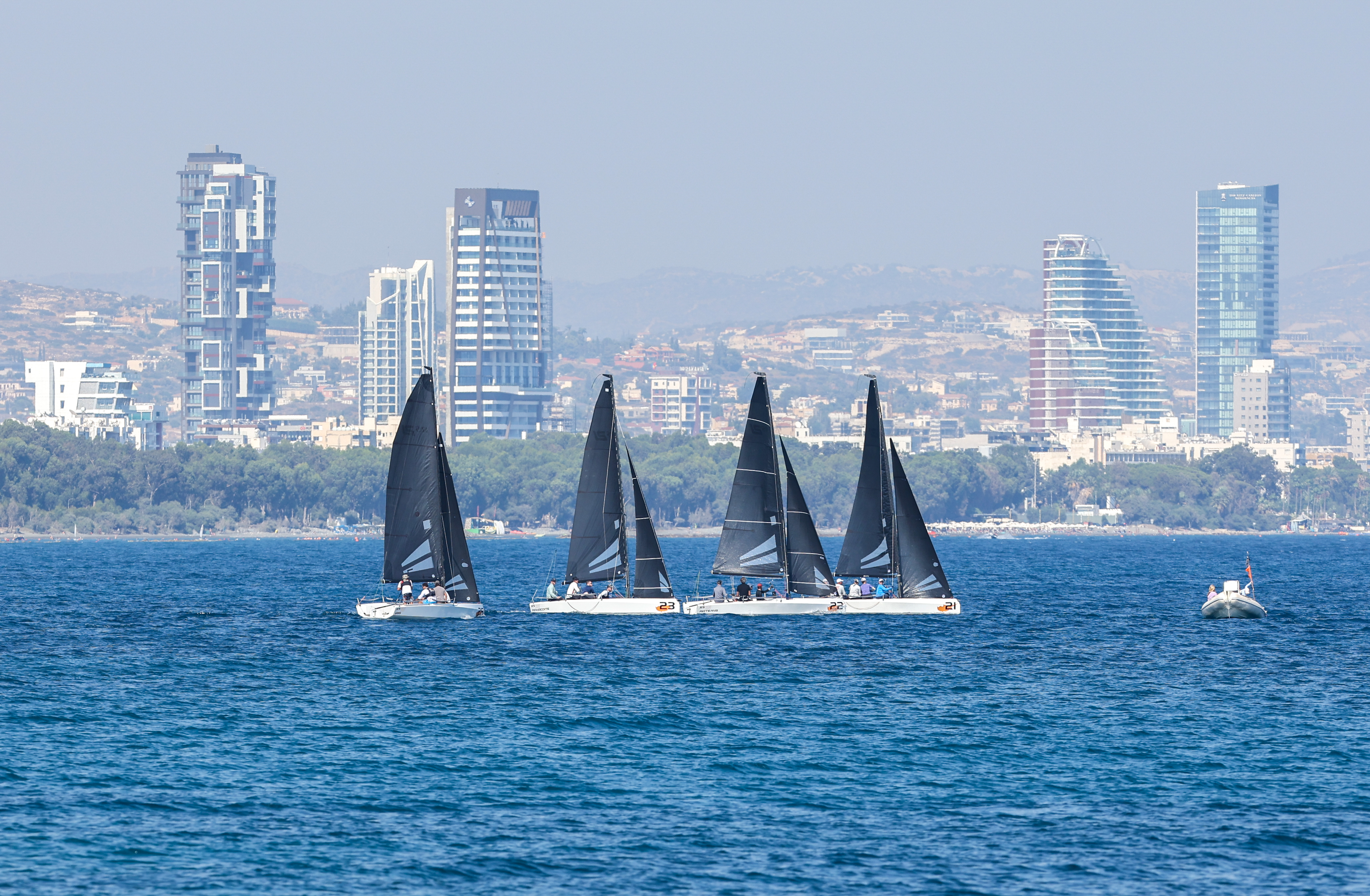
The job is quite extensive, RS21 providing three-hour sessions to clients and also hoping to attract pro sailors from Europe for “winter sailing”, which Cyprus is well-placed to offer. There’s more being planned, or underway: racing competitions (the first one, the Club Cup 2026, took place in August), crew training, corporate sailing programmes. It’s a very ambitious project.
Ihor is central to the project, bringing his decades of experience to coaching, training and inspiring others – and of course he also has his own racing schedule, travelling abroad for world championships. What does he do for fun, though?
“Sometimes I windsurf.”
Anything else?
Long pause, good-humoured shrug. “I don’t have a lot of time.”
He’s more relaxed now, the smile breaking through more often – maybe because our time is almost up, and he can go back (eventually; there’s another meeting after me) to his beloved boats. I mention again how impressed I am that he’s fit enough to sail competitively, at 55 – what’s his secret? – and he tells me a joke. “How long have you been smoking?” a guy is asked. “Since I was 14,” he replies. “But you look so healthy!” “Well, the alcohol helps…”
We laugh. It’s unclear how relevant the joke is to Ihor, who probably doesn’t indulge in too many vices – but I think I see why he told a joke, to finesse the question. Humour is often how men shrug off impossible questions – especially a sportsman and man of the sea, an expert at ‘managing’ sailboats and doing, not talking.
The ageing body, and how best to handle it, is one impossible question. The precise nature of sailing, or any sport – why some people win Olympic gold medals, and others don’t – is another such question, a mystery. What actually happened in 1996? What made Ihor and his partner the best in the world? Of course it was nothing, and everything.
“You must be feeling,” he explains. “Only your feeling.” The 470 class is “a very technical class” and you have no instruments, no speedometer – so you have to practise and practise but then you also have to feel the wind, feel the waves, feel the boat, be in tune with everything and feel it just a touch more deeply and precisely than the sailors in those other boats. And you have to be lucky.
He and Yevhen did a lot of preparation, he says. “And then we are feeling the boat very good. And our technique is also very good. And we get the medal.” The answer is mysterious, like the sea itself. I leave him to it and walk to my car, past the blue waves lapping at the hulls of yachts and sailboats.
Click here to change your cookie preferences