
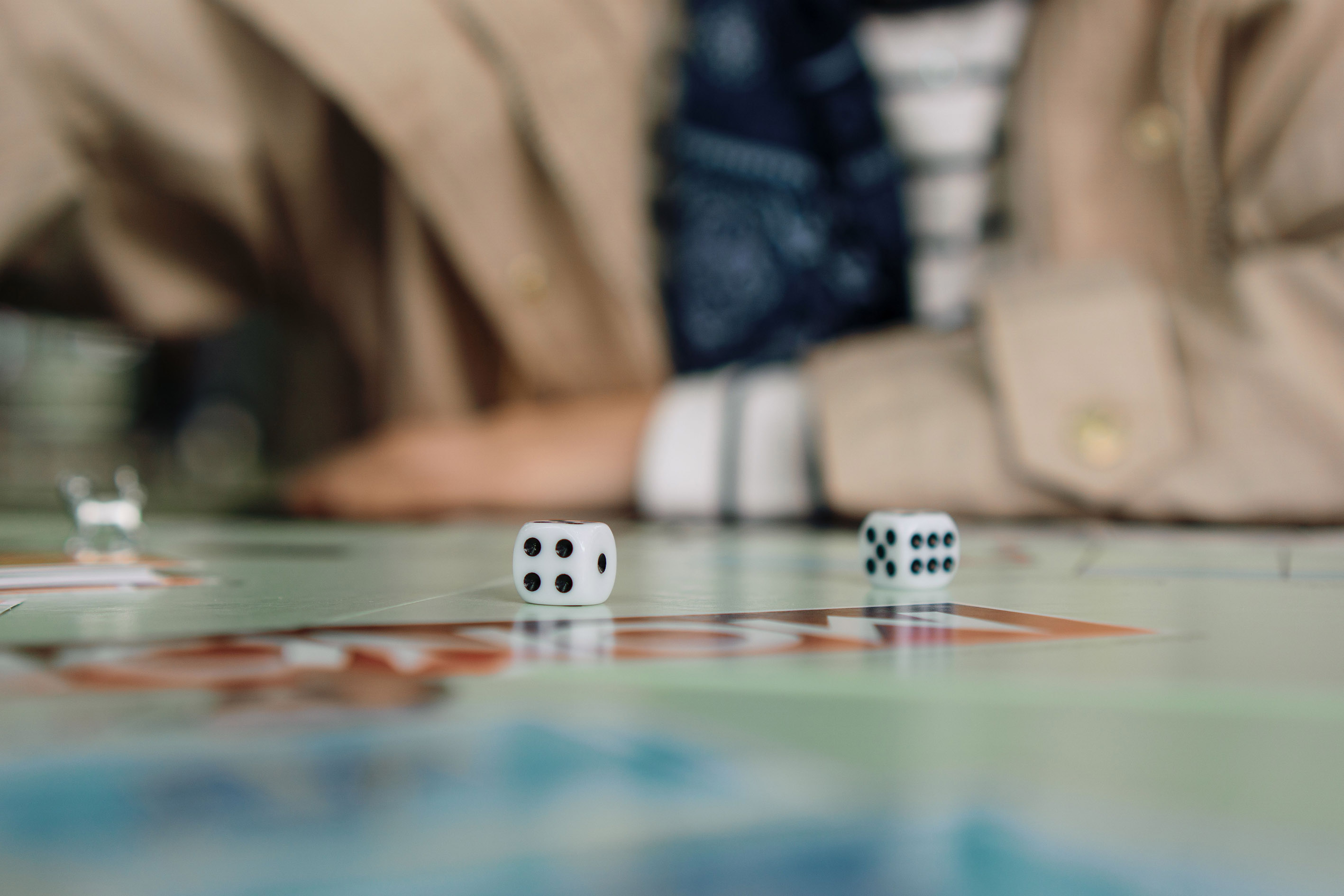
From Catan and Go to sprawling modern strategy games, one Cyprus venue is helping players find opponents, friends and a community beyond their screens
Oleg is Ukrainian, 33, and in finance. It’s 7pm on a Friday, the end of a long working week. You’d expect him to be in a bar, letting off steam – but instead he’s sitting at Tablo Board Game Café in Nicosia, eating a club sandwich and waiting for his co-workers to arrive to play Settlers of Catan.
Catan, which has been around since the 90s, is a very famous board game, halfway between the old classic games of Gen X childhoods (Monopoly, Cluedo, Risk, Trivial Pursuit) and the explosion in board games that’s taken place in the past couple of decades. Around 3,500 new games are now coming out every year (!), and SPIEL in Germany, the world’s largest board-game trade fair, gets around 200,000 visitors.
Catan is clearly popular at Tablo too, being a good entry-level game. Oleg and his friends – seasoned aficionados who meet every weekend – will be playing a more advanced version, but there’s also, for instance, six young men at an outside table (they’re mainland-Greek, probably students or soldiers) who seem to be playing more casually, with a good deal of joking and badinage.
Tablo isn’t big, only about 10 tables plus some extra space upstairs (mostly reserved for games that require a bigger board or more time to play, like Dungeons & Dragons). I assume it’ll fill up soon, at the moment though it’s just Oleg and his sandwich, the Greeks playing Catan, and a Cypriot group immersed in a game where players mark their cards by connecting hexagons of the same colour. This is a ‘roll and write’ game, explains Andonis Michanikos – meaning you roll dice, then write as instructed – called Trails of Tucana.
Andonis is the owner, having opened Tablo in March 2025. (Before that it was also a café, but not for board games.) There are over 200 games on the shelves here and he knows them all, having played them and memorised the rules – and in fact he owns even more, around 650 in total. “I buy new ones too,” he explains, “but meanwhile I take the ones I have, learn the rules, and bring them here.”
Taking his hobby to the next level
This is not his full-time job (he’s a practising lawyer) – it’s his passion, a labour of love. He always liked games, but his hobby went next-level in 2016 when he designed his own game, Rhyme the Rap Challenge (players are provided with three random words and must use them to create a rhyming verse, like a rap song), and attended various fairs, including SPIEL, to promote it.
What he saw there inspired him – not just the boom in board games but the sight of families together, huddled round a board, so much nicer than the usual image of Dad, Mum and kids spending ‘family time’ on their separate phones at a restaurant table.
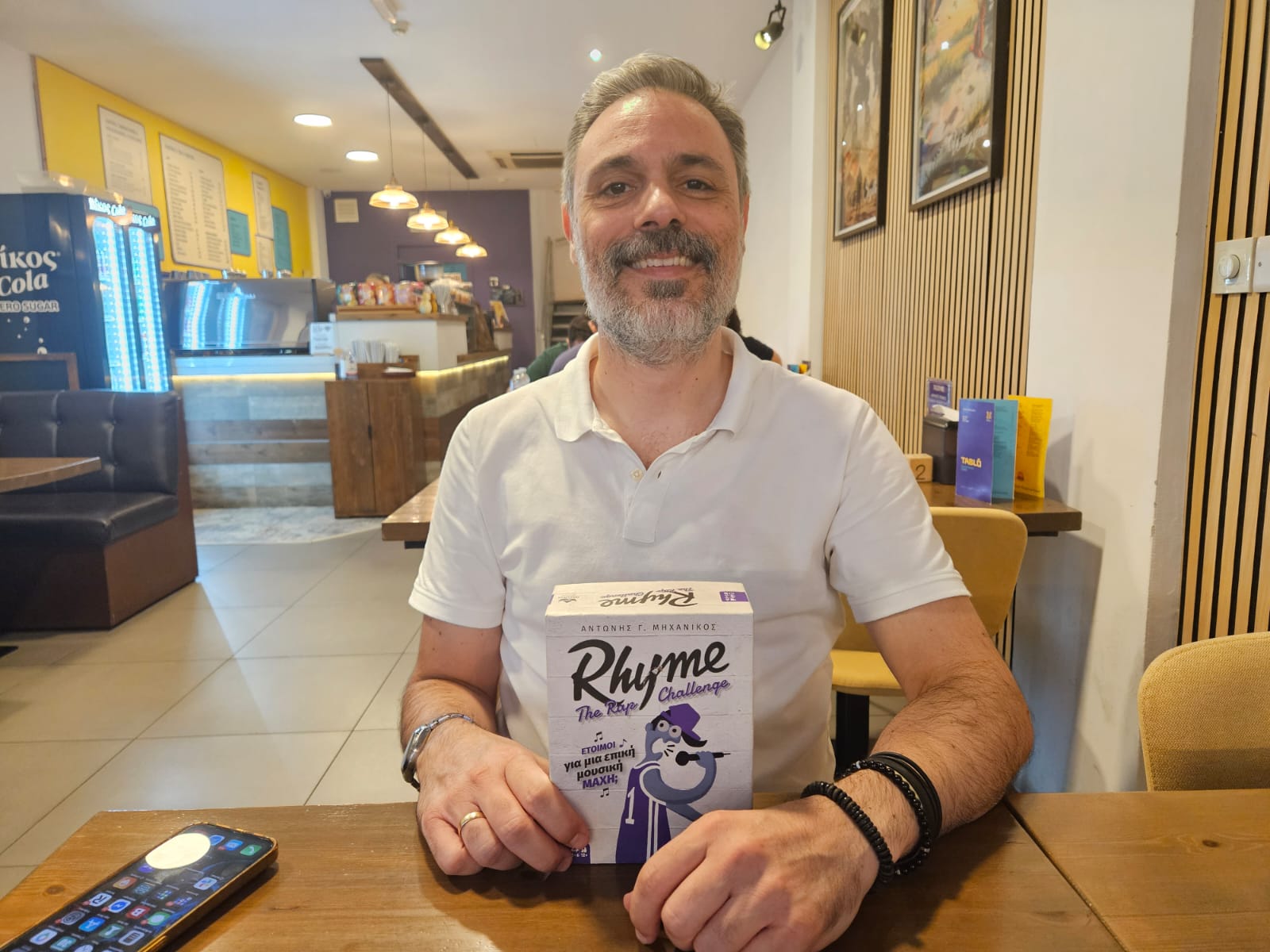
Andonis became a board-game evangelist. He presented games at schools and youth clubs, organised events, saw first-hand how exhilarated kids become playing games, “especially when they have their parents playing with them”. The hundreds of games at Tablo even include a selection – on the bottom shelf, for easy access – for very young kids, even toddlers. One of his ‘regulars’ is a three-year-old girl who always gets the same game, playing quietly by herself. It’s not even clear if she understands the rules – but it makes her happy, and keeps her off the tablet.
That’s all well and good, and games are indeed educational, teaching children how to lose as well as win, for one thing – but the notion that games are ‘for kids’ is a misconception that’s still far too prevalent in Cyprus (we’re a bit behind the times, as usual), much like the misconception that ‘board games’ still refers to Monopoly, Cluedo et al.
The real story here is one of community – and not just for kids.
A story of community
Board-game culture isn’t quite as active as the one for collectible-card games like Pokemon or Magic: The Gathering – but it’s getting there. One of the oldest communities on the island is the one, appropriately enough, for one of the oldest board games in existence: the ancient Chinese game Go, known for being simultaneously very simple and impossibly complex. “Until recently, when AI managed to beat the strongest players, it was basically the last game where it was considered impossible for computers to beat humans,” says Nicholas Roussos.
Nicholas is co-founder of the Cyprus Go Association, having been afflicted with a common board-game problem. He learned Go as a student in the US, promptly became obsessed with it – then, when he came back to Cyprus in 2002, had no-one to play with.
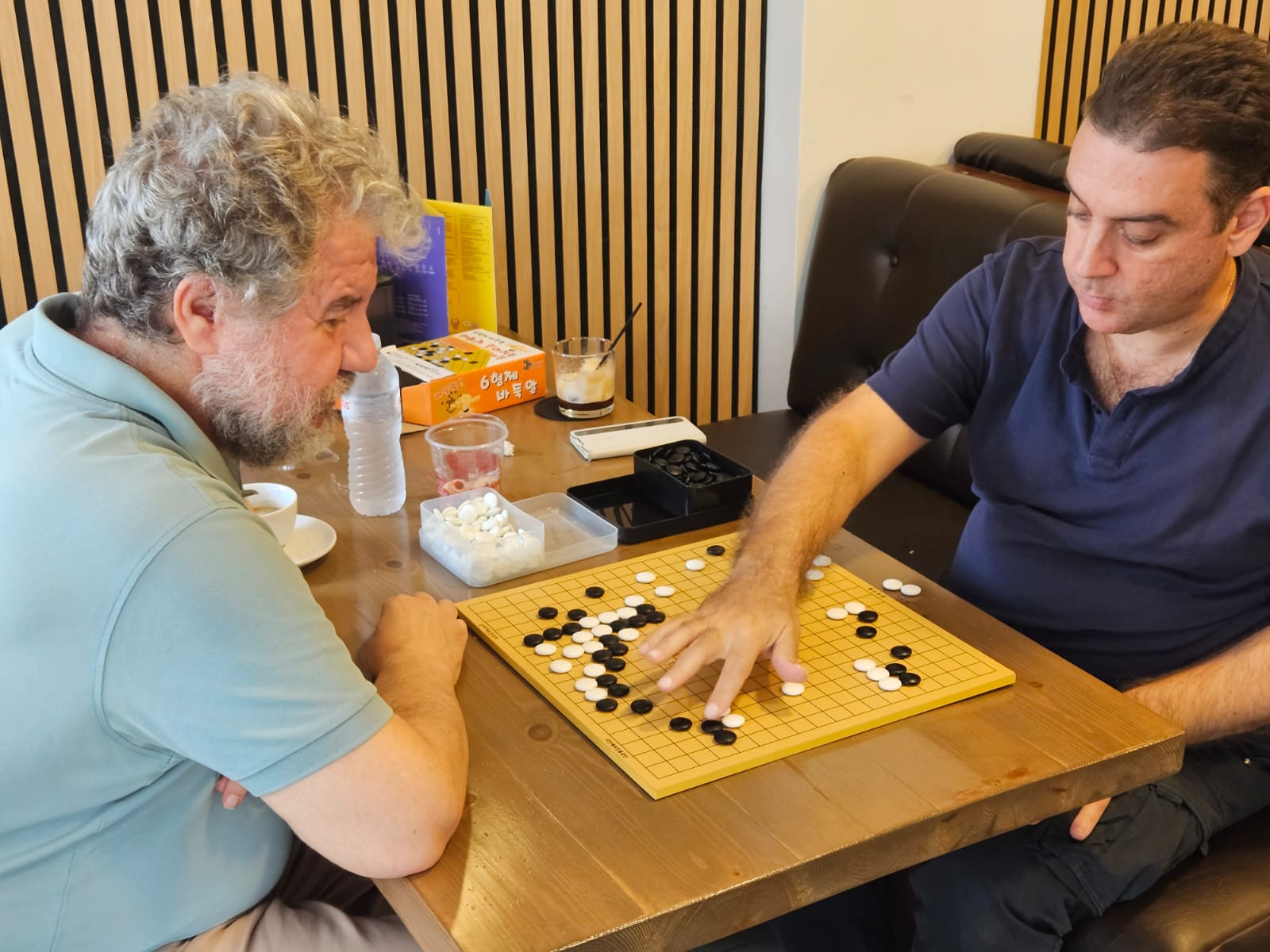
There was no equivalent of Tablo at the time – so instead he wrote to the European Go Federation which put him in touch with Dimitris Regginos, a classical guitarist who’d taught himself Go online. The two of them launched the Association – which is still active now, with a couple of dozen members (many of them Russian and Chinese) all over Cyprus. Their top player, undefeated in all tournaments, is a 17-year-old Chinese schoolboy in Paphos.
Nicholas, now 48 and a family man, isn’t as involved as he once was. Still, the opening of Tablo was a golden opportunity for the Go community (derailed by Covid, and the closure of its previous venue) to resume its regular meetings. “So here we are, and we invite anyone who is interested to find out about this game!” he says enthusiastically – every Saturday at 3pm, beginners welcome and no previous experience needed.
Who to play games with?
The story of the Go Association is typical, being a story of trying to form a community (this is also, ironically, the aim in Catan, in which ‘settlers’ build cities, roads and other settlements on the titular island). Board games, by their nature, are sociable – unlike video games, which attract the same demographic.
Oleg grew up playing video games, but has largely switched in the past few years – mostly because he works at a computer all day, so prefers something more hands-on and tactile to relax. “There’s lots of small figures,” he notes of board games. “There’s a rule book to study. There’s the element of competition.” He plays Catan, Terraforming Mars, Carcassonne, Ruins of Arnak. Recently he’s picked up Avalon: The Riven Veil, but is still wading through the massive rule book. “I can play it,” he shrugs. “But I still need to find people to play it.”
There it is, the common problem – and there’s also a related problem, namely who should one play with, friends or strangers? Then again, why not both?
Some games – so-called ‘party games’ – do work best with a friend group, because players getting personal is part of the fun. Thus, for instance, Dixit, which Andonis plucks from one of his teeming shelves.
Dixit is played with rather abstract-looking cards, illustrated with dreamlike images. One player picks a card and cryptically states what it evokes in them – ‘adventure’, say – then the other players pick what they feel is a similar card from their own hand. Cards are shuffled and dealt face-up, and the point is to guess which card belonged to the first player – a quest that becomes more entertaining when the players know each other, and can riff on what ‘adventure’ might mean to Maria or Costas.
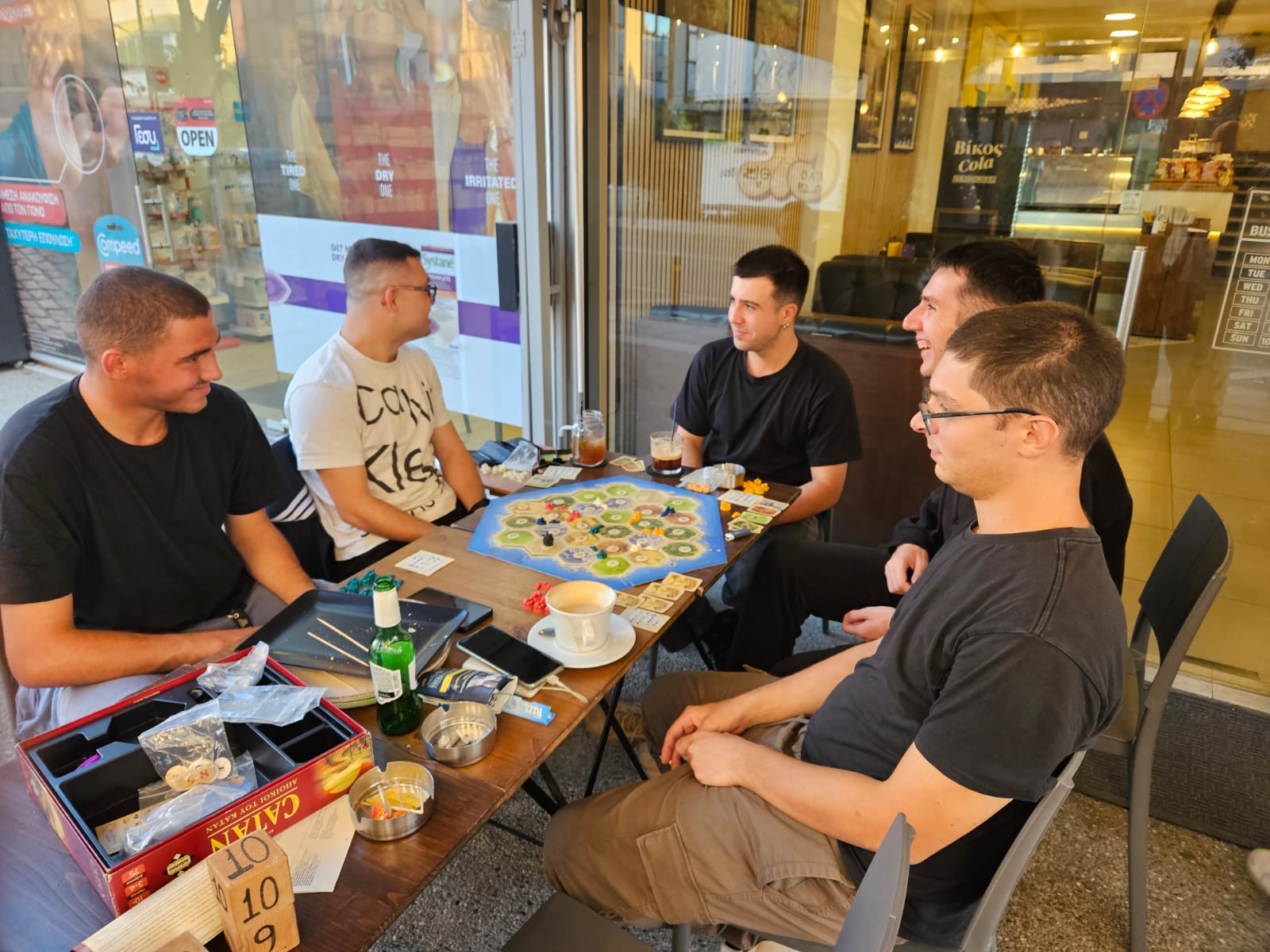
Then again, playing with strangers has its own charm. Tablo has a WhatsApp community (Tablo Board Game Café) with several groups – and one group is ‘Looking for Players’, where people post in search of gaming companions. “That’s also part of the experience,” says Andonis. “Lots of people love to meet new people.”
Most intriguing is the in-between scenario, where the fellow gamer is neither a friend nor a random stranger. Tablo hosts a singles night once a month (they also do a social event for over-55s) – and playing board games is indeed an excellent way to get a feel for someone’s character without the investment of having to date them, or even hang out with them. A game is like life, and you see every facet – what strategy they pick, whether they’re reckless or risk-averse, whether they hold grudges, whether they become belligerent under pressure, and of course (the big one) how they handle losing.
A growing community
Easy to see why board-game culture is having a renaissance – and it’s bound to grow as modern life becomes more disconnected, everyone buried in their phones or behind their social-media filters.
It’s face-to-face and tangible, but sublimated in a fantasy world without the strain of actual social interaction (unless you want it). It’s like sports but not necessarily competitive, indeed some of the best-known board games are co-operative.
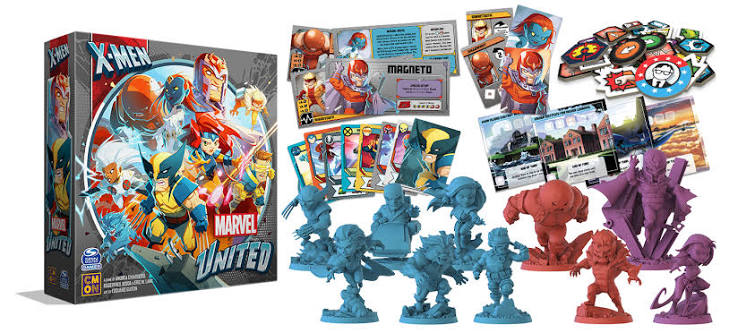
Andonis plucks them from his shelves, one game after another. Pandemic, say – published in 2008, before the actual pandemic – where all players work as a team, trying to stop four deadly viruses. Marvel United, superheroes vs. baddies. Sky Team, a dice-rolling game where a pilot and co-pilot have to land a plane through increasingly bumpy conditions.
What’s a really unusual game, speaking as a game designer himself? He immediately extracts Micro Macro: Crime City, also co-operative, a detective game with hidden objects. We don’t even need to open the box, our first case (‘Who murdered the burger vendor?’) is right there on the cover – a stencilled urban map where we first locate the figure of burger vendor, then plot his journey to his sad demise.
More games, a whole profusion of games. Alfred Hitchcock’s Rear Window, based on the film but apparently a Mastermind-like game where players must work out where each character lives, and what they do. Block Ness, where I try to assemble a Loch Ness monster on a game board and you try and block me. Deface Race, a drawing game (actual drawing skills not required) where players scribble madly to make a bell look like an octopus, or a panda resemble a chef. Kung Fu Zoo, a dice-flicking game which is more about dexterity. Go was never like this.
Board games aren’t for everyone, and they do appeal most obviously to a certain personality type. “We like numbers. We like rules!” laughs Oleg, meaning himself and his fellow finance geeks. Being a lawyer, like Andonis, is another rules-based job that rewards creativity within rigid constraints, like gaming. And there’s also a particular temperament – a certain analytical bent, a detachment – in being able to care very deeply and, at the same time, not at all. It’s only a game, after all.
What kind of people come to Tablo? His most reliable regulars are a group of university researchers, chuckles Andonis (I recall Oleg’s comment that going to a bar after work “is not really mentally stimulating”) – but it’s not just brainiacs, mostly it’s friends looking to assemble Loch Ness monsters on a Friday night. (Anything to get off their phones.) The more pressing question is about the people who don’t come.
Board-game culture is growing – but there’s no co-ordination, it’s hard (even now, with so many online aids) to find kindred spirits. “Most people might be playing at home, and they don’t even know we exist,” sighs Andonis. “And we don’t know that they exist.”
The community needs a hub, a meeting point, somewhere to congregate and rally round. Enter Tablo.




Click here to change your cookie preferences