
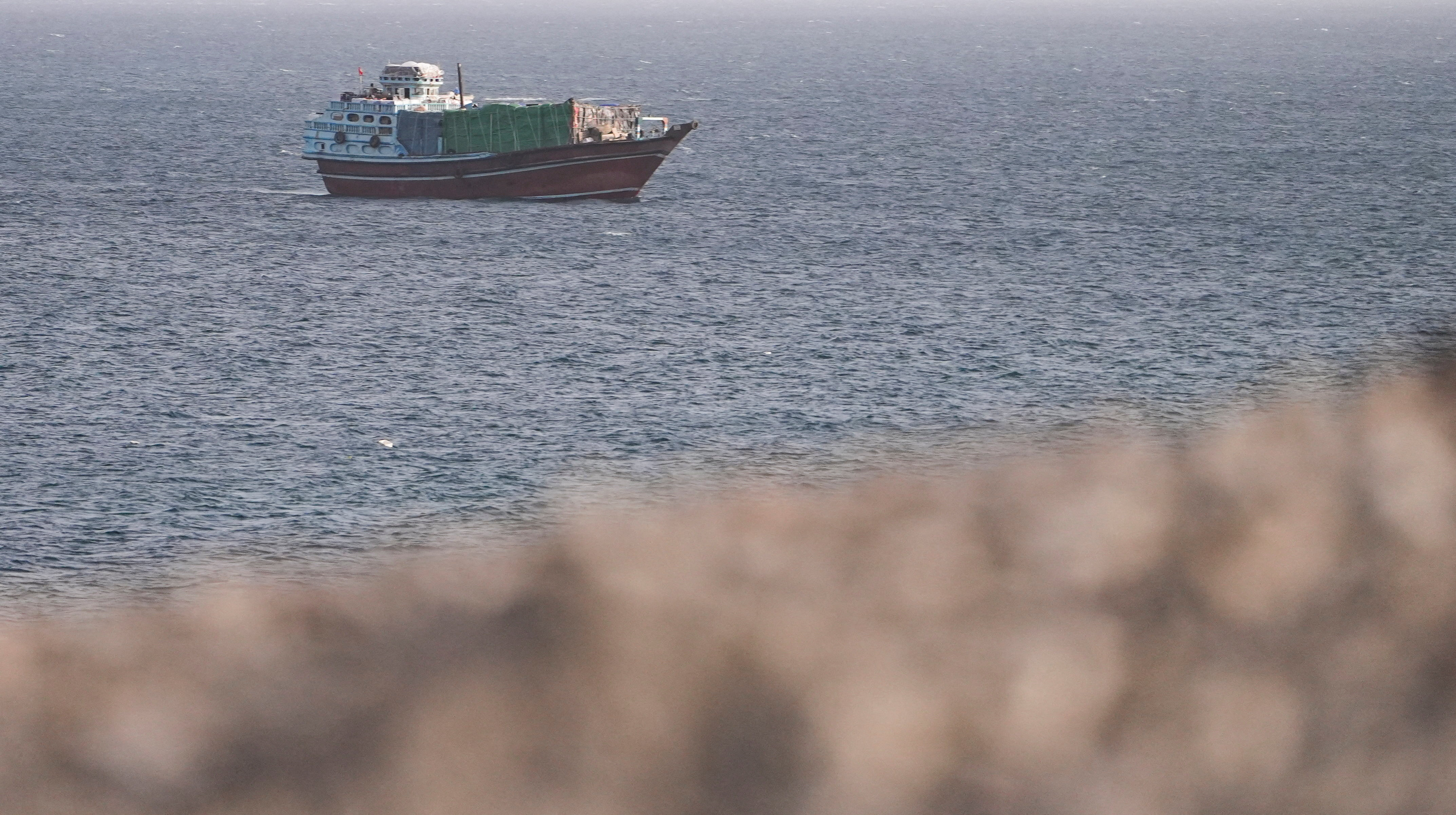
Commercial ships have been sunk and sailors killed or left missing as attacks intensify across the Strait of Hormuz and Black Sea, raising concerns for Cyprus’ shipping industry over crew safety, insurance costs and disrupted trade.
The International Maritime Organisation (IMO) has recorded 113 confirmed maritime incidents in the wider Hormuz region since the Middle East conflict began on February 28, with 24 seafarers killed, according to its latest figures, updated on October 14.
The deteriorating security situation comes as drone attacks in the Black Sea move closer to the coasts of Bulgaria and Romania, both NATO members, threatening commercial routes used to transport grain, oil and other commodities.
For Cyprus, which operates one of the world’s major ship registries and hosts an extensive network of ship management companies, the simultaneous crises are adding to concerns over vessel operations, crew safety and the cost of international trade.
Among the latest casualties was the Singapore-flagged container ship GFS Pride, which sank on October 14 after being struck by a projectile near the Omani coast the previous day.
The vessel caught fire and became disabled before sinking, although all 21 crew members were evacuated safely.
Another Singapore-flagged container ship, GFS Giselle, sustained hull damage in a separate incident but managed to reach a safe anchorage, with its crew unharmed.
Singapore’s maritime authorities condemned the attacks, warning against further threats to civilian shipping and describing the incidents as unjustifiable violations of international law.
The Antigua and Barbuda-flagged bulk carrier Cape Dao also sank in October, nearly three weeks after being struck twice near Khasab, Oman, on September 23.
An Indian seafarer died in the attack, while the remaining 26 crew members were rescued.
The two sinkings have raised further concerns because the danger is no longer confined to oil tankers. Container ships and dry bulk carriers are also being caught in the conflict, exposing a wider range of cargoes and shipping operations to disruption.
Indeed, the frequency of attacks has increased considerably. According to maritime intelligence company Windward’s quarterly assessment, 45 vessels were attacked in the Gulf between July and September, compared with 25 during the preceding quarter.
Tankers made up 87 per cent of the vessels targeted, reflecting the growing pressure on energy transportation through one of the world’s most important shipping routes.
At the same time, maritime traffic remains well below pre-war levels. Windward recorded an average of just 24 daily transits through Hormuz during the third quarter, against approximately 138 before the conflict.
Moreover, more than half of September’s transits involved vessels travelling without transmitting their automatic identification system signals, making commercial traffic increasingly difficult to monitor.
While the Gulf crisis continues to disrupt energy shipments, developments in the Black Sea have brought the threat of attacks closer to European shores.
On October 13, the Guinea-Bissau-flagged cargo vessel HS Dignity sank approximately 17 nautical miles off Bulgaria after being struck by a drone.
Five of its 16 crew members were rescued, while 11 were reported missing.
Another vessel, the Malta-flagged Chelsea-3, was attacked on the same day near the Bulgarian coast. All 15 crew members survived.
Bulgarian authorities subsequently ended the search-and-rescue operation for the missing sailors aboard HS Dignity on October 14 after worsening weather conditions prevented further operations.
The attacks have also spread towards Romania, where two chemical tankers were struck near the Sulina Canal on October 15, an important shipping route connecting the Danube with the Black Sea.
The San Marino-flagged Wine Trader caught fire, leaving seven seafarers missing and five rescued. A second tanker, the Comoros-flagged Yara J, was also damaged, although its crew escaped injury.
Romanian authorities initially stopped short of formally attributing responsibility, while a NATO military source linked the strikes to Russian drones.
The incidents have since prompted further military action. On Saturday, October 17, Romanian F-16 fighter jets shot down two drones over the country’s territorial waters, with Defence Minister Radu Miruta saying they were believed to be advanced Russian-made aircraft.
The latest developments have also brought the matter onto NATO’s agenda, with the North Atlantic Council expected to discuss Black Sea security on Tuesday, October 20, following requests from Romania and Bulgaria for stronger protection against drone attacks.
Meanwhile, the scale of the threat has increased sharply. Windward estimates that approximately 86 commercial vessels were attacked in the Black Sea during the third quarter of 2026, compared with 23 during the entire first half of the year.
For shipowners, the consequences extend beyond the immediate risk of losing a vessel. Higher war-risk insurance costs, additional security requirements, possible route changes and longer voyages are all putting pressure on maritime operations.
These costs can eventually reach businesses and consumers, particularly when shipping disruptions affect energy supplies, agricultural commodities and other essential imports.
For Cyprus, the situation is particularly significant as the country continues efforts to strengthen its position as an international maritime centre.
Speaking at a reception promoting the Cyprus Ship Registry in Tokyo on October 15, Shipping Deputy Minister Marina Hadjimanolis said the registry had grown by 27 per cent since September 2023, reaching its highest level in 25 years.
She also emphasised Cyprus’ commitment to maritime safety, reliable regulation and efficient shipping services, while presenting Japan as an important partner for further cooperation.
However, the country’s exposure to international shipping risks extends well beyond vessels flying the Cyprus flag.
Limassol is home to numerous ship management companies and maritime service providers involved in international tanker, dry bulk and container operations. Consequently, developments in both Hormuz and the Black Sea have implications for companies operating from the island, even when the vessels concerned are registered elsewhere.
The danger facing Greek-controlled shipping was already evident earlier this month, when the Dynacom-managed tanker Lipsi, controlled by shipowner George Prokopiou, was struck in Hormuz on October 4.
The vessel, delivered just six weeks earlier, suffered engine-room damage and was left disabled and adrift, although its crew was reported safe. The incident was covered in an earlier report.
A day later, the Greek-flagged LNG carrier Maran Gas Mystras, operated by the Angelicoussis Shipping Group, was also struck while leaving the strait. Its operator subsequently confirmed that the vessel and crew were safe.
Beyond the immediate shipping concerns, prolonged disruption to energy transportation could place further pressure on fuel and electricity costs in Cyprus.
According to Eurostat’s 2026 energy report, petroleum products represented 86 per cent of Cyprus’ available energy in 2024, the highest proportion in the European Union.
With the island still heavily dependent on imported fuels, further increases in international oil prices could have consequences for households and businesses.
The pressure on energy markets was evident last week, with Brent crude closing at $109.86 a barrel on Friday, October 16, its highest level since May, as concerns over Gulf supplies continued.
There may, however, be some room for diplomatic progress.
On Sunday, October 18, Iranian Foreign Minister Abbas Araqchi reiterated that Tehran’s proposal to reopen the Strait of Hormuz within a week remained available to Washington.
Nevertheless, significant differences remain over sanctions, the US naval blockade and other conditions, leaving prospects for an agreement uncertain.
The IMO has repeatedly called for civilian vessels and their crews to be protected, while urging governments to ensure safe passage through international shipping routes.
With attacks continuing in both the Gulf and Black Sea, the immediate challenge for shipping companies is to maintain commercial operations without placing seafarers at unacceptable risk.





Click here to change your cookie preferences