
Ancient buildings, pottery and tools uncovered at an Erimi settlement are providing new evidence of how people lived and worked in Cyprus around 5,000 years ago.
The finds at Erimi Pamboula include circular buildings, plaster floors, a hearth and objects linked to craft activities, according to the Department of Antiquities.
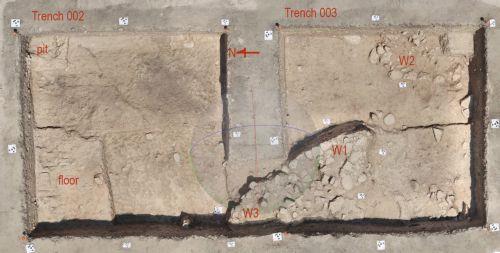
Archaeologists uncovered an extensive outdoor area containing plaster floor remains, a stone mortar, a plaster hearth, pottery fragments, animal bones and evidence of ochre working.
They also almost completely uncovered a circular building.
A nearby wall, previously thought to belong to a rectangular structure, now appears to be part of a second circular building.
Other finds include pottery, mainly of the Red-on-White type, chipped and ground stone tools, picrolite objects, clay lumps, seashells and animal bones, mainly from deer.
The picrolite objects included pebbles, unfinished artefacts and beads, suggesting the working of materials used to make ornaments.
The ochre remains provide further evidence of activities involving natural pigments.
The pottery supports a date for the settlement within the Middle to early Late Chalcolithic period, between 3500 and 2900/2800 BC.
The second excavation season was conducted by the National and Kapodistrian University of Athens, under the direction of professor Giorgos Vavouranakis.
Researchers from Cyprus and abroad are analysing archaeological finds, plant remains, bones, stone tools and fragments of structures, to better understand the settlement and its inhabitants.





Click here to change your cookie preferences