
The global LED video display market is facing mounting cost pressures and weaker demand in traditional applications, but revenues are forecast to grow by an annual average of 11.6 per cent between 2026 and 2030, according to research by market intelligence firm Omdia.
The technology research firm said manufacturers were contending with rising component prices, trade tensions and changing demand, prompting a shift towards higher-value products and emerging applications.
Omdia’s LED Video Display Market Tracker for the second quarter of 2026 found that global shipments rose by 3.3 per cent year-on-year, while revenue fell by 0.2 per cent, highlighting continued pressure on the industry.
Since late 2025, suppliers of LED chips, driver integrated circuits, printed circuit boards, power supplies and other materials have announced successive price increases.
Several brands have responded with three to four rounds of price adjustments, with cumulative increases ranging from 3 per cent to 30 per cent.
“Rising prices and changing market conditions are prompting vendors to reassess their product portfolios and focus on higher-value opportunities,” said senior analyst Cindy Liu said.
“Vendors are increasingly prioritising mid-range and premium products, improving energy efficiency and reliability while expanding production capacity in areas where they have competitive advantages,” Liu added.
Emerging markets across Asia and Oceania, Latin America and the Caribbean, the Middle East and Africa, and Eastern Europe are offering opportunities for expansion.
Urbanisation, infrastructure investment, energy-efficiency initiatives and wider adoption of digital display technology are encouraging manufacturers to expand regional production and diversify supply chains.
Daktronics, for example, is investing in a new manufacturing facility in Saltillo, Mexico, with shipments expected to offer greater flexibility in managing production costs, tariffs and regional customer requirements.
Leyard has also been expanding its manufacturing presence in Saudi Arabia following a 2024 agreement with Saudi Engineer Holding Group Establishment (EHG), with production initially scheduled to begin in the second quarter of 2026.
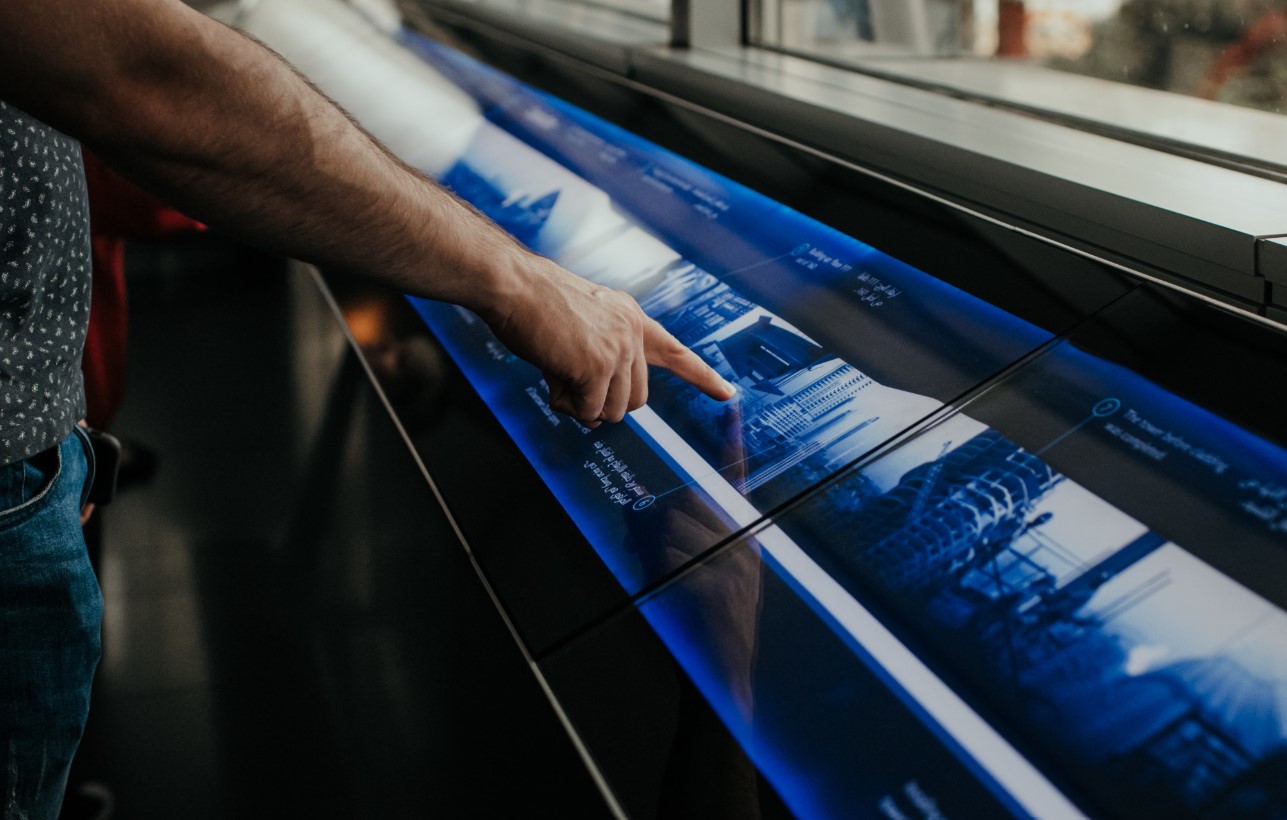
Meanwhile, advances in Micro LED, chip-on-board packaging, high-precision seamless splicing and interactive technology are extending LED displays beyond traditional uses.
Applications in sports venues, immersive cultural attractions, film and television production, public safety and retail are increasingly becoming commercially viable, turning displays from supporting hardware into central elements of new experiences and services.
Curved and spherical LED installations are enabling immersive experiences in planetariums, science centres and cultural attractions.
Multi-sided LED CAVE systems can also create immersive environments without requiring users to wear head-mounted devices, supporting applications in museums, corporate exhibitions, simulation and training.
Omdia expects these developments to strengthen market growth from 2027 onwards.
It forecasts that corporate signage revenue will grow at an annual average of 14.7 per cent between 2026 and 2030, while public-space applications are projected to expand by 10 per cent annually over the same period.




Click here to change your cookie preferences