

Cyprus tourism businesses may have to get used to a new kind of holidaymaker. One who watches the price of the hotel room but thinks nothing of spending extra on a memorable dinner, spa treatment or an experience worth travelling for.
It is a change that could have considerable implications for the island’s hotels, restaurants and leisure operators, as international research reveals that travellers are becoming more careful with their money without necessarily losing their appetite for luxury.
The message is increasingly clear. Holidaymakers are not abandoning the good life. They are simply becoming more selective about what they are prepared to pay for.
According to the WTM Global Travel Report 2026, produced by Tourism Economics, part of Oxford Economics, and presented at World Travel Market London earlier this month, the global tourism industry is heading for another record year, despite geopolitical tensions, expensive airfares and pressure on household budgets.
International overnight arrivals are forecast to reach 1.57 billion in 2026, up 2 per cent from last year, while spending at destinations, including domestic tourism, is expected to climb 9 per cent to $7.8 trillion.
But behind the impressive figures lies a more interesting development for tourism businesses. Consumers are increasingly prepared to cut costs in one part of their holiday to spend more generously elsewhere.
The research found that 56 per cent of travellers were interested in combining affordable options with premium experiences during the same trip. Only 20 per cent preferred exclusively budget experiences, while 16 per cent were interested solely in premium ones.
Moreover, 49 per cent of respondents had paid for a luxury experience while travelling, compared with 41 per cent in 2025.
Perhaps more revealingly, half of those who had splashed out on such experiences were also trying to reduce their overall holiday expenditure.
In other words, the traveller who saves money on accommodation may still be willing to pay handsomely for the right experience.
Tourism Economics managing director for Europe, the Middle East and Africa Dave Goodger acknowledged the pressure on consumer purchasing power, explaining during the presentation that “travellers are reallocating resources and looking to save where they can”.
Rather than abandoning holidays, consumers are adjusting their priorities, with the research showing that three in four travellers still regard taking an annual leisure trip as important.
That determination to travel, even when money is tight, is helping sustain demand. It is also changing the way holiday budgets are divided.
Indeed, the importance of value for money has risen sharply, with 16 per cent of respondents identifying it as a reason for choosing their most recent international destination, compared with just 9 per cent a year earlier.
Luxury, meanwhile, remained a deciding factor for 12 per cent.
For businesses, the distinction matters. A customer looking for value is not necessarily looking for the cheapest possible holiday.
Instead, the opportunity lies in offering a competitively priced starting point, with additional services and experiences available for those willing to spend more.
A reasonably priced hotel room can be accompanied by an optional spa treatment, a premium dining experience or an excursion. Similarly, a visitor staying in an expensive resort may prefer to spend the day exploring local villages, markets and traditional restaurants rather than booking costly organised activities.
The accommodation figures illustrate just how varied these preferences have become.
Some 29 per cent of respondents stayed primarily in luxury hotels on their most recent international trip, compared with 27 per cent in mid-range accommodation and 10 per cent in budget hotels.
However, the traditional distinction between luxury and economy appears to be becoming less useful in understanding how visitors actually spend.
At WTM London, Chase Gray of Skift Advisory captured the change with a particularly telling observation, arguing that the future of luxury would be about “access not excess”.
His analysis of the traveller of 2036 identified growing interest in personal enrichment, meaningful experiences and connections with family and friends, alongside the more traditional pursuit of prestige.
The commercial lesson is a straightforward one. Luxury is no longer necessarily about buying the most expensive version of everything. Increasingly, it is about being able to choose what makes a trip special.
For Cyprus, the findings arrive at an interesting moment. The island’s tourism industry has faced a more difficult year, although the latest arrival figures offer some encouragement.
According to official figures from the statistical service (Cystat), Cyprus welcomed 3.4 million tourists between January and September 2026, a decline of 5.6 per cent compared with the corresponding period of 2025.
September, however, delivered a record for the month, with 580,889 arrivals, up 1.8 per cent year on year.
The picture is equally interesting when spending is taken into account.
Tourism revenue reached €2.32 billion during the first eight months of 2026, down 6.2 per cent from €2.47 billion a year earlier.
However, the August figures revealed a difference between the amount visitors spent each day and the length of time they remained on the island.
Average daily expenditure rose from €105.04 to €108.52, while the average stay shortened from 9.2 to 8.9 days.
Spending per visitor remained almost unchanged at €965.81.
The figures do not prove that visitors to Cyprus are behaving in precisely the same way as those surveyed internationally. Nevertheless, they demonstrate why visitor spending patterns deserve as much attention as arrival numbers.
For a hotelier, an additional night is valuable. For a restaurant, winery, excursion provider or small tourism business, what the visitor chooses to do during that stay can be equally important.
And this is where the international findings become particularly relevant to Cyprus.
The survey found that 61 per cent of travellers expressed strong interest in trying local food and drink, while 46 per cent wanted to meet residents or learn more about local culture.
When asked about the reasons behind their most recent international destination choice, relaxation remained the leading attraction, accounting for 37 per cent of responses, up from 31 per cent in 2025.
History and culture followed at 27 per cent, with good weather accounting for 25 per cent. Food and drink and the natural environment each attracted 17 per cent.
These preferences could work in Cyprus’ favour.
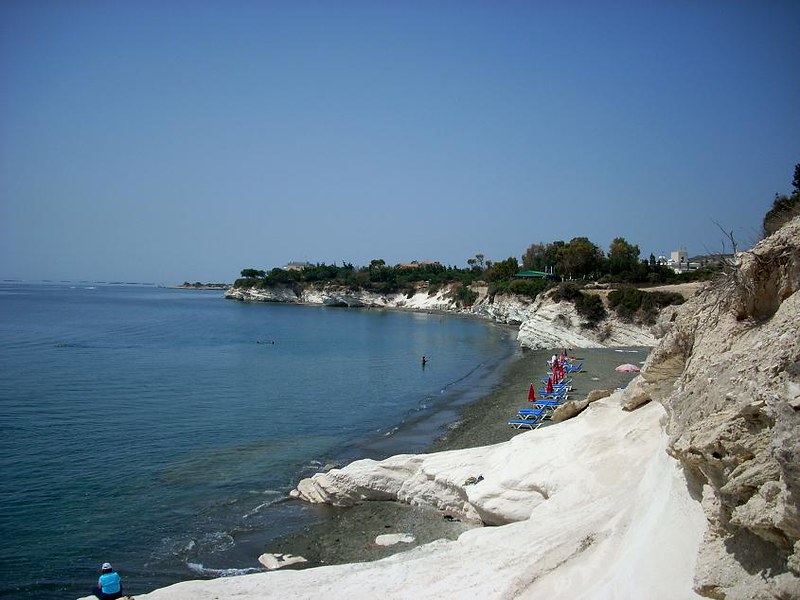
Beyond its beaches and established resorts, the island has a tourism offering that includes traditional villages, vineyards, local gastronomy, archaeological sites, mountain landscapes and outdoor activities.
The opportunity is not simply to promote these attractions more enthusiastically. It is to make them easier for visitors to discover, book and enjoy.
A winery visit in the Troodos foothills, for example, becomes a stronger commercial proposition when it offers a clearly priced tasting, transport arrangements and a straightforward reservation process.
A traditional cooking experience or a guided village walk can similarly become an activity that visitors plan and pay for, rather than something they discover by chance.
For smaller operators, this creates opportunities to earn directly from tourism expenditure without depending entirely on the major hotel and tour operator networks.
There is another potentially lucrative development. Events are increasingly becoming the reason for a holiday, rather than something tourists happen to attend once they arrive.
According to the report, 58 per cent of international travellers had travelled abroad specifically to attend an event during the previous two years.
Among travellers aged 18 to 34, that proportion reached an extraordinary 80 per cent.
Music events led the way, attracting 37 per cent of international travellers, followed by sporting events at 24 per cent and cultural events at 22 per cent.
The business opportunities extend well beyond ticket sales.
Hotels benefit from additional overnight stays, restaurants and bars gain customers, while transport providers and local attractions have an opportunity to capture spending that might otherwise never have reached the destination.
Angela Val of Visit Philadelphia emphasised this during a discussion at WTM London, explaining how the American city had developed complementary visitor activities around major concerts, including performances by Taylor Swift.
The approach had “changed the way we look at concerts in Philadelphia”, she explained, with visitors increasingly wanting to make a broader holiday out of an event.
It is a useful example for Cyprus, where concerts, sporting competitions, food festivals and cultural events could provide additional reasons to visit outside the traditional summer holiday period.
A weekend concert in Limassol, a sporting event in Paphos or a food festival in a mountain village could attract visitors who might not otherwise have considered travelling to the island at that particular time.
Crucially, the potential economic benefit depends on making it easy to turn interest into an actual booking.
Flights must be available, accommodation must remain open and visitors need practical information about transport and activities.
Without those elements, an event may generate local attendance without delivering the wider tourism benefits it could offer.
The timing of holidays is changing, too. Some 22 per cent of travellers said they intended to travel at different times of the year than previously, with better value an increasingly important consideration.
For Cyprus, where extending the tourism season has long been an industry priority, this presents a further opportunity.
Visitors prepared to travel outside peak summer months could support hotels, restaurants and attractions during quieter periods, particularly if destinations offer enough to make a short break worthwhile.
There is also a geographical shift working in Europe’s favour. Higher airfares, geopolitical uncertainty and security concerns are encouraging travellers to look closer to home.
The report forecasts that travel within the same geographical region will increase by 3 per cent in 2026, while journeys between different regions will decline by 3 per cent.
Europe is expected to benefit, with international overnight arrivals rising by 5 per cent, more than double the global growth rate.
International leisure spending in Europe is forecast to increase by 11 per cent, while domestic leisure expenditure is expected to rise by 8 per cent.
Together, the two markets are projected to generate approximately $2.05 trillion in European leisure tourism spending this year, with international visitors responsible for roughly one-third of the total.
The figures are measured in nominal dollars, meaning they include the effect of inflation and should not be interpreted as equivalent increases in real tourism activity.
For Cyprus, the preference for shorter journeys offers potential advantages, although competition for European visitors remains intense.
Attracting those customers will depend not only on competitive airfares and accommodation prices, but also on whether the island can offer the experiences travellers increasingly want.
Technology is adding another dimension to that competition. The report found that 36 per cent of travellers would trust artificial intelligence to complete a booking on their behalf, while 24 per cent had used AI chatbots to help plan an international trip.
Younger travellers were considerably more receptive. Among those aged 18 to 34, 54 per cent would trust AI to make a booking, compared with just 18 per cent of people aged 55 and over.
For hotels, attractions and smaller tourism operators, this raises questions about digital visibility and how easily their services can be found and booked.
A distinctive experience may attract interest, but if customers cannot find reliable information, compare prices or make a reservation without difficulty, the commercial opportunity can quickly disappear.
Looking further ahead, Tourism Economics expects international arrivals to increase by 8 per cent in 2027, assuming geopolitical disruption eases, with longer-distance travel recovering by 11 per cent.
By 2032, international overnight arrivals are forecast to reach 2.2 billion worldwide, with Europe expected to welcome approximately 226 million more annual international arrivals than in 2026.
These projections point towards a considerably larger market, but they also raise an important question for destinations competing for a share of it.
The challenge is no longer simply to convince people to take a holiday. The evidence shows that most already want one.
It is to persuade them that a particular destination offers enough value, variety and memorable experiences to justify their spending.
For Cyprus, that means looking beyond the number of people passing through airport arrivals and paying closer attention to what happens after they leave the terminal.
The money tourists spend in a village restaurant, at a winery, on a guided excursion or during a cultural event has consequences for businesses and communities far beyond the hotel where they sleep.
And as travellers become more selective, the destinations that make those experiences accessible, attractive and easy to book could find themselves in a stronger competitive position. The next generation of holidaymakers may still dream of five-star experiences. They simply see no reason why every part of the holiday should come with a five-star bill.



Click here to change your cookie preferences