
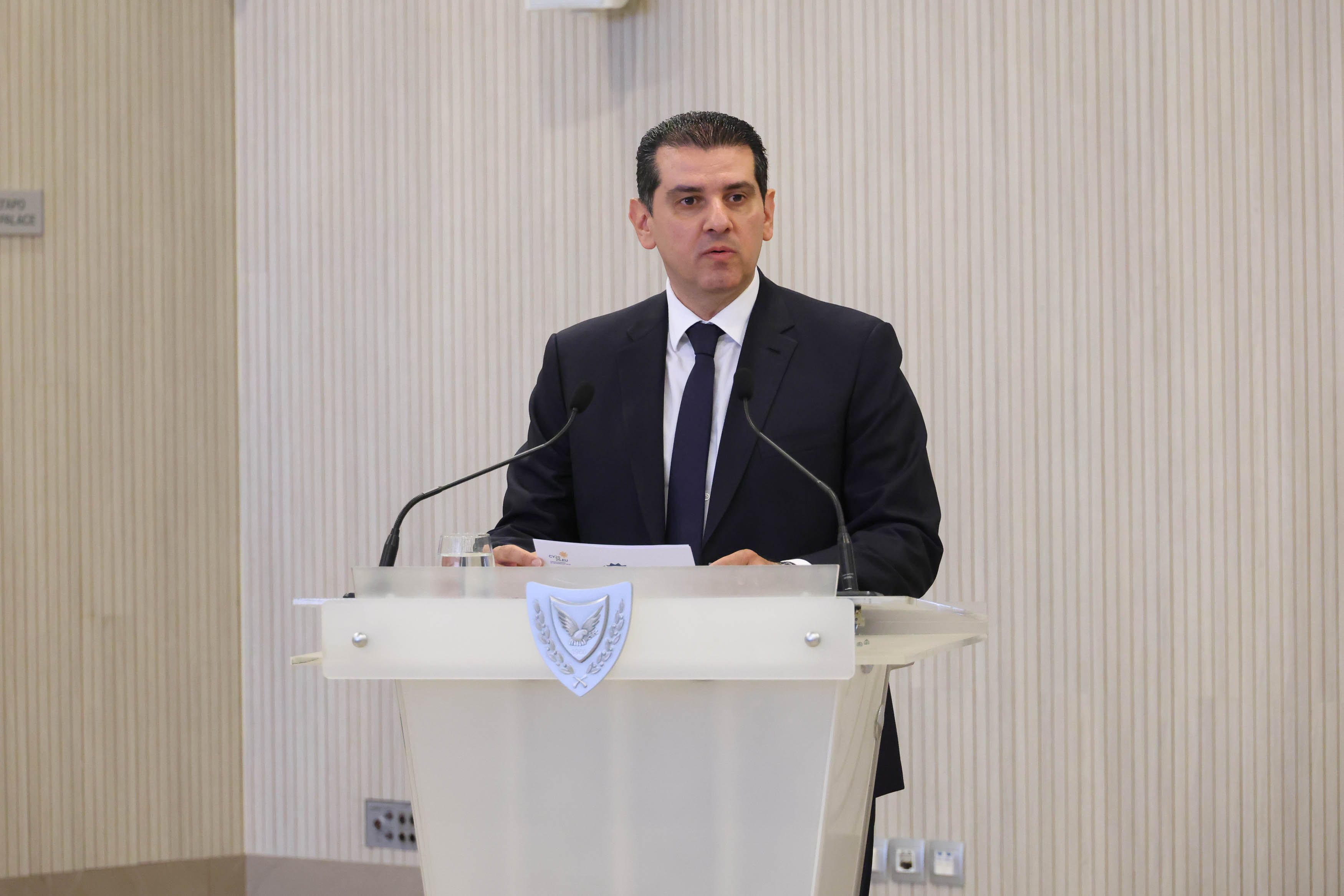
Cyprus’ six natural gas discoveries hold an estimated 20 trillion cubic feet, Energy Minister Michalis Damianos said on Monday, adding that the first gas from the Kronos field is expected in the first half of 2028.
Speaking at the Economist’s annual conference in Nicosia, Damianos said Eni and TotalEnergies took the final investment decision on Kronos in July, with the main contracts being signed in October.
The gas will travel through existing infrastructure in Egypt to international markets, mainly in Europe.
Work on the Aphrodite field is also progressing, he said, with key agreements with Egypt completed.
Partners in blocks 5 and 10 are weighing options for developing and selling their discoveries.
Crisis caused by Hormuz
Damianos said the recent crisis in the Strait of Hormuz showed the need to diversify energy sources, supply routes, infrastructure and partnerships.
He said Cyprus with “a small, isolated electricity system with no interconnections results in a heavy reliance on imported fuels”.
That leaves households and businesses exposed to rises in fuel prices and the cost of carbon dioxide emission rights.
Despite progress in solar power, growing curtailment of renewable generation showed the need for more storage and a modernised grid, he said.
The competitive electricity market, which began operating in October 2025, should help make better use of renewable power and reduce dependence on imported fuel.
GSI to end energy isolation
On the Great Sea Interconnector, Damianos said the project would let Cyprus end its energy isolation and use more renewable electricity.
He described the planned link between Cyprus, Greece and Israel as an EU Project of Common Interest and part of the Energy Highways initiative.
Asked why large energy companies are drawn to Cyprus, he cited its credibility as an international partner, its strong relations with Israel, Egypt and Greece, its location and the ability to use existing Egyptian infrastructure.
Damianos said energy security and the energy transition must reinforce each other, through reliable supply, resilient infrastructure and policies that bring “tangible benefits” to households and businesses.





Click here to change your cookie preferences