
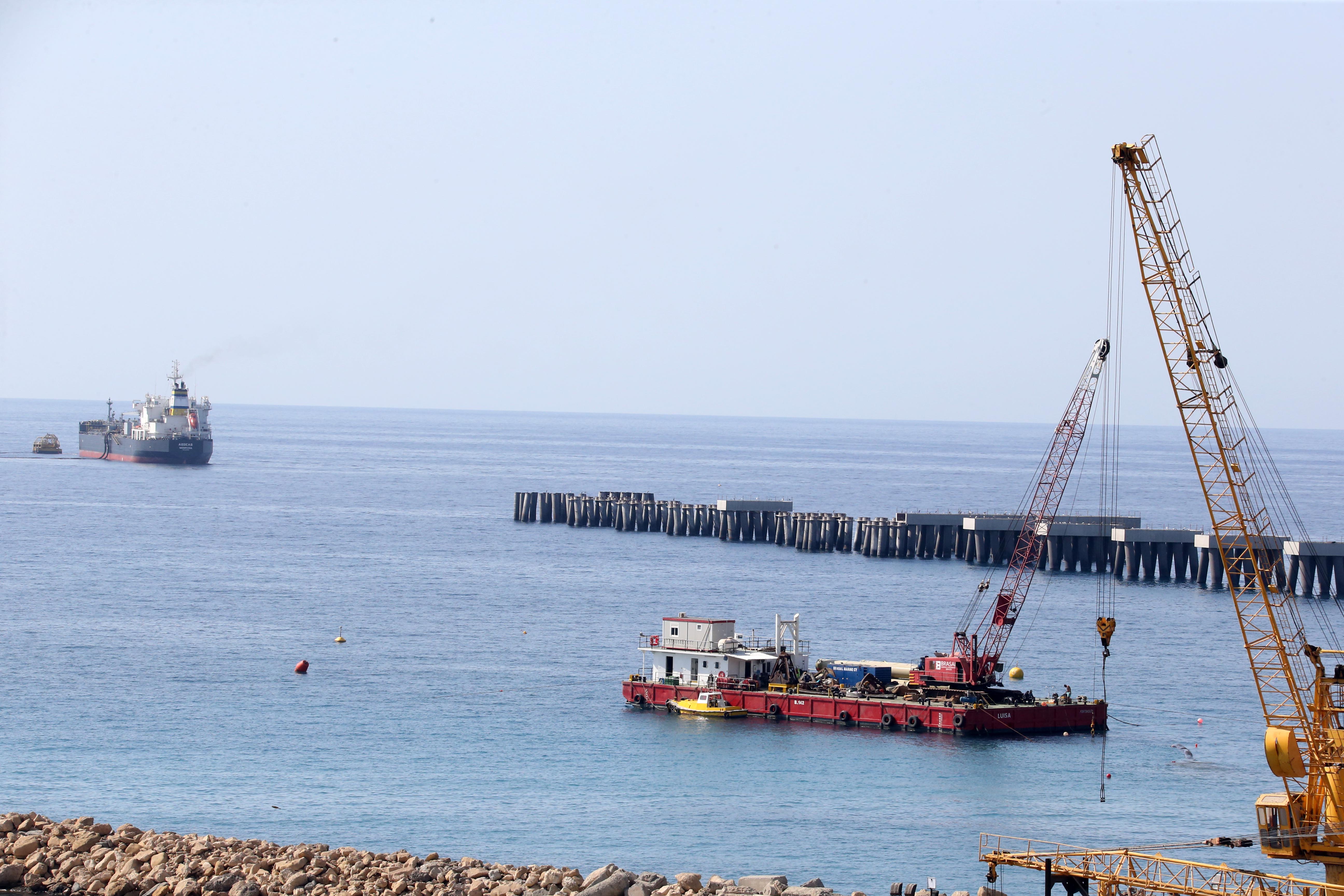
The anti-corruption authority confirmed on Tuesday that it will not open its own investigation into claims made by former energy minister George Papanastasiou regarding the Vasiliko gas terminal, saying that the European Public Prosecutor’s Office (EPPO) is already running a criminal inquiry.
The authority said the EPPO told it that the ongoing investigation covers every issue Papanastasiou raised in his public statements.
It concluded that a parallel inquiry would not be appropriate and is not permitted under current legislation, since criminal proceedings are already under way before the competent European body.
Papanastasiou had spoken on a Sigma podcast in regards to alleged interference by financial interests and personal relationships with political bosses.
Akel secretary-general Stefanos Stefanou had subsequently asked the authority for an ex officio investigation.
The watchdog studied the request and contacted the EPPO, which confirmed that a criminal investigation into the project was already open.
Akel said the claims “raise relentless questions” on how President Nikos Christodoulides takes decisions.
Papanastasiou told Sigma that “politics and vested interests” obstruct infrastructure projects “because one is interested in giving it to A, the other is interested in giving it to B”.
Delays in the public sector were made worse by interventions of various kinds, he said, and “these are the results of Vasilikos”.
He called the terminal “a particularly burdensome” project with serious problems dating from the original contract award.
He said the choice of contractor “was not the most appropriate for such a complex construction project” and that the situation “worsened when a consortium member with a significant construction role withdrew”.
Disagreements between the contractor and the natural gas infrastructure company Etyfa have gone to arbitration in London.
The contractor’s claims come to about €150 million, and further costs could arise while proceedings continue.
Papanastasiou said the Prometheus floating storage and regasification unit, the largest and most expensive element, now belongs to Etyfa and therefore the state.
It was returned from a port abroad without extra payment and remains outside Cyprus, which is more cost effective until the pier and onshore facilities are finished.
It must then be brought to the island, certified and shown to work safely with the land facilities as one system.
Eight organisations have expressed interest in replacing the contractor, he said.
Taking over a partly built project carries extra technical and financial risk, and experience in completing unfinished energy projects should carry “particularly great weight” in the selection.
He said delays at Vasiliko and the lack of adequate storage continue to push up energy costs.


Click here to change your cookie preferences